RE: The Psychology Behind Everyday Decisions We Make
People often assume that failure is our greatest fear, but psychological reality reveals something far more subtle: most people fear change far more than failure.
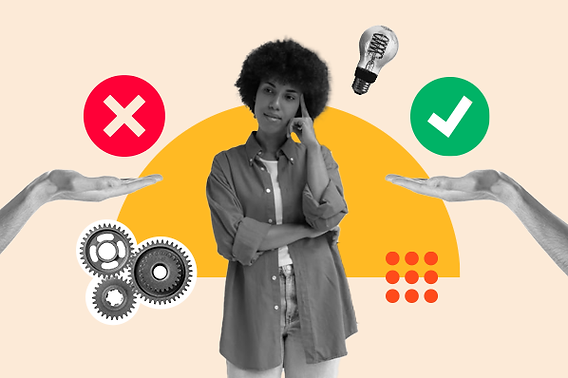
Failure, for all its painful emotional fallout, carries a critical psychological comfort—it is a known outcome. When you fail at something familiar, the scenario is concrete, predictable, and easily integrated into your existing self-concept. Change, on the other hand, forces you directly into the territory of the unknown. The human brain is an evolutionary prediction engine designed for survival, prioritizing certainty over potential improvement. To your subconscious mind, a predictable, unhappy status quo feels safer than an unpredictable future—even one that promises success.
This paradox explains why people stay in unfulfilling jobs, toxic relationships, or stagnant routines. In a familiar environment, even a bad outcome can be anticipated and managed. But change strips away control, triggering the primitive brain's threat-detection mechanisms. Furthermore, change demands an identity shift; it requires letting go of who you currently are before you have fully stepped into who you will become. Ultimately, failure merely hurts your ego, but change threatens your sense of safety—making the discomfort of the known infinitely more palatable than the risk of the unfamiliar.