Why First-Time Borrowers in India Get Rejected - And How to Fix It Before You Apply
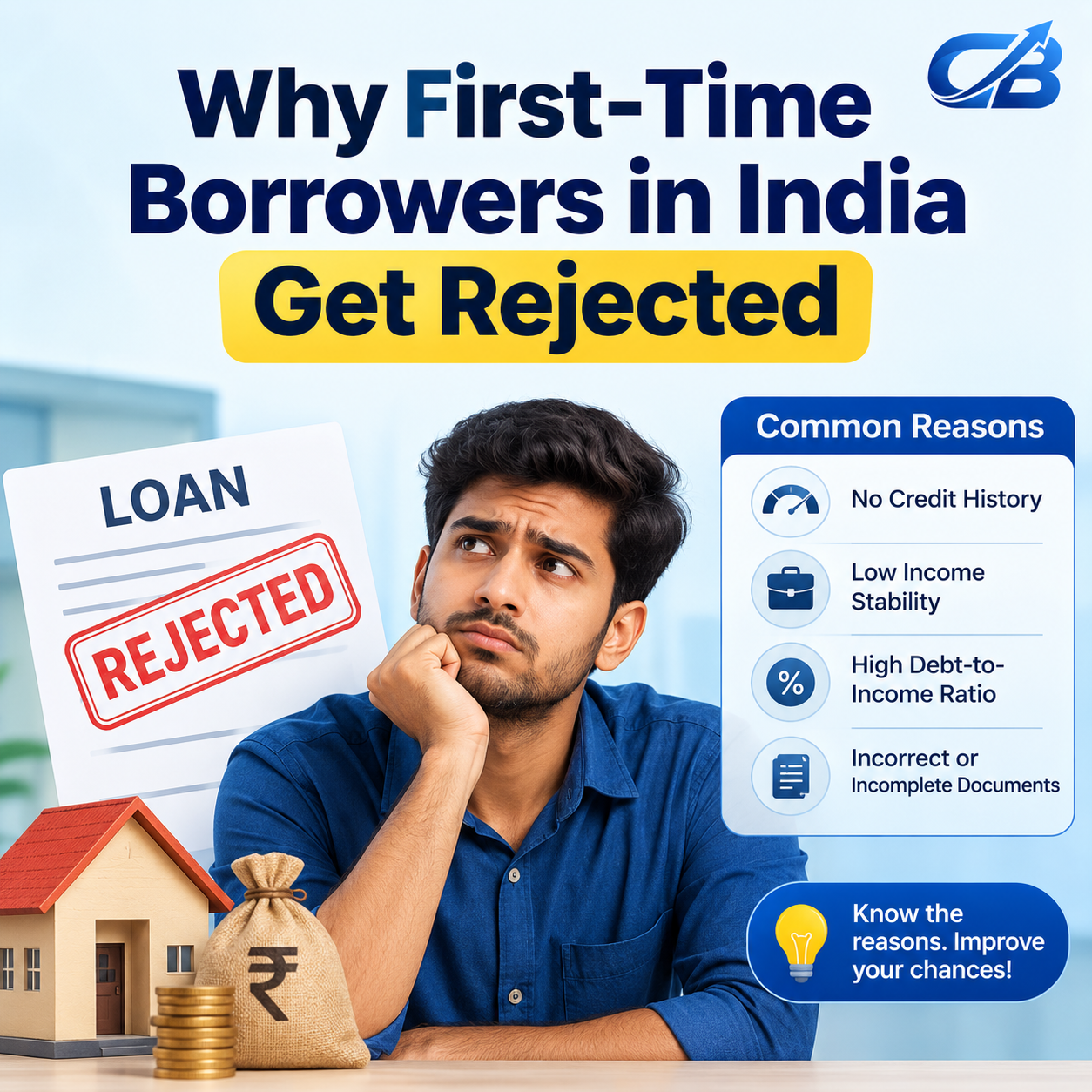
If you've never taken a loan before, you'd assume having no debt at all would make you a safer bet to a lender. In practice, it's often the opposite, and it's the single most confusing thing about applying for your first personal loan or credit card in India.
The "no credit history" problem
Lenders don't just want to know you're not in debt they want evidence of how you behave with credit. No history means no evidence, and no evidence means the lender has nothing to price risk against. This is why a salaried professional with a decent income can still get declined for a starter credit card, while someone with a modest income but two years of on-time EMI payments sails through.
This "new-to-credit" (NTC) segment is large and well understood by lenders now most banks and NBFCs have specific underwriting tracks for it but it still trips up a huge number of first-time applicants who don't realise they're in it.
The other rejection reasons that actually show up
FOIR breach: Fixed Obligation to Income Ratio. If your existing EMIs plus the new one push past roughly 40–50% of your income, you get declined regardless of your salary.
Multiple applications close together: applying to three lenders in the same week doesn't increase your odds, it triggers multiple hard inquiries that make you look credit-hungry to whichever lender checks last.
Employment stability: most lenders want 6–12 months in your current job; job-hopping in your first two years of employment is a common, avoidable rejection trigger.
Mismatched loan amount and profile: asking for an amount that doesn't align with your income band is a fast rejection, even if a smaller amount from the same lender would have sailed through.
How to actually fix this before you apply
Start small and build history deliberately. A secured credit card or a small consumer durable EMI, paid on time for 6–12 months, builds exactly the evidence lenders are looking for.
Check where you actually stand before applying. Check your loan eligibilityagainst your real profile instead of guessing this alone prevents most of the "wrong amount for my profile" rejections.
Know your score, even if it's thin. Even a short credit history produces a score. Get your free credit score and see exactly what a lender will see before they see it.
Apply once, deliberately, not several times hopefully. One well-matched application beats three scattergun ones, every time.
The frustrating truth about being a first-time borrower is that the system is built to reward exactly the kind of credit behaviour you haven't had the chance to demonstrate yet. The fix isn't to avoid credit it's to build a small, clean track record deliberately, before you need a larger loan to matter.