Lumy Tokenomics Breakdown Understanding Supply Demand and Utility
If you want to know how a digital asset will perform over the next five years, you only need to look at one thing. You must look at tokenomics. In the early days of cryptocurrency, developers could launch a coin, write a vague whitepaper, and watch millions of dollars flow into their ecosystem. The tokenomics were usually terrible. They printed new tokens out of thin air to pay yield farmers, creating massive inflation that eventually destroyed the value of the asset.
The market in 2026 is unforgiving. Institutional capital and sophisticated retail investors demand sustainable economics. They want to see verifiable utility, organic demand, strict supply controls, and a transparent whitepaper.
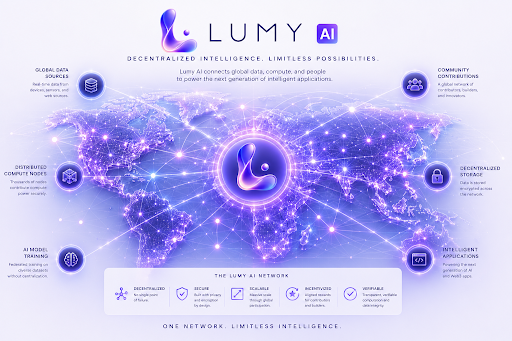
Right now, the decentralized artificial intelligence sector is capturing the attention of the smartest money in the world. At the heart of this movement is a protocol building the Internet of Agents. This network utilizes the Language Model Operating System to connect enterprise AI demand with a global grid of independent hardware providers. The economic engine driving this entire revolution is the Lumy token.
This comprehensive breakdown will analyze the exact tokenomics of the $LUMY asset as detailed in the official protocol documentation. We will explore the hard numbers, how real world utility drives organic demand, how the physical infrastructure creates a massive supply squeeze, and why this specific economic architecture is built for long term market dominance.
The Hard Numbers Total Supply vs Circulating Supply
To understand the long term vision of the ecosystem, we must look directly at the math outlined in the official whitepaper. The protocol has structured its token supply to ensure a massive runway for future growth, network expansion, and long term infrastructure rewards.
The absolute maximum total supply is capped at 300,000,000,000 $LUMY.
While that number might sound large out of context, the true genius of tokenomics lies in the initial circulating supply. At the current stage of the network rollout, the self reported circulating supply sits at approximately 1.85 billion tokens. This means that roughly 0.62 percent of the total supply is actually liquid and circulating on the open market right now.
Why is this initial circulating supply kept so intentionally low. The answer is network longevity. The remaining tokens are meticulously scheduled for release through strict vesting schedules, ecosystem development grants, and most importantly, automated rewards for the Lumy node operators. The protocol is not interested in a short term pump. By keeping the circulating supply highly constrained at launch, the team has ensured that they have the economic fuel required to incentivize network security and growth for decades to come.
The Core Utility What Gives the Lumy Coin Real Value
The biggest problem with most cryptocurrencies is that they are searching for a problem to solve. They exist purely as speculative trading vehicles. The tokenomics of this ecosystem are entirely different because the native asset is deeply integrated into a functional, revenue generating product.
The project operates the Language Model Operating System, commonly referred to as LMOS. This platform is a decentralized environment where developers can build, deploy, and interact with autonomous AI agents. When an enterprise business needs to utilize Lumy AI for complex data analysis, natural language processing, or market prediction, they must pay for that computational power.
They do not pay with traditional fiat currency or credit cards. To access the decentralized grid, these enterprise clients must purchase and spend the native Lumy coin. This dynamic is the holy grail of tokenomics. It creates a constant, evergreen baseline of organic buying pressure. The demand for the asset is not driven by social media hype or speculative trading. The demand is driven by the massive, rapidly expanding global need for artificial intelligence processing power.
As more businesses migrate away from expensive legacy cloud providers and adopt the Internet of Agents, the transactional volume flowing through the native asset will scale exponentially against that highly constrained circulating supply.
The Supply Squeeze Mechanics of the Lumy Node Ecosystem
Strong demand is only half of the tokenomics equation. To create a highly valuable asset, a protocol must also control how tokens move through the open market. If a network constantly floods the exchanges with unlocked tokens, the price will crash regardless of how much enterprise demand exists.
The genius of this ecosystem lies in how it ties the physical infrastructure directly to the token supply. The Language Model Operating System relies on thousands of independent computers globally to process the AI agent data. These computers are operated by everyday users running a Lumy node.
To ensure that these hardware operators act honestly and securely process the enterprise data, the protocol requires them to provide a security deposit. Before a node can go live and begin earning processing fees, the operator must purchase and lock a specific amount of $LUMY into a protocol smart contract.
This security mechanism creates an incredibly powerful economic phenomenon known as a supply squeeze. Consider the mechanics at play. As the network becomes more popular, more enterprise tasks are submitted to the grid. This requires more processing power, which incentivizes new operators to launch a Lumy node. Every single time a new node comes online, a portion of that small 1.85 billion circulating token supply is locked away and removed from the open exchanges entirely.
When you have a mathematical framework where commercial demand is constantly rising while the liquid supply on the open market is constantly shrinking, you create the ultimate environment for long term value appreciation.
Rewarding the Infrastructure Providers
A sustainable token economy must fairly compensate the people who build and secure the network. In traditional centralized tech monopolies, the profits are hoarded by a small group of corporate executives. In this decentralized architecture, the wealth is redistributed to the community.
The enterprises paying for Lumy AI processing power are effectively paying the hardware operators. When you run your digital node, the network automatically routes these computational fees directly to your secure Web3 wallet in the form of the native asset.
This creates a highly lucrative passive income stream for infrastructure providers. Because the rewards are derived from actual enterprise revenue combined with the slow, programmatic release of the 300 billion total supply cap, the yield is sustainable over a multi year horizon.
Furthermore, because node operators are earning an asset that has strict supply controls, the purchasing power of their daily rewards has the potential to compound significantly as the Internet of Agents continues to capture global market share.
Why LMOS Tokenomics Lead the Industry
When you zoom out and look at the entire cryptocurrency landscape in 2026, it is difficult to find a project with a more compelling economic structure. The protocol has successfully aligned the incentives of every single participant in the ecosystem.
Enterprise clients get access to cheaper, faster, and highly secure artificial intelligence processing. Hardware operators earn a lucrative, sustainable yield for providing physical computing power. The Lumy coin sits squarely in the middle of all these interactions, capturing value at every single stage of the process.
This is not a meme coin relying on community enthusiasm. This is a highly structured digital economy designed to power the next generation of Web3 intelligence. By linking the value of the asset directly to the computational output of the Internet of Agents, the core team has built a resilient financial model capable of weathering broader market volatility.
How to Navigate the Protocol Economy Today
If you understand the power of supply and demand, you recognize that the best time to accumulate a utility asset is while the physical infrastructure is still in its expansion phase. As the network finalizes more enterprise partnerships and the node grid scales globally, the economic flywheel will accelerate rapidly.
To navigate this ecosystem safely and securely, you must rely exclusively on official documentation. Your absolute first step should be reviewing the comprehensive technical and economic breakdown located at https://lumyos.gitbook.io/lumy-whitepaper. This document provides the exhaustive mathematical framework detailing the token distribution and the specific routing algorithms used by the Language Model Operating System.
For direct access to the platform marketplace, node setup instructions, and official software downloads, you must use the verified project portal at https://www.lmos.info/. Security in the digital asset space is your personal responsibility, so always verify these links before connecting your Web3 wallet.
Understanding tokenomics gives you a massive advantage, but staying ahead of the market requires active engagement with the community. Network upgrades and token utility expansions happen fast. You must follow the core development team on X at https://x.com/lumyinfo to monitor these real time strategic announcements.
To ensure you never miss a critical protocol update or a time sensitive security alert, subscribe to the official broadcast feed at https://t.me/LUMY_Announce. Finally, if you want to discuss advanced token accumulation strategies, network with veteran hardware operators, and deep dive into the underlying tokenomics with other highly educated investors, join the primary community hub at https://t.me/LUMYCommunity.
The era of printing digital money out of thin air is over. The future of Web3 wealth belongs to protocols that power the physical internet. Understand the tokenomics, secure your assets, and position yourself at the forefront of the decentralized intelligence revolution.