Reshaping Industry: The Transformative Power of 3D Printing in Manufacturing
For decades, the manufacturing landscape was defined by subtractive processes—cutting, drilling, and milling raw materials into shape. However, 3D printing, or additive manufacturing, has fundamentally altered this paradigm. By building objects layer-by-layer, this technology has evolved from a niche prototyping tool into a cornerstone of industrial production, sparking a quiet revolution on factory floors worldwide.
Design Freedom and Complexity Perhaps the most immediate impact of 3D printing is the removal of traditional geometric constraints. Engineers can now create intricate, lightweight structures—such as lattice designs—that were previously impossible to machine.
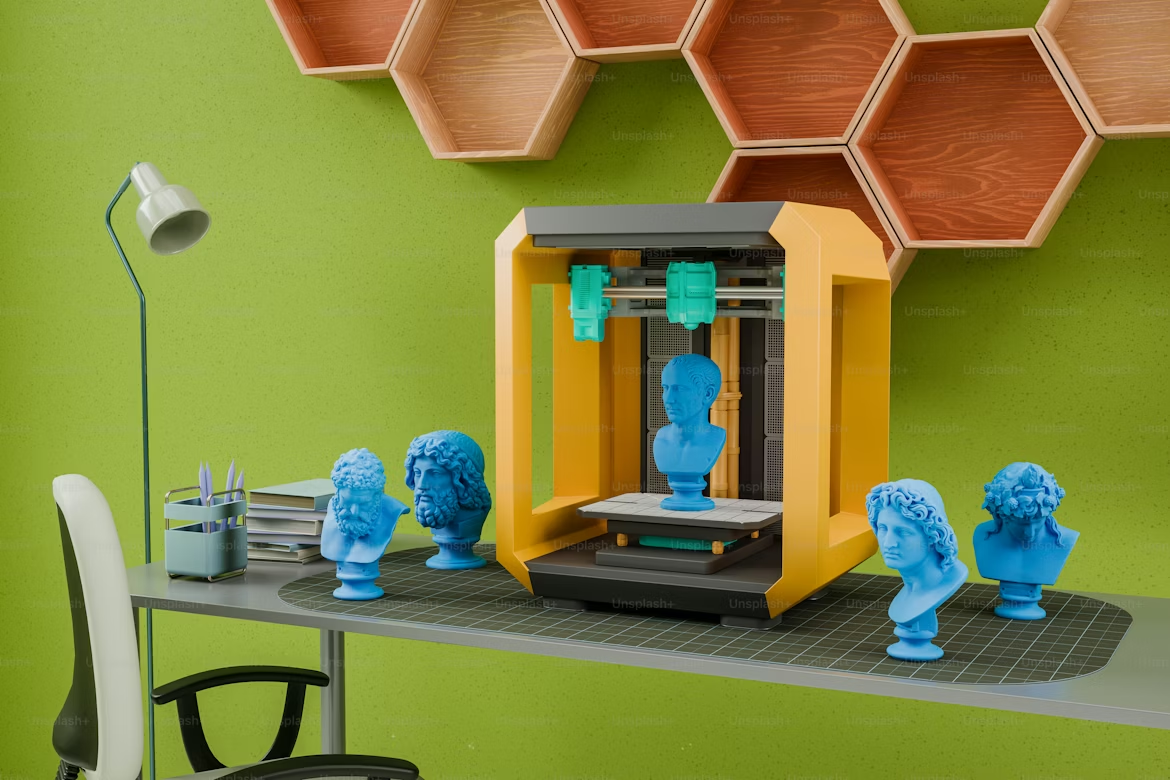
This allows for the consolidation of multiple parts into a single, cohesive unit, reducing assembly time and minimizing failure points. The result? Optimized products that are stronger, lighter, and more efficient.
Supply Chain Resilience and On-Demand Production The traditional "just-in-time" supply chain has proven fragile in recent years. 3D printing offers a compelling alternative: distributed manufacturing.
Instead of relying on vast warehouses and global shipping, companies can leverage "digital inventories." Parts can be printed on-demand, exactly where and when they are needed. This shift dramatically reduces overhead costs, eliminates the need for expensive tooling, and slashes lead times from weeks to hours.
Sustainability and Efficiency Sustainability has become a business imperative, and additive manufacturing is a key ally.
Because 3D printing only uses the material necessary to build the part, waste is significantly reduced compared to subtractive methods that discard large volumes of scrap metal or plastic. Furthermore, by enabling localized production, the technology shrinks the carbon footprint associated with long-distance freight.
The Road Ahead While 3D printing is not poised to replace traditional mass manufacturing for every application, it has carved out an essential role in high-value, customized, and complex production.
As material science advances and print speeds increase, the integration of additive manufacturing will continue to define the next generation of industrial innovation.