MiCA Passporting: What Crypto Users Need to Know Before Choosing an Exchange
MiCA has changed crypto in Europe.
But the most important question is no longer simply whether an exchange is licensed.
The better question is: how complete is the license?
A MiCA authorisation can passport across the European Economic Area, but it is not one universal permission. It is built from separate service categories, including custody, exchange, execution, transfers, advice, portfolio management and operating a trading platform.
That distinction matters.
A platform can be MiCA-authorised but still offer a narrower product than users expect.
A firm may have custody and execution permissions, but not trading-platform permission.
A global exchange brand may have a European entity that does not offer the same products, leverage or advanced trading tools available elsewhere.
A regulator may issue a valid license, but its authorisation process may still draw supervisory scrutiny.
And a platform can be huge globally while still lacking EU CASP authorisation altogether.
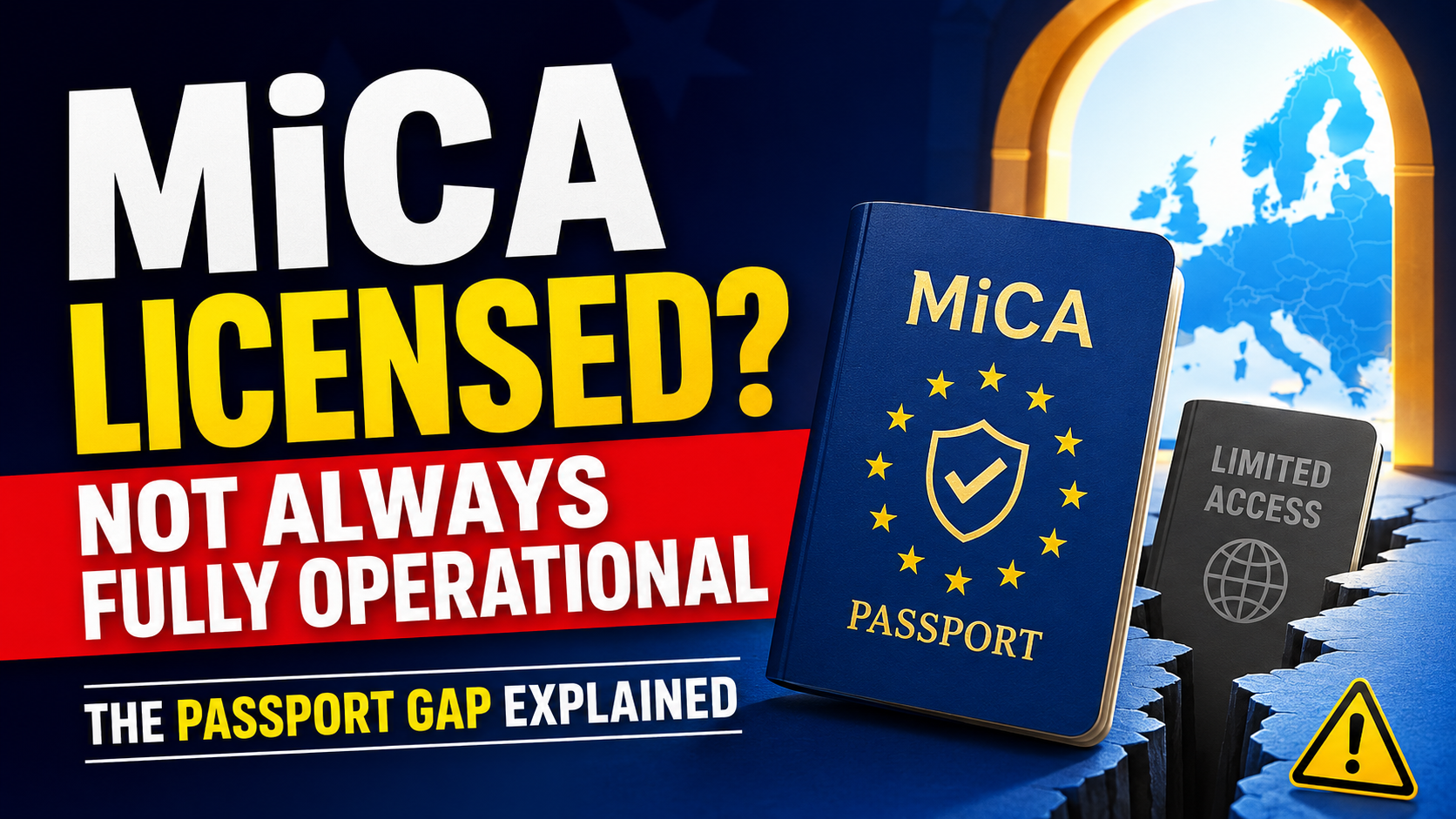
This is the MiCA Passport Gap.
It is the difference between being legally authorised and being operationally complete.
For crypto users, the lesson is simple: do not just check the brand. Check the exact legal entity, home regulator, service scope, trading-platform permission, product availability and local access.
For exchanges, MiCA is no longer just a compliance box. It is becoming a competitive advantage.
For investors, license quality is now part of exchange due diligence.
The first phase of MiCA was about who could get licensed.
The next phase is about who can actually operate at scale.
Read the full breakdown on Decentralised News: https://decentralised.news/mica-explained-why-eu-crypto-licenses-are-not-all-equal
#MiCA #CryptoRegulation #Crypto #Bitcoin #Ethereum #EURegulation #CASP #ESMA #CryptoExchanges #Binance #Bybit #OKX #Kraken #Coinbase #Compliance #DigitalAssets #Web3 #DecentralisedNews #18Plus