Why Your Credit Score Is the Most Underrated Financial Asset You Own..
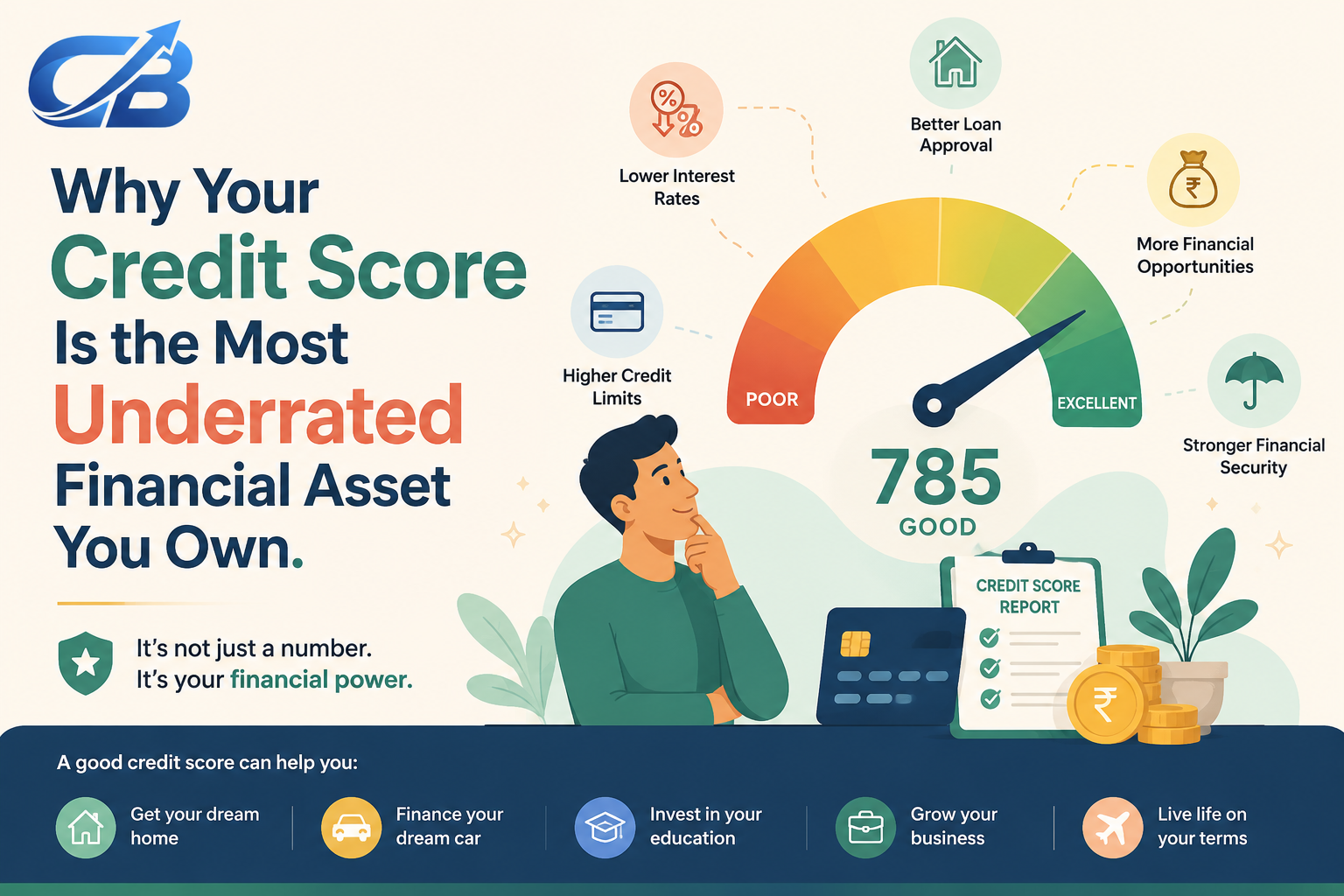
We talk a lot about assets, savings, investments, property, but there's one number that quietly decides how expensive every other financial decision in your life will be, and most people never actively manage it.
Your credit score isn't just a gatekeeper for loan approvals. It's a pricing mechanism. Two people can apply for the same personal loan, get approved on the same day, and end up paying meaningfully different amounts of interest over the life of the loan purely because of a three-digit number neither of them checked beforehand.
Here's why it deserves more attention than it usually gets:
It compounds like debt does, just in reverse. A good score doesn't just get you approved it gets you a better rate, which lowers your EMI, which frees up cash you can save or invest elsewhere. A poor score does the opposite, quietly taxing every borrowing decision you make for years.
It's mostly built from boring, repeatable habits. Paying on time, keeping utilisation low, not applying to multiple lenders in a short window, none of this is exciting, but it's also entirely within your control, unlike, say, market returns.
Most people only check it when they're already in a hurry. The worst time to discover your score needs work is the week you actually need the loan. Checking it periodically, even when you're not borrowing, gives you time to fix things before they matter.
It also affects more than loans. A strong score can shape things people don't always connect to it
the deposit a landlord asks for, the credit limit a new card comes with, sometimes even the terms on a phone financed through a retailer. It's less a "loans-only" number and more a general marker of financial reliability that shows up in unexpected places.
A simple way to think about the number itself:
Below 649: Lenders see this as higher risk. Expect rejections or approvals that come with a noticeably higher interest rate.
650–749: Approvable, but you're rarely getting the best rate on offer there's usually room to improve before your next big borrowing decision.
750 and above: This is where the number starts working for you. Lenders compete for borrowers in this range, which means more room to negotiate terms rather than just accept whatever's offered.
None of these bands are permanent. A score is a rolling reflection of the last several years of behaviour, which means consistent good habits can move you up a band and a few missed payments can move you down one faster than most people expect.
One habit worth building: treat your score like a number you check, not a number you find out.
If you haven't looked at yours recently, a free credit score check takes a couple of minutes and gives you the actual number rather than a vague "good/bad" guess. And once you know where you stand, it's worth understanding how that score plays into your loan eligibility before you're standing in front of a lender.
Treat your score like the asset it is. It doesn't sit in a portfolio, but it affects the cost of almost everything you'll ever borrow.
Hay mucho humo en el mundo de las finanzas y posts como este ponen los pies sobre la tierra. @ethan14