Why Your Credit Score Is the Most Underrated Financial Asset You Own..
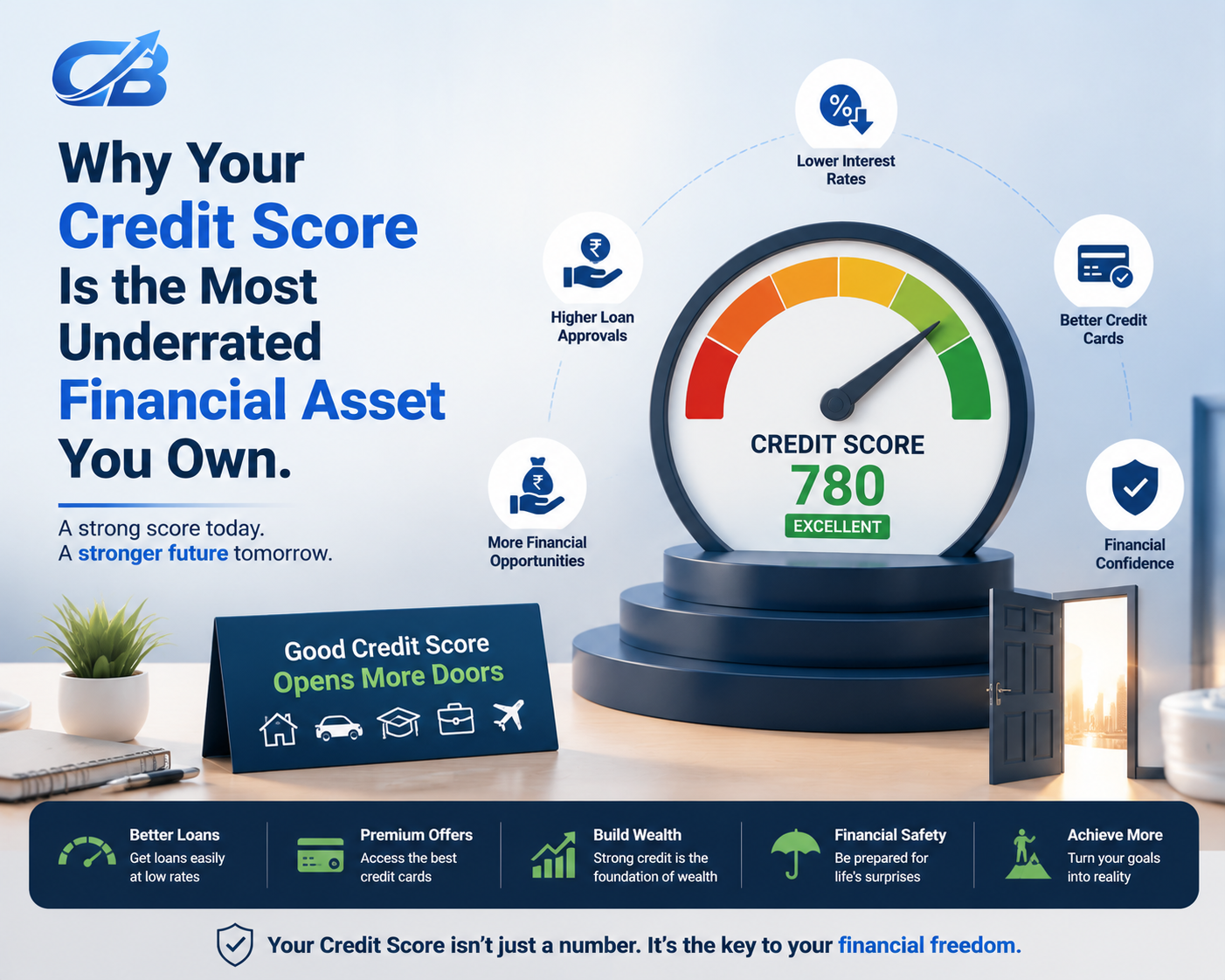
We talk a lot about assets savings, investments, property but there's one number that quietly decides how expensive every other financial decision in your life will be, and most people never actively manage it.
Your credit score isn't just a gatekeeper for loan approvals. It's a pricing mechanism. Two people can apply for the exact same personal loan, get approved on the same day, and end up paying meaningfully different amounts of interest over the life of the loan purely because of a three-digit number neither of them checked beforehand.
Here's why it deserves more attention than it usually gets:
It compounds like debt does, just in reverse. A good score doesn't just get you approved it gets you the better rate, which lowers your EMI, which frees up cash you can save or invest elsewhere. A poor score does the opposite, quietly taxing every borrowing decision you make for years.
It's mostly built from boring, repeatable habits. Paying on time, keeping utilization low, not applying to multiple lenders in a short window none of this is exciting, but it's also entirely within your control, unlike, say, market returns.
Most people only check it when they're already in a hurry. The worst time to discover your score needs work is the week you actually need the loan. Checking it periodically, even when you're not borrowing, gives you time to fix things before they matter.
It also reaches further than borrowing. Landlords increasingly check credit history before renting, some insurers factor it into premium pricing, and a handful of employers in finance-adjacent roles run a credit check as part of background verification. None of that is loan-related, which is exactly why treating your score as a one-time, loan-application-week concern undersells how much it's quietly doing in the background.
If you haven't looked at yours recently, free credit score check takes a couple of minutes and gives you the actual number rather than a vague "good/bad" guess. And once you know where you stand, it's worth understanding how that score plays into your loan eligibility before you're standing in front of a lender.
Treat your score like the asset it is. It doesn't sit in a portfolio, but it affects the cost of almost everything you'll ever borrow.
@noah21, con el laburo uno se olvida de estas cosas. Tu post me hizo frenar un minuto y valorar lo que tengo.
Leí varios posts sobre el tema y este es de los que mejor lo explican. Me gustó especialmente la parte donde hablás de los errores comunes. @noah21