Film Review: Iron Man (2008)
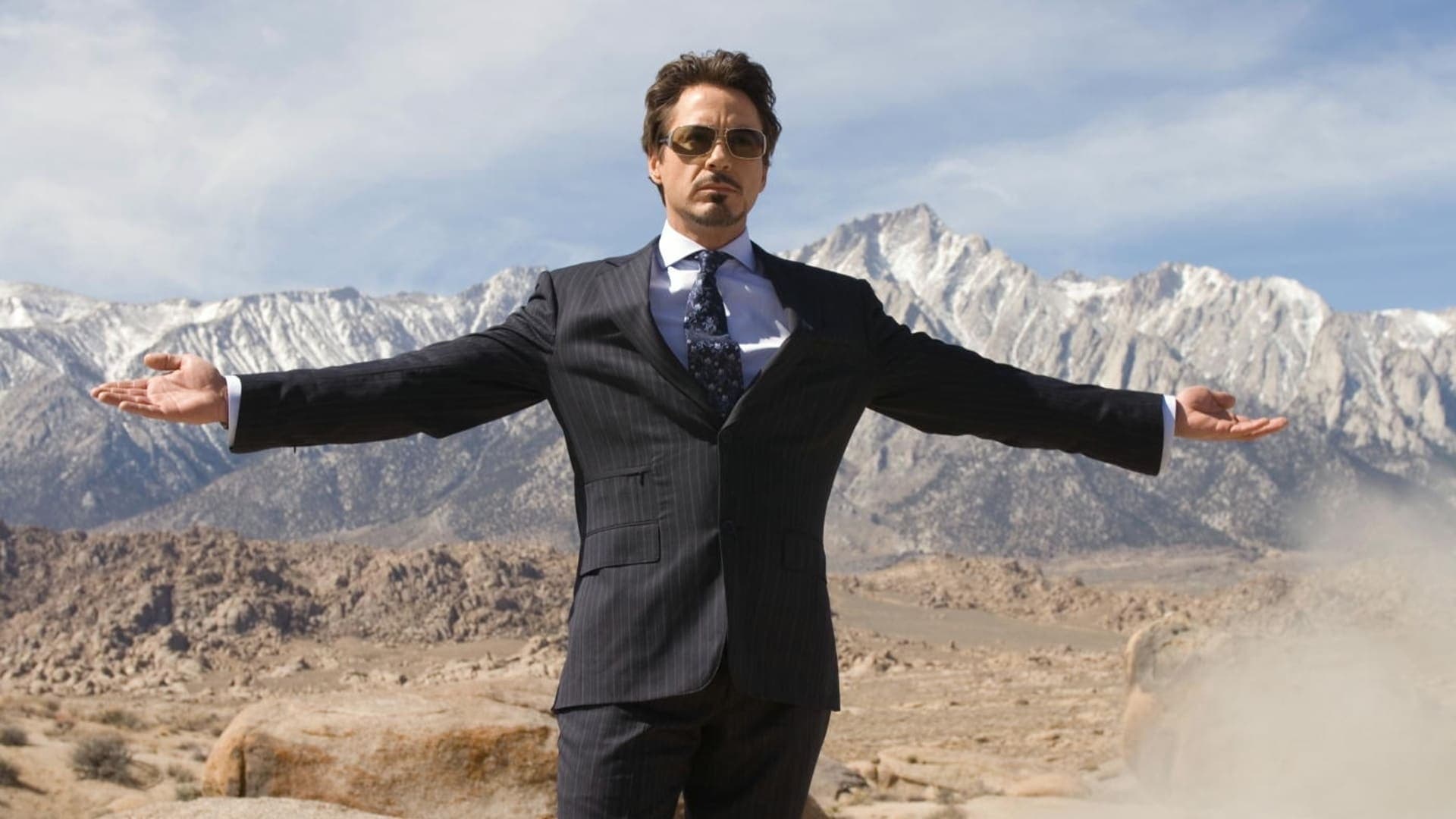
Viewed through the lens of what followed, the first instalment of the Marvel Cinematic Universe appears almost quaint—a modestly scaled origin story that predates the multi-billion-dollar behemoth the franchise would become. Yet Iron Man (2008) shows how a single casting decision and a willingness to ground superhero fantasy in uncomfortable reality can reinvigorate a moribund genre. What began as a gamble on a B-list comic book character has, in retrospect, become the foundation stone of the most commercially successful film series in cinema history.
The film introduces us to Tony Stark, a character conceived by Stan Lee, Larry Lieber, Don Heck, and Jack Kirby in 1963 as something of an anomaly in the Marvel pantheon. Unlike the relatable everymen (Spider-Man) or tragic figures (Daredevil) that populated Marvel's roster, Stark was a wealthy industrialist—a "genius billionaire playboy philanthropist," as he would later describe himself—whose superpower was essentially his engineering brilliance and vast fortune. Lee reportedly created Iron Man as a challenge: to make a character embodying the military-industrial complex sympathetic to a readership increasingly sceptical of American foreign policy.
Director Jon Favreau and screenwriters Mark Fergus, Hawk Ostby, Art Marcum, and Matt Holloway retain this essential tension. When we first encounter Stark, he is a swaggering arms dealer, delivering cynical quips to American troops in Afghanistan while showcasing his company's latest weaponry. The film's inciting incident—Stark's capture by terrorists who demand he build them a weapon of mass destruction, and his subsequent decision to construct a powered exoskeleton to escape—serves as both a literal and metaphorical rebirth. The shrapnel embedded near his heart, kept at bay only by an electromagnet and later the arc reactor, provides a physical manifestation of his moral wound: he has profited from death, and now death resides within him.
This is a darker origin story than audiences had come to expect from superhero cinema. The Afghanistan setting grounds the film in contemporary geopolitical reality; these are not fictional Nazis or abstract alien threats, but the very conflicts dominating news headlines in 2008. The film's first act, depicting Stark's imprisonment and his construction of the crude Mark I armour in a cave, owes more to The Bridge on the River Kwai or Escape from Alcatraz than to the colourful pages of Silver Age comics.
Upon his return to civilisation, Stark undergoes a conversion that the film treats with surprising seriousness. His decision to cease weapons manufacturing—announced impulsively at a press conference—sets up the central conflict with his business partner Obadiah Stane (Jeff Bridges), who represents the old guard of American capitalism that Stark is attempting to outgrow. The father-son dynamic between the two men, with Stane having helped raise Stark after his father's death, adds emotional texture to what might otherwise have been a standard corporate villain narrative.
To appreciate what Iron Man achieved, one must consider the checkered history of Marvel adaptations prior to 2008. The 1970s had seen modest television success with The Incredible Hulk starring Bill Bixby, and a Captain America television film in 1979 that was largely forgettable. The 1980s brought the notorious Howard the Duck (1986), a critical and commercial catastrophe that remained a cautionary tale for decades.
The 1990s and early 2000s saw more successful iterations: Bryan Singer's X-Men (2000) and Sam Raimi's Spider-Man (2002) demonstrated that Marvel properties could achieve both critical respectability and box office dominance. However, these were licensed properties, controlled by 20th Century Fox and Sony respectively. Marvel's own attempts at self-production had been decidedly mixed. Blade (1998) and its sequels found a niche audience, while Daredevil (2003), Elektra (2005), and Ghost Rider (2007) ranged from mediocre to outright embarrassing. Ang Lee's Hulk (2003), though ambitious, had underperformed commercially and left audiences cold.
The most relevant precursor, however, was the 1990 Captain America film—produced by Marvel's own studio before its bankruptcy—and the various television pilots that never found series orders. Marvel had long struggled to translate its characters to screen with the fidelity and respect that DC had enjoyed with Richard Donner's Superman (1978) and Tim Burton's Batman (1989). By 2008, Marvel Studios was essentially betting its future on Iron Man and the subsequent Incredible Hulk—if these failed, the nascent cinematic universe would be stillborn.
What elevates Iron Man above the morass of mediocre superhero films is Robert Downey Jr.'s performance—a career resurrection as remarkable as Stark's own transformation. Casting Downey was Favreau's masterstroke; the actor's well-documented struggles with addiction and his own public redemption mirrored Stark's journey in ways that lent the performance authentic emotional weight. Downey brings a restless intelligence to the role, delivering Stark's quips with a timing that suggests wit as defence mechanism rather than mere arrogance.
The chemistry between Downey and Gwyneth Paltrow, as Stark's long-suffering assistant Pepper Potts, provides the film's emotional anchor. Their relationship—professional, flirtatious, yet grounded in genuine mutual respect—offers a template for the MCU's later explorations of character dynamics over spectacle. Jeff Bridges, bulked up and bald, makes for a physically imposing antagonist, though the film's third-act descent into armoured combat between Stark and Stane's Iron Monger represents its weakest stretch—a harbinger of the CGI-heavy finales that would plague subsequent entries.
Viewing Iron Man today, knowing what followed, one notices the seeds planted for future expansion. The post-credits scene featuring Samuel L. Jackson as Nick Fury, mentioning the "Avengers Initiative," was a bold gambit—an implicit promise to audiences that this was merely the beginning. At the time, it seemed a cheeky nod to fans; in retrospect, it was the first move in Kevin Feige's grand chess game.
The film's success—grossing over $585 million worldwide against a $140 million budget—validated Feige's vision of a connected universe. It established the template that would serve the MCU for over a decade: origin stories that balance character development with spectacle, post-credits scenes that tease future narratives, and a tone that leans into humour without sacrificing stakes.
Yet Iron Man also stands apart from what followed. Iron Man 2 (2010), the sequel, doesn't stray from the first but adds distracting fan service in its eagerness to clear the path for future phases. The second film, despite confident direction from Favreau and an impressive turn by Mickey Rourke as Ivan Vanko, suffers from having to serve as both a standalone sequel and a piece of franchise infrastructure. By Iron Man 3 (2013), Shane Black's involvement brought welcome deviations from comic book orthodoxy and plenty of humour, mostly in form of Stark's one-liners, though the final showdown shows limits of Black as director.
The character's evolution culminates in The Avengers (2012), less a film and more of a commercial superevent, and ultimately Avengers: Endgame (2019), where Stark's arc reaches its conclusion. That film represents the final conclusion of the saga that began in 2008 with Iron Man." The bold vision of producer Kevin Feige—building a saga from seemingly unconnected films about individual superheroes that gradually became part of a tightly rounded whole—found its starting point here.
Iron Man is not without flaws. The second act sags somewhat as Stark perfects his armour in secret; the climactic battle with Stane feels perfunctory, a concession to genre expectations rather than an organic culmination of the narrative. The film's treatment of Afghan characters is broadly drawn, serving primarily as backdrop for Stark's redemption rather than as fully realised individuals.
Yet these shortcomings are outweighed by the film's achievements. Favreau's direction prioritises character over CGI, trusting Downey's charisma to carry scenes that lesser films would have rushed. The production design—particularly the evolution of the Iron Man suits from crude scrap-metal cage to sleek red-and-gold armour—provides visual storytelling that wordlessly conveys Stark's transformation.
The film's greatest legacy, however, is demonstrating that superhero cinema could accommodate adult themes without sacrificing entertainment value. By engaging with the moral complexities of arms dealing and American foreign policy, Iron Man suggested that the genre could be about more than escapism—though it would be left to later films, particularly Captain America: The Winter Soldier (2014), to fully realise this potential.
In the context of what the MCU would become—the multi-billion-dollar juggernaut spanning dozens of films and television series—Iron Man appears almost modest. It is a film that knows its limitations and works within them, trusting in performance and writing rather than overwhelming spectacle.
What Iron Man provided was a foundation—a proof of concept that Marvel's lesser-known characters could support films, that audiences would embrace continuity and interconnected storytelling, and that Robert Downey Jr. could anchor a franchise. The most popular saga in recorded history began here, with a man in a cave, building a suit of armour from scraps. That it works at all is remarkable; that it launched an empire is nothing short of extraordinary.
RATING: 6/10
Blog in Croatian https://draxblog.com
Blog in English https://draxreview.wordpress.com/
InLeo blog https://inleo.io/@drax.leo
Substack https://draxster.substack.com/
BTC donations: 1EWxiMiP6iiG9rger3NuUSd6HByaxQWafG
ETH donations: 0xB305F144323b99e6f8b1d66f5D7DE78B498C32A7
BCH donations: qpvxw0jax79lhmvlgcldkzpqanf03r9cjv8y6gtmk9