Film Review: Mesrine (L'Instinct de mort/L'Ennemi public nº 1 , 2008/2009)
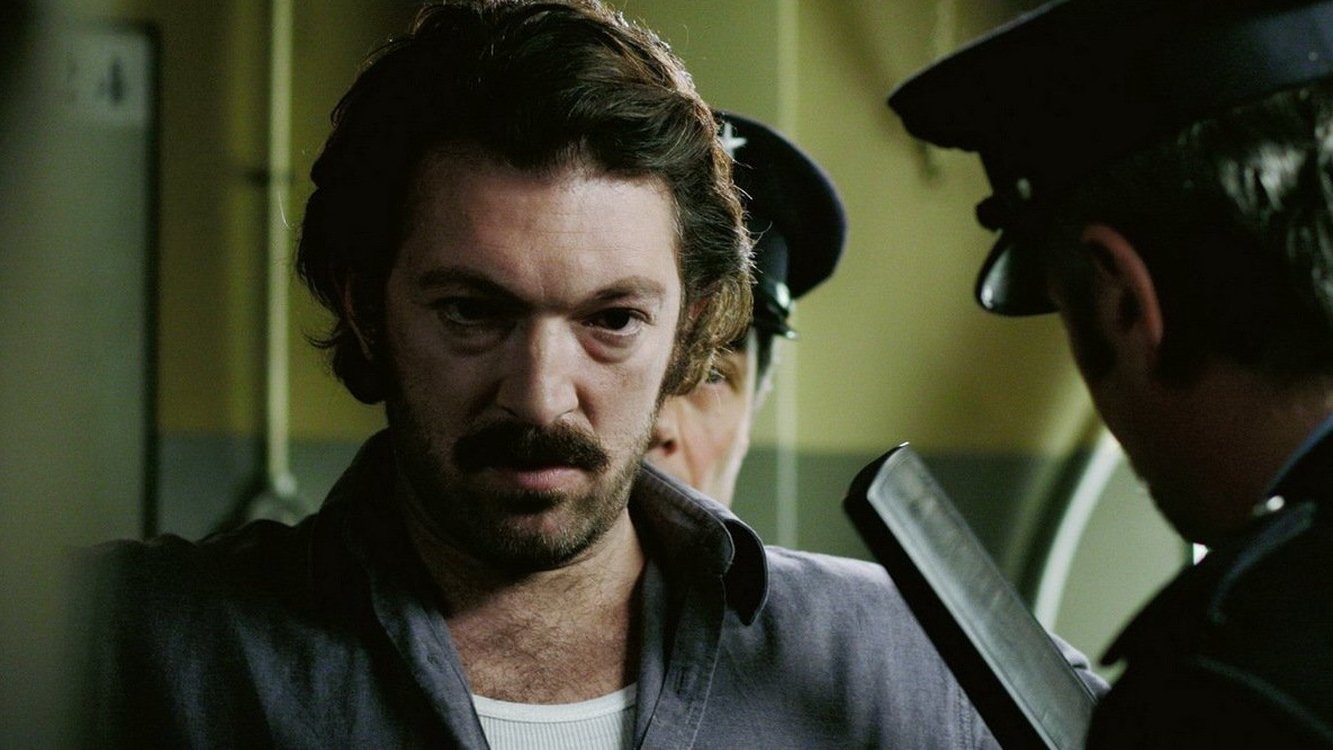
Jean-François Richet, the French director previously known to international audiences for his rather ill-advised remake of John Carpenter's Assault on Precinct 13, demonstrates a keen eye for contemporary cinematic trends. Following Quentin Tarantino's demonstration with Kill Bill that multi-part films need not be commercial poison, the model has proven increasingly attractive for biopics of larger-than-life figures whose stories cannot adequately be contained within a single feature. Steven Soderbergh employed this approach for his two-part examination of revolutionary Che Guevara; Richet applies it to Guevara's rather less celebrated but equally colourful contemporary, Jacques Mesrine.
Mesrine's life unfolds across two feature-length instalments. The international titles—Mesrine: Killer Instinct for the first film and Mesrine: Public Enemy No. 1 for the second—reflect their distinct temperaments, though both were based on the criminal's autobiography (the first more directly so than the second).
Killer Instinct opens on 2 November 1979, with a disguised Mesrine (Vincent Cassel), by then France's most wanted man, driving through Parisian streets in a BMW with his girlfriend Sylvie Jeanjacquot (Ludivine Sagnier), unaware that this journey will be his last. The narrative then flashes back two decades to find the young Mesrine, a child of comfortable middle-class parents, serving as a French army recruit in war-torn Algeria where he is forced to bloody his hands with the blood of local civilians. Upon his return, he is received as something of a hero, yet finds himself unable to reconcile himself to the tedium of civilian existence. Instead, he gravitates towards gangsters, prostitutes, and the demi-monde that offers a far more exhilarating means of earning his keep. The crime boss Guido (an excellent, barely recognisable Gérard Depardieu) recognises considerable talent in the audacious, cocksure young man, though Mesrine's criminal career is briefly interrupted by imprisonment and an attempt to settle down as a family man. When dismissed from his job, however, he abandons his family, returns to his old ways, and decamps to Quebec, where he will execute some of his most spectacular criminal undertakings.
Public Enemy No. 1, meanwhile, concerns itself with the remainder of Mesrine's life, beginning in 1972 when he returned to France and established himself as one of the most notorious bank robbers and kidnappers in the nation's history. His exploits capture public imagination not merely through his ability to evade police and judicial capture, but through his evident relish for his celebrity status as "Public Enemy No. 1". Mesrine increasingly views himself not as a criminal but as a species of folk hero, stealing from hypocritical wealthy elites and mocking the repressive state apparatus embodied by his principal pursuer, Commissioner Pierre Broussard (Olivier Gourmet). When he eventually finds himself behind bars, apparently for the long term, he uses his incarceration to write an autobiographical bestseller, and eventually attempts to align himself with the Baader-Meinhof Gang, the Red Brigades, and other extreme leftist organisations that were setting fire to Western Europe throughout the 1970s.
Richet's work is not the first cinematic treatment of Mesrine. In 1984, André Génoves directed Mesrine starring Nicolas Silberg in the title role. Richet's version, benefiting from Cassel's star power and a substantially larger budget, has attracted considerably greater attention. The director handles the epic scope and bifurcated structure with far greater success than he managed with his Assault on Precinct 13 remake. Indeed, Mesrine functions not merely as a film in two parts, but as two distinctly different films.
The first instalment is, in many respects, the more conventional of the pair, employing what has become the standard formula for criminal biopics: a succession of violent sequences interspersed with scenes charting the protagonist's drift towards crime, all rendered with meticulous period reconstruction of costumes, props, and production design evoking those "good old days". Cassel is effective here as the young, brash, arrogant criminal who conducts himself as though the world were his personal property. Richet likewise exploits numerous opportunities for exceptionally effective action set pieces, most memorably an escape from a Quebec prison. The sole significant drawback is perhaps the rather unfortunate casting of Cécile de France as Mesrine's romantic and criminal partner Jeanne Schneider, with whom Cassel shares little discernible chemistry.
The second instalment, chronicling Mesrine's exploits on home soil, is a far more realistic and darker affair. Unlike Mesrine's own account—in which numerous events were "ironed out" and "embellished"—the screenplay draws upon considerably more prosaic facts, and the action unfolds within the "leaden" 1970s. The charismatic criminal is no longer a romantic hero so much as a narcissistic egomaniac who fails to comprehend that his personal war against the social order is doomed to failure. This is reflected in effective casting choices: Mathieu Amalric, as Mesrine's partner François Besse, initially appears throughout as a deranged homicidal maniac, yet proves to be the more rational and composed member of the criminal partnership. The consequences of Mesrine's adventures are perhaps best illustrated by a sequence in which the robber, attempting to flee police, takes an innocent family hostage and thereby places them in mortal danger. The most striking impression, however, is left by the finale, in which Richet revisits the scene from the opening of the first film from an entirely different perspective, elevating the work above the level of ordinary gangster biography.
Though Mesrine has its flaws—Cassel occasionally overplays his hand, and a sequence depicting a spectacular arrest in the American desert feels artificially inserted—it can be recommended not merely as a more-than-competent example of the gangster genre, but as a reminder that the fusion of criminality and celebrity culture is not exclusively a phenomenon of our own troubled times.
RATING: 8/10 (+++)
(Note: The text in the original Croatian version is available here.)
Blog in Croatian https://draxblog.com
Blog in English https://draxreview.wordpress.com/
InLeo blog https://inleo.io/@drax.leo
Substack https://draxster.substack.com/
BTC donations: 1EWxiMiP6iiG9rger3NuUSd6HByaxQWafG
ETH donations: 0xB305F144323b99e6f8b1d66f5D7DE78B498C32A7
BCH donations: qpvxw0jax79lhmvlgcldkzpqanf03r9cjv8y6gtmk9