Film Review: The Book of Eli (2010)
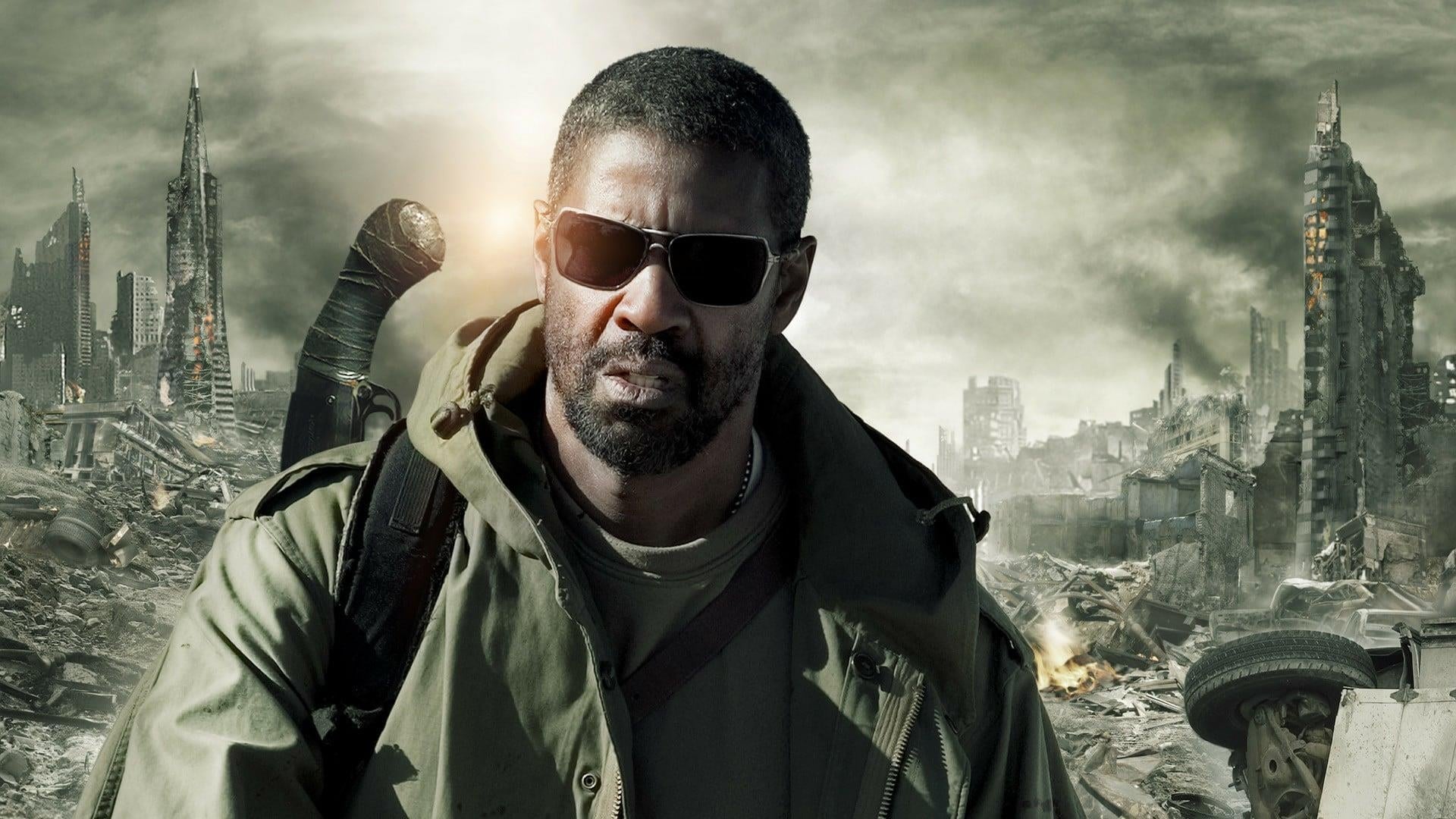
In an age dominated by sleek gadgets and digital ephemera, one might argue that only something as radical as nuclear cataclysm could restore the book to its former cultural prominence. This, at any rate, appears to be the underlying premise of The Book of Eli, the Hughes brothers' foray into post-apocalyptic territory—an offering that proves as uneven as the scorched wasteland its protagonist traverses.
Thirty years after ecological and nuclear devastation has reduced America to a desolate expanse of ash and ruin, we encounter Eli (Denzel Washington), a solitary wanderer whose existence is defined not by the base instinct of survival that consumes his contemporaries, but by a singular, almost fanatical mission. He carries with him a book—read daily with devotional fervour—which he is determined to deliver westward, guided by nothing more than an "inner voice." That this volume is the Bible, and quite possibly the last surviving copy, marks Eli as both pilgrim and prey.
The narrative conflict arises when Eli seeks temporary refuge in a ramshackle settlement presided over by Carnegie (Gary Oldman), a local despot of cultivated manners and chilling pragmatism. Carnegie recognises the Bible for what it is: an instrument of authority capable of legitimising power and subjugating populations. His determination to possess it—by whatever means necessary—sets the stage for a confrontation that should, by rights, carry genuine moral weight.
What is immediately striking about The Book of Eli is its formal audacity, at least initially. The Hughes brothers—previously associated with the "black pack" wave of urban cinema—demonstrate a visual sophistication that elevates the early sequences considerably. The opening passages unfold with minimal dialogue, presenting the banal horrors of this annihilated world through hyper-realistic imagery that speaks louder than any exposition. The cinematography here is genuinely arresting; one witnesses the desolation not as spectacle, but as lived reality.
Equally noteworthy is the film's uncommonly positive treatment of Christian themes—a stance sufficiently unusual in contemporary Hollywood to merit attention. Eli is not merely a believer; he is, by any reasonable definition, a religious zealot, yet the film treats this not as pathology but as virtue. In an industry typically allergic to earnest faith, this represents a genuine departure.
Alas, these promising foundations are progressively squandered. Having established a tone of contemplative austerity, the film abruptly transforms into something approaching a music video—an action showcase in which our protagonist acquires near-supernatural combat abilities, dispatching cannibals, rapists, and bandits with choreographed efficiency. The shift is jarring, undermining the very realism that made the opening so compelling.
The genre inconsistency only worsens as the narrative progresses. Western iconography is appropriated without full commitment, and the final act descends into a mire of heroic pathos that borders on self-parody. One senses a film uncertain of its own identity—torn between the demands of blockbuster action and the ambitions of serious speculative fiction.
The screenplay by Charles Witta (a writer with video game credentials) offers multi-layered characters that the plot cannot quite support. Gary Oldman emerges as the production's saving grace, delivering a performance of remarkable restraint; his Carnegie is one of the more rational and composed villains in his distinguished career—a man who wields cruelty as calculation rather than temperament. Washington, by contrast, is somewhat ill-served by the material, his character's interiority obscured by the film's increasing reliance on spectacle over substance.
That said, the tonal unevenness and occasional contradictions in character motivation suggest a script that was neither fully developed nor properly refined. One detects the outline of a more thoughtful film struggling to emerge from the wreckage of compromised execution.
The Book of Eli ultimately frustrates because its failures are those of unrealised potential rather than mere incompetence. The Hughes brothers possess genuine visual intelligence, and their approach to the material—however inconsistent—demonstrates an ambition to transcend the clichés of the post-apocalyptic genre. Yet for every moment of genuine atmosphere, there follows a sequence of derivative action or heavy-handed symbolism.
The film may be recommended, albeit with substantial reservations, for its original approach to a theme that—however thoroughly chewed over by cinema—retains a depressing contemporary relevance. Yet one cannot escape the conclusion that here is a film whose impressive form ultimately outclasses its disappointing content.
Rating: 5/10
Blog in Croatian https://draxblog.com
Blog in English https://draxreview.wordpress.com/
InLeo blog https://inleo.io/@drax.leo
Substack https://draxster.substack.com/
BTC donations: 1EWxiMiP6iiG9rger3NuUSd6HByaxQWafG
ETH donations: 0xB305F144323b99e6f8b1d66f5D7DE78B498C32A7
BCH donations: qpvxw0jax79lhmvlgcldkzpqanf03r9cjv8y6gtmk9
Thank you for sharing on steem! I'm witness fuli, and I've given you a free upvote. If you'd like to support me, please consider voting at https://steemitwallet.com/~witnesses 🌟