Films, Life and Immortality of James Dean
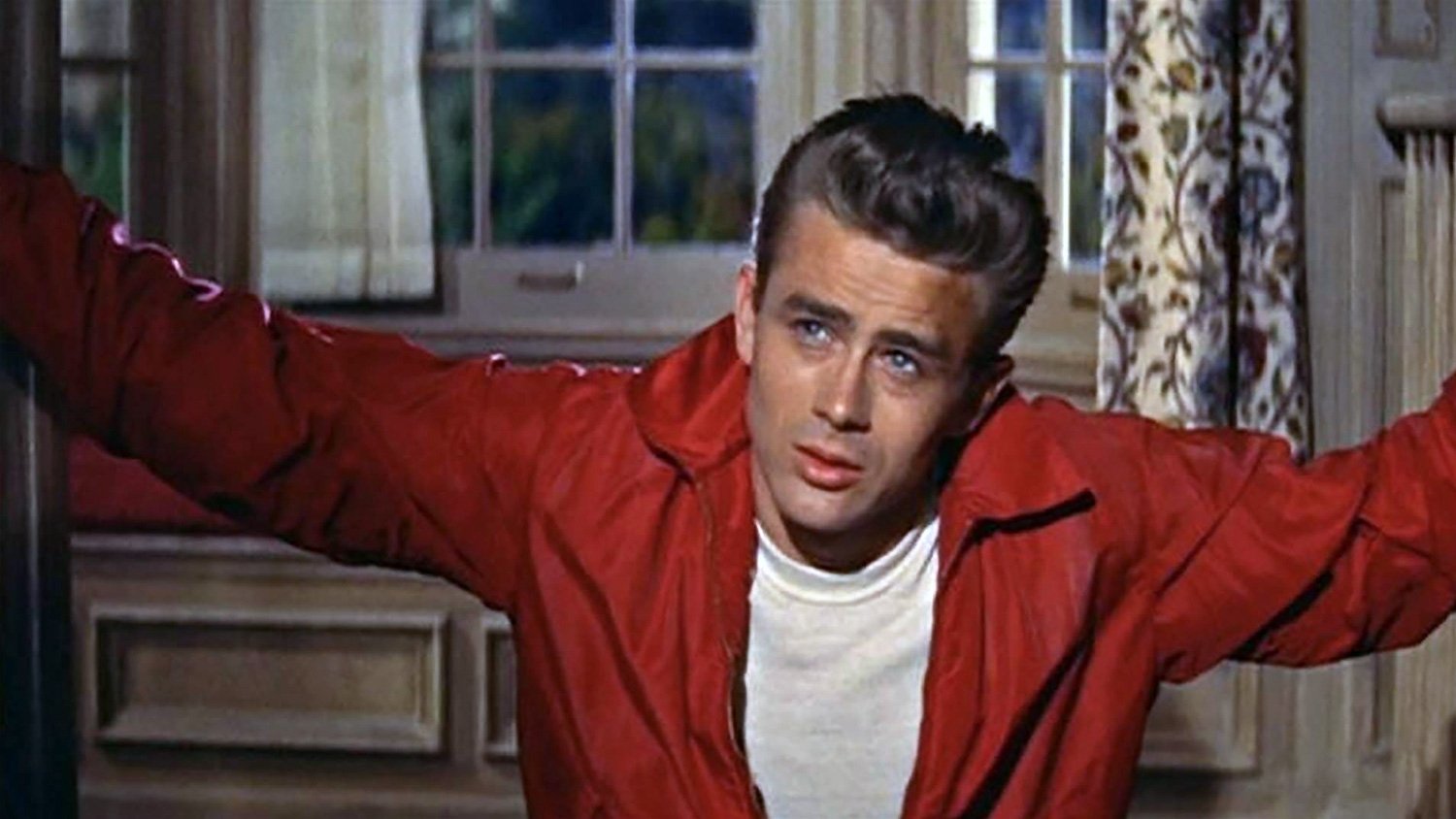
In the Hollywood history, few figures embody the tragic romance of fleeting brilliance quite like James Dean. His life spanned a mere twenty-four years, yet his influence continues to reverberate through popular culture nearly seven decades after his death. The paradox of Dean's legacy is striking: by perishing at the zenith of his youthful promise, he achieved a form of immortality that decades of continued work might never have secured. Three films, released within the span of eighteen months, were sufficient to transform a farm boy from Indiana into the eternal symbol of adolescent rebellion.
James Byron Dean was born on 8 February 1931 in Marion, Indiana, to a dental technician father and a mother who would die of cancer when James was only nine years old. This early trauma sent the boy to live with his aunt and uncle on their Quaker farm in Fairmount, Indiana, where he developed a close bond with his Uncle Marcus, who would later inspire the character of Cal Trask in East of Eden. Dean's rural upbringing was marked by isolation and introspection; he was a mediocre student but showed early promise in sports and, significantly, in performance. After graduating from high school, he moved to California to live with his father, then to Santa Monica College and UCLA to study law, before transferring to the UCLA School of Theatre Arts. His early acting career consisted of television commercials and minor roles in programmes like Kraft Television Theatre and The United States Steel Hour. Determined to refine his craft, he moved to New York City in 1951, where he studied at the Actors Studio under Lee Strasberg, immersing himself in Method acting—a technique that would define his screen presence. His stage work in productions such as The Immoralist brought him to the attention of Hollywood, and in 1954, director Elia Kazan cast him in his first major cinematic role.
East of Eden (1955), directed by Elia Kazan and based upon John Steinbeck's novel, provided Dean with his breakthrough performance. Set in California during the First World War, the film depicts the troubled relationship between ranch owner Adam Trask and his son Cal, a young man consumed by jealousy towards his favoured brother Aron and desperate to earn his father's love. Dean's portrayal of Cal—a character whose neuroticism and emotional volatility mirrored the misfit youth of 1950s America—demonstrated his mastery of Method acting. Kazan deliberately encouraged Dean's immersive approach, even making him genuinely intoxicated for the shooting of one scene. Whilst some critics noted that Dean's mannerisms occasionally verged on overacting, particularly in the film's opening passages, the performance ultimately delivered profound emotional resonance. The film itself, despite simplifying Steinbeck's complex narrative and employing occasionally artificial visual techniques, remains a powerful exploration of familial dysfunction and the darker aspects of American society, including the anti-German hysteria that swept the United States following its entry into the Great War.
If East of Eden introduced Dean to the world, Rebel Without a Cause (1955) cemented his status as the voice of a generation. Released mere weeks after his fatal automobile accident, Nicholas Ray's film captured the zeitgeist of 1950s America with remarkable precision. The narrative follows twenty-four hours in the lives of three troubled Los Angeles teenagers: Jim Stark (Dean), a sensitive young man suffocated by his emasculated father; Judy (Natalie Wood), a girl fleeing her father's inability to accept her emerging sexuality; and Plato (Sal Mineo), an effeminate, abandoned teenager who projects onto Jim the roles of friend, surrogate father, and unrequited romantic interest. Ray, drawing upon his own experiences with dysfunctional families and his understanding of homosexuality, crafted what many consider the first portrayal of a gay teenager in American cinema. The film's visual style was equally revolutionary—Warner Bros., impressed by Dean's rising stardom, allocated a substantial budget that Ray employed to create lush colour cinematography and utilise CinemaScope, a widescreen format previously reserved for musicals and epics. The famous "chicken run" scene became a potent metaphor for Cold War nuclear brinkmanship, whilst the film's exploration of the generation gap established a template that would dominate Hollywood cinema for decades.
Dean's final film, Giant (1956), directed by George Stevens, presents perhaps the most fascinating contradiction in his brief filmography. Based upon Edna Ferber's novel and spanning decades in the lives of a Texas ranching family, the film features Dean as Jett Rink, a ranch hand of modest origins who inherits a plot of land, discovers oil, and transforms into a wealthy antagonist. Unlike his previous roles, Dean here plays an older character—a man who ages from youth into middle age—and a clear villain, albeit one rendered sympathetic through poverty and unrequited love. The production was troubled; Dean's Method techniques clashed with Stevens's traditionalist approach, and the actor received only third billing behind Elizabeth Taylor and Rock Hudson. Indeed, Giant is arguably the most "un-James Dean" film in his oeuvre: a mainstream epic with melodramatic overtones that would later inspire American television soap operas, most notably Dallas. Yet Dean's final scene, in which Jett is morally defeated despite his vast wealth, remains profoundly affecting, and the film's anti-racist message—addressing prejudice against Mexican-American workers—demonstrates Stevens's progressive sensibilities.
Beyond his performances, Dean's visual iconography became inseparable from his cultural significance. The red jacket, white T-shirt, and blue jeans of Rebel Without a Cause; the Stetson hat and cigarette dangling from his lips; the brooding intensity captured in black-and-white publicity photographs—these elements constructed an image of rebellious masculinity that stood in deliberate opposition to the "proper" and "wholesome" values of post-war America. Dean represented a rupture with the previous generation's expectations of conformity and deference. Curiously, his rise coincided with the birth of rock'n'roll, and though the connection was largely coincidental—Elvis Presley's ascendancy paralleled Dean's own—the two phenomena became intertwined in the public imagination as twin harbingers of youthful revolution.
The phrase "Live fast, die young and be a good-looking corpse," often attributed to Dean, encapsulates both the myth and the uncomfortable reality of his legacy. The romanticisation of early death has obscured the genuine tragedy of a young man with extraordinary talent who never had the opportunity to mature as an artist. Dean was not merely a pretty face or a cultural accident; he was, as evidenced by his three performances, one of the most gifted actors of his generation. His death on 30 September 1955, when his Porsche 550 Spyder collided with another vehicle near Cholame, California, transformed him from rising star into eternal symbol.
The Baby Boomer generation, coming of age in the 1960s, embraced Dean as the iconic manifestation of their own rebellion—a "voice of their generation" who had articulated their discontents before they themselves could fully articulate them. This identification extended to other youthful martyrs of the decade: President John F. Kennedy, assassinated in 1963, and John Lennon, murdered in 1980, both became figures through whom subsequent generations projected their desires for authenticity and change cut short by violence.
Dean's death inaugurated a peculiar tradition in popular culture: the cult of the entertainer who perishes before their time. Marilyn Monroe, Janis Joplin, Jimi Hendrix, Jim Morrison, Bruce Lee, River Phoenix, and Heath Ledger—all died prematurely, their potential unrealised, their images preserved in perpetual youth. This phenomenon was not confined to the West; in Poland, actor Zbigniew Cybulski became known as the "Eastern James Dean," deliberately adopting Dean's mannerisms and screen presence. In an almost unbearable irony, Cybulski died in 1967 when he jumped from a moving train and struck his head—accidentally recreating the manner of Dean's own demise.
The shadow of early death fell not only upon Dean himself but also, with peculiar frequency, upon his collaborators. Sal Mineo, whose sensitive portrayal of Plato in Rebel Without a Cause earned him an Academy Award nomination, was murdered in 1976 during a robbery in West Hollywood. Natalie Wood, Dean's co-star in Rebel, drowned in mysterious circumstances in 1981, her death remaining one of Hollywood's most enduring unsolved mysteries. Rock Hudson, Dean's co-star in Giant, became the first major Hollywood star to succumb to AIDS-related complications in 1985, his death forcing public acknowledgment of the epidemic and further cementing the sense that Dean's films existed within a peculiar nexus of mortality.
James Dean's filmography consists of merely three feature films, yet his influence persists in ways that actors with dozens of credits have never achieved. The paradox remains: had Dean survived, had he aged into character roles and perhaps directorial endeavours, would he occupy the same pedestal in our collective imagination? Or did his death at twenty-four, preserving him forever as the beautiful, troubled youth, create the very conditions for his immortality? The question is unanswerable, but the evidence suggests that Dean understood something essential about the culture he inhabited. In his famous quotation, often misattributed but resonant nonetheless, he reportedly said, "Dream as if you'll live forever. Live as if you'll die today." He did both, and in doing so, achieved the immortality that only the briefest of lives could confer.
Blog in Croatian https://draxblog.com
Blog in English https://draxreview.wordpress.com/
InLeo blog https://inleo.io/@drax.leo
Substack https://draxster.substack.com
BTC donations: 1EWxiMiP6iiG9rger3NuUSd6HByaxQWafG
ETH donations: 0xB305F144323b99e6f8b1d66f5D7DE78B498C32A7