Fred Astaire and Ginger Rogers: The Golden Age of Hollywood Dance
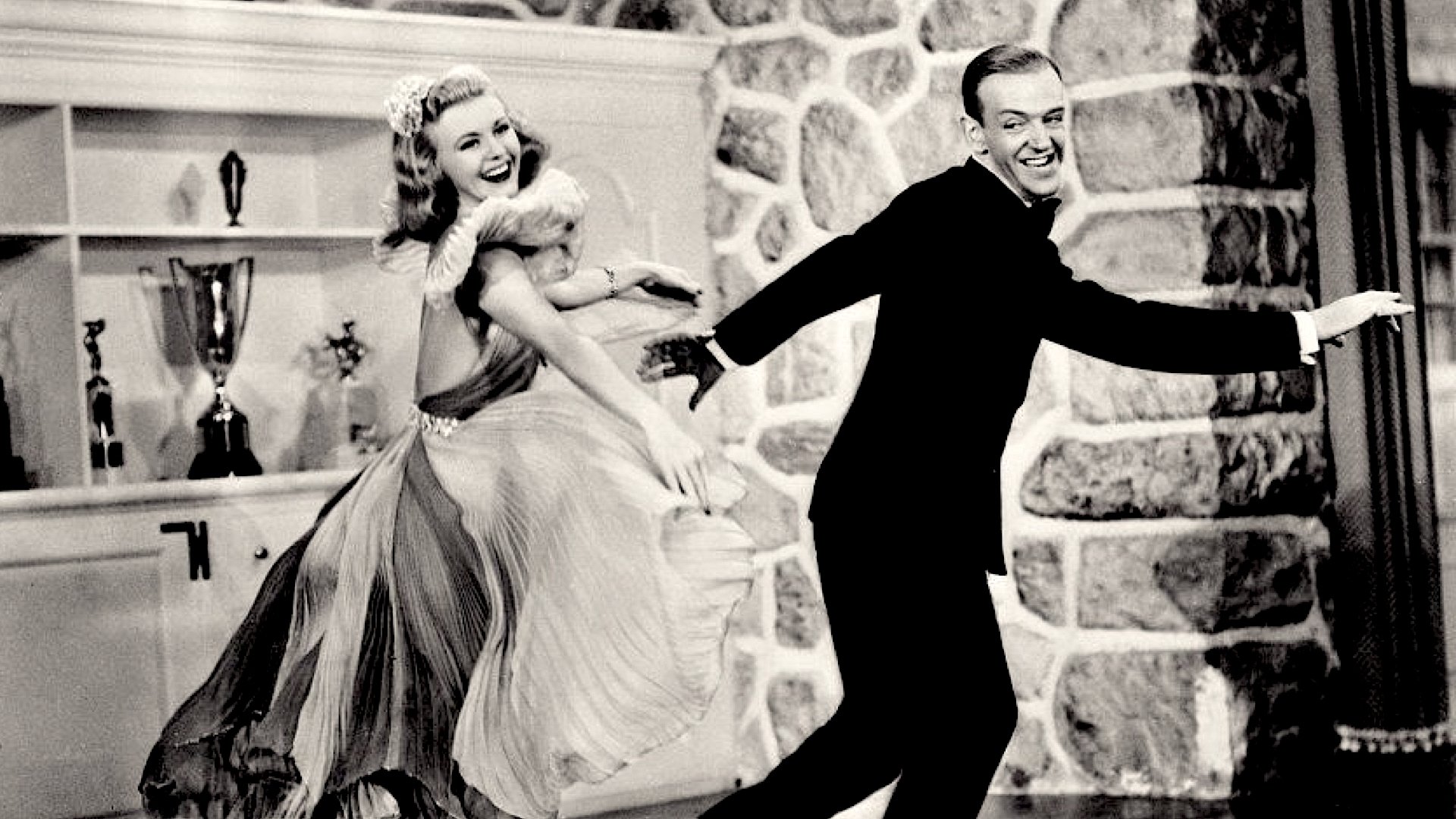
The history of cinema is graced by few partnerships as enduring and enchanting as that of Fred Astaire and Ginger Rogers. Together, they created a body of work that defined the Hollywood musical and established a standard of elegance, grace, and romance that remains unmatched nearly a century later. Their ten films together represent not merely a collaboration between two performers, but a alchemy that transformed the musical genre into an art form.
Fred Astaire: The Aristocrat of Dance
Fred Astaire was born Frederick Austerlitz in 1899 in Omaha, Nebraska. Alongside his sister Adele, he formed one of the most celebrated sibling dance acts in vaudeville history. The Astaire siblings conquered Broadway in the 1920s, with Fred developing a reputation as a dancer of extraordinary precision and innovation. When Adele retired from the stage in 1932 to marry Lord Charles Cavendish, Fred found himself at a crossroads. He made his way to Hollywood, where his initial screen test was famously dismissed with the notation: "Can't act. Slightly bald. Also dances."
Despite this inauspicious beginning, Astaire would revolutionise film dance. He brought to the screen a style that was at once effortless and technically demanding, creating the illusion that anyone might glide across a ballroom floor with such grace—provided they possessed his years of discipline and innate musicality. Astaire insisted on filming his dance numbers in full-body shots, rejecting the fashionable cutting techniques that would have disguised the effort behind his art. He wanted audiences to see the dance as he performed it, uninterrupted and complete.
Ginger Rogers: The All-American Girl
Virginia Katherine McMath was born in 1911 in Independence, Missouri, though she would spend her formative years in Texas. Taking her name from a cousin's failed pronunciation of "Virginia," Ginger Rogers began her career in vaudeville and Broadway, establishing herself as a singer, dancer, and comedienne of considerable talent. Unlike Astaire, who came from the refined world of Broadway theatre, Rogers had worked her way up through the more democratic circuits of American entertainment.
By the time she reached Hollywood, Rogers had developed a persona that combined glamour with accessibility—a quality that would prove essential to her partnership with Astaire. She was beautiful but approachable, talented but never intimidating. Rogers brought to their films a warmth and comic timing that grounded Astaire's ethereal elegance, creating a chemistry that felt both aspirational and attainable.
The Reality Behind the Romance
The on-screen romance between Astaire and Rogers was so convincing that generations of audiences assumed a parallel attachment in real life. The truth was considerably more complicated. Contrary to persistent rumours that they despised one another, Astaire and Rogers maintained a relationship of professional respect and genuine friendship, albeit one bounded by the constraints of their very different personalities.
Astaire was a perfectionist who approached his work with monk-like dedication, rehearsing endlessly until every step achieved mechanical precision. Rogers, no less committed to her craft, brought a more spontaneous energy to the set. She famously described how her shoes would fill with blood after days of shooting, such was the physical toll of matching Astaire's exacting standards. The legend that she "did everything he did, backwards and in high heels" contains more than a grain of truth—Rogers was not merely Astaire's partner but his equal in creating the illusion of effortless romance.
Their working relationship was tested by the inequalities of the studio system. Rogers was consistently paid less than Astaire, a fact that rankled her and nearly ended their partnership after Shall We Dance in 1937. Nevertheless, when they reunited a decade later for The Barkleys of Broadway, both expressed genuine delight at working together again. If theirs was not a love story in life, it was unquestionably one of the great artistic romances in cinema history.
The Films: A Complete Retrospective
Flying Down to Rio (1933)
The partnership began almost by accident. Flying Down to Rio, directed by Thornton Freeland, was not conceived as an Astaire-Rogers vehicle. They were supporting players, with Astaire as Fred Ayres, a comic relief character, and Rogers as Honey Hales, the band's vocalist. The nominal stars were Gene Raymond and Dolores del Rio, whose romantic entanglements in Miami and Rio de Janeiro provided the film's nominal plot.
Yet when Astaire and Rogers took to the floor for the "Carioca" number, something magical occurred. Their performance "easily outshines everything else in the film," transforming what might have been a routine musical into a harbinger of cinematic history. The film benefited from being produced before the strict enforcement of the MPAA Production Code, featuring saucy double entendres and a level of sexual playfulness that would soon disappear from American cinema. The spectacular finale, featuring showgirls dancing on aeroplanes in flight, established the escapist extravagance that would become the duo's trademark.
The Gay Divorcee (1934)
Mark Sandrich's The Gay Divorcee marked the first time Astaire and Rogers received top billing, and they justified the studio's confidence completely. Astaire reprised his Broadway role as Guy Holden, an American dancer in London who pursues the reluctant Mimi (Rogers) through a series of comic misunderstandings involving divorce proceedings and a professional co-respondent named Tonetti.
The film illustrates how little plot mattered in these productions. The script, adapted from a Cole Porter stage production, served merely as scaffolding for the musical numbers. "Night and Day," the only Porter composition retained from the Broadway original, features in a brilliantly staged sequence that demonstrated the pair's growing confidence before the camera. The seventeen-minute "Continental" number, which won the first Academy Award for Best Original Song, represents one of the longest dance sequences in musical history.
Contemporary viewers might wince at Guy's pursuit of Mimi, which borders on stalking, and at Erik Rhodes's ethnic caricature of an Italian gigolo—a performance so broad that it earned a ban in Mussolini's Italy. Yet the film's essential good nature and the undeniable chemistry of its stars carried it through.
Roberta (1935)
William A. Seiter's Roberta, the duo's third collaboration, demonstrates that even formidable talent cannot entirely redeem mediocre material. Based on a Jerome Kern Broadway musical, the film finds Astaire as Huck Haines, a bandleader stranded in Paris, and Rogers as his former sweetheart, now posing as "Countess Scharwenka."
The film suffers from structural problems. Astaire and Rogers are not the sole stars—they share billing with Irene Dunne, the "First Lady of Hollywood," whose romantic subplot with Randolph Scott consumes considerable screen time. The finale, combining musical numbers with a fashion show (featuring a young Lucille Ball among the models), fails to achieve the memorability of their previous films' climaxes.
The production history proved nearly as interesting as the film itself. RKO outbid MGM and Paramount for the rights, but MGM later purchased all copies of the 1935 version for its 1952 remake Lovely to Look At, rendering Roberta unavailable for decades. It remains among the most obscure of the Astaire-Rogers films, and perhaps deservedly so.
Top Hat (1935)
If Roberta represented a stumble, Top Hat marked the pinnacle of their collaboration. Mark Sandrich's film, with music by Irving Berlin, stands as "arguably the most successful among all collaborations between Fred Astaire and Ginger Rogers." Astaire plays Jerry Travers, an American dancer in London who falls for Dale Tremont (Rogers), a model who mistakenly believes him to be her best friend's husband.
The plot, "loosely based" on a Hungarian play, amounts to little more than a comedy of errors, but the execution is flawless. Berlin provided not one but five classic compositions: "No Strings (I'm Fancy Free)," "Isn't This a Lovely Day," "Cheek to Cheek," "Top Hat, White Tie and Tails," and "Il Piccolino." Each number is choreographed to perfection, with Astaire and Rogers pouring their life and soul into performances that left Rogers's shoes full of blood after each day's shooting.
The film's escapist fantasy reached its apotheosis in the Venetian Lido sequence, one of the most elaborate and spectacular studio sets of Classic Hollywood. Here was a world without Depression-era hardship, where beautiful people in beautiful clothes moved through beautiful spaces without a care. The only acknowledgement of reality comes when Dale mentions "living on the dole"—a single line that reminds viewers of the world outside the cinema.
Follow the Fleet (1936)
Astaire and Rogers returned to more working-class territory in Mark Sandrich's Follow the Fleet, based on Hubert Osborne's play Shore Leave. Astaire plays Bake Baker, a former professional dancer turned sailor who reconnects with his former partner Sherry Martin (Rogers) during shore leave in San Francisco.
The film represents something of an experiment. Astaire, who had established himself as the epitome of upper-class elegance, here plays an ordinary seaman frequenting low-class dance clubs. He also plays the piano on screen for the first time. Rogers, meanwhile, performs her first solo tap dance number, continuing her evolution as a dancer in her own right.
The romantic subplot, featuring Randolph Scott and Harriet Hilliard, actually dominates the narrative more than the Astaire-Rogers storyline—a curious structural choice that weakens the film's overall impact. Nevertheless, Irving Berlin's "Let's Face the Music and Dance" provides a brilliant centrepiece, performed against Art Deco splendour. The song's lyric—"There might be trouble ahead"—acquires retrospective poignancy given the fate of the battleships depicted, several of which would be sunk at Pearl Harbor five years later.
Swing Time (1936)
George Stevens's Swing Time is frequently hailed as the finest of the Astaire-Rogers collaborations, though it suffers from significant flaws. Astaire plays Lucky Garnett, a gambler who must earn $25,000 before he can marry his fiancée, only to fall for dance instructor Penny Carroll (Rogers) in New York.
The plot, burdened with clichés and implausibilities, serves primarily to delay the inevitable union of its stars. Yet the musical numbers, composed by Jerome Kern with lyrics by Dorothy Fields, represent some of the finest in cinema history. "The Way You Look Tonight" became Kern's biggest hit and an Oscar winner, later immortalised in the finale of Star Trek: Deep Space Nine.
The film contains Astaire's most celebrated and most controversial sequence: "Bojangles of Harlem," in which he dances with his own shadows. Intended as a tribute to Bill Robinson, the performance in blackface has rendered the film problematic for modern audiences, limiting its television appearances. Despite this, and despite a slow first act that delays the initial dance number by nearly thirty minutes, Swing Time remains essential viewing for anyone interested in the art of film dance.
Shall We Dance (1937)
Mark Sandrich's Shall We Dance was intended to conclude the Astaire-Rogers partnership, as Rogers's dissatisfaction with RKO's pay disparities reached breaking point. The film features Astaire as Peter P. Peters, an American ballet dancer posing as Russian "Petrov," who falls for tap dancer Linda Keene (Rogers) amid a flurry of rumours that they are secretly married.
George and Ira Gershwin provided the score, their last major collaboration before George's untimely death. The brothers produced several standards, including "They All Laughed," "Let's Call the Whole Thing Off," and "They Can't Take That Away from Me." The latter would become particularly significant, reprised in their final film together twelve years later.
The film's most memorable sequence features Astaire and Rogers dancing on roller skates, a feat of coordination that demonstrates their commitment to innovation. The ending attempts to blend jazz with classical ballet, an interesting experiment if not entirely successful. Despite these highlights, Shall We Dance represents one of the lesser works of legendary dance couple, with a weak script and mild humour saved only by the supporting performances of Edward Everett Horton and Eric Blore.
Carefree (1938)
By their eighth film in five years, RKO recognised the danger of audience fatigue. Mark Sandrich's Carefree accordingly shifts emphasis, functioning more as screwball comedy than musical. Astaire plays Dr. Tony Flagg, a psychotherapist treating Amanda Cooper (Rogers), his friend's fiancée, for her reluctance to marry.
Irving Berlin provided only four numbers, none achieving the popularity of his earlier contributions. The comedy, centred on psychoanalysis—a subject very much in vogue in 1930s Hollywood—allows Rogers to demonstrate her formidable comedic skills, particularly in scenes where Amanda behaves irrationally under hypnosis. Astaire, choreographing with Hermes Pan, is somewhat overshadowed by his co-star.
The film is remembered primarily for containing the first and only actual kiss Astaire and Rogers shared on screen, included to quash rumours of off-screen animosity and to compensate for the lack of kisses in previous films. This gambit failed to rescue the film commercially—Carefree became the first actual flop in their collaboration.
The Story of Vernon and Irene Castle (1939)
H. C. Potter's The Story of Vernon and Irene Castle represented a radical departure: a biopic rather than musical comedy. Based on Irene Castle's memoirs, the film traces the careers of the Castles, dance pioneers who popularised the Foxtrot and became icons of American popular culture before the Great War.
The first half resembles the duo's earlier successes, but the second takes a tragic turn as Vernon Castle joins the Royal Flying Corps. The film's tone, reflecting the worsening European situation, "almost serves as a propaganda film" for the coming conflict. The production was troubled—Irene Castle clashed with the studio over historical accuracy, costume restrictions imposed by the Production Code, and Rogers's refusal to dye her hair black or cut it short to match Castle's appearance.
The result disappointed audiences expecting the usual escapist fantasy. The film flopped, ending the Astaire-Rogers partnership for a decade.
The Barkleys of Broadway (1949)
When Astaire and Rogers reunited for Charles Walters's The Barkleys of Broadway, the results defied the usual pattern of disappointing comebacks. Produced by MGM in Technicolor—their first and only colour film together—the picture casts them as Josh and Dinah Barkley, a husband-and-wife musical comedy duo whose marriage strains under professional pressures.
The reunion was accidental. The film was written for Astaire and Judy Garland, but Garland's drug addiction rendered her unavailable. Rogers, delighted with the opportunity to again play with an old friend, found personal resonance in Dinah's struggle to be recognised as a serious actress—a mirror of her own Oscar-winning dramatic career in the intervening years.
Harry Warren and Ira Gershwin's score disappointed some critics when compared to the 1930s classics, though "They Can't Take That Away from Me" (reprised from Shall We Dance) remains sublime. The "Highland Fling" number, performed in kilts with heavy Scottish brogues, verges on the cringeworthy, yet the stars' commitment carries even weak material. The film succeeded at the box office, providing a fitting conclusion to one of cinema's greatest partnerships.
Legacy
Fred Astaire and Ginger Rogers made ten films together over sixteen years, yet their influence extends far beyond this catalogue. They established the template for the romantic musical comedy, demonstrating that dance could advance narrative and character rather than merely interrupting the story. Astaire's perfectionism and Rogers's warmth created a chemistry that feels as fresh today as it did in the 1930s.
Their films offered Depression-era audiences something precious: a vision of elegance, romance, and joy that transcended the hardships of daily life. In an age of uncertainty, Astaire and Rogers proved that beauty and art could still flourish, that love could still triumph, and that two people, moving together in perfect harmony, could create something greater than themselves. That they did so with such apparent effortlessness only testifies to the dedication behind the art. As Rogers herself might have observed, it is never as easy as they made it look.
Blog in Croatian https://draxblog.com
Blog in English https://draxreview.wordpress.com/
InLeo blog https://inleo.io/@drax.leo
BTC donations: 1EWxiMiP6iiG9rger3NuUSd6HByaxQWafG
ETH donations: 0xB305F144323b99e6f8b1d66f5D7DE78B498C32A7
Hello @drax, your post has been positively voted by @supportive.
Our account is a curation account that aims to reward quality content and supporting the community.
In addition, accounts that delegate to us may receive one daily vote on a post worth approximately 11x their delegated SP, along with nearly 7% APR paid daily.
You can visit our profile page to learn more about us.
Have a nice day.