Television Review: The Shield (Season 2, 2003)
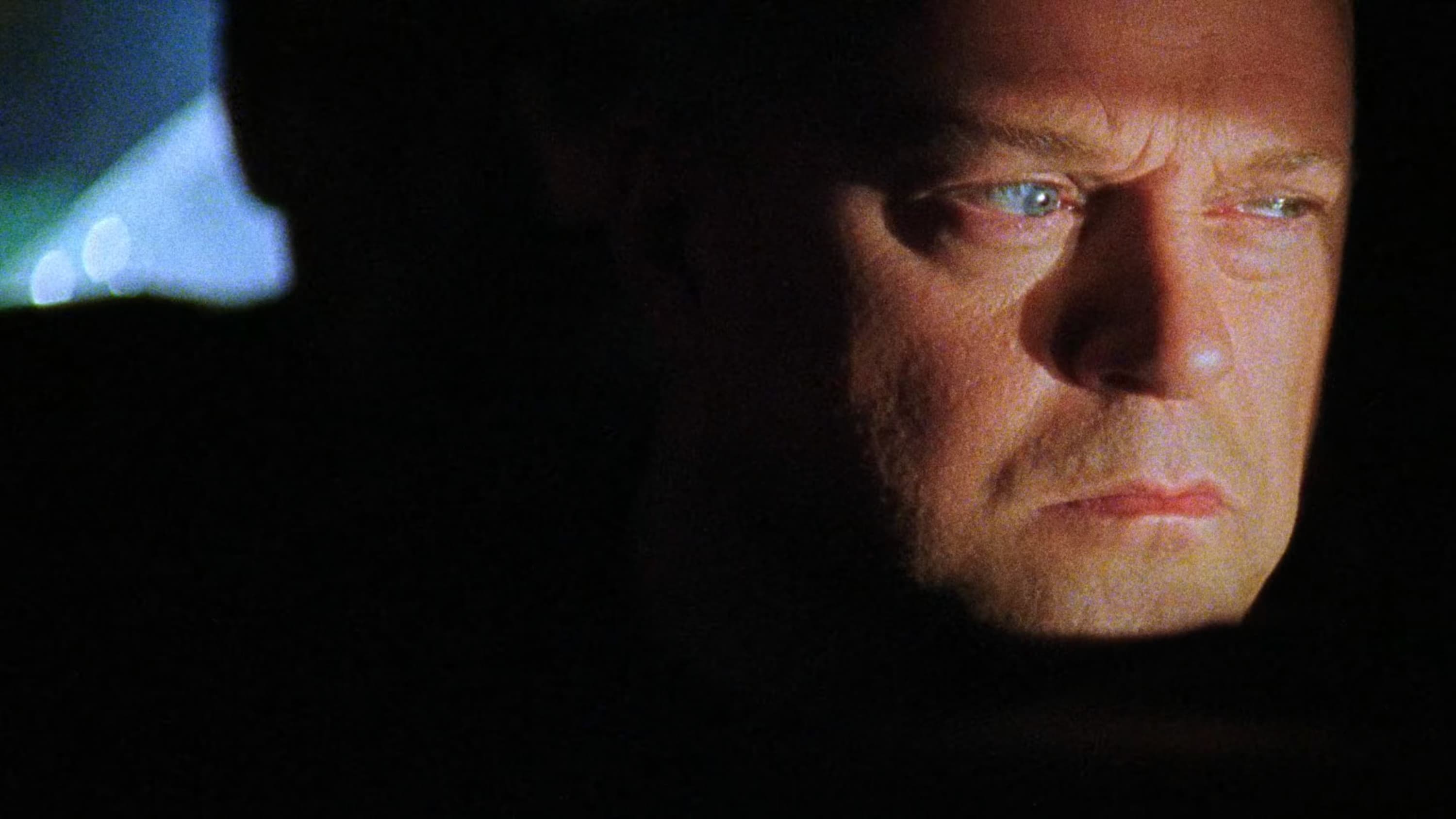
Shawn Ryan's groundbreaking police drama returned for its sophomore outing in January 2003 with considerable expectations weighing upon it. The first season had redefined televised crime drama through its unflinching portrayal of Detective Vic Mackey—an unapologetically corrupt officer whose murder of a fellow detective in the pilot established a moral baseline from which the series would only descend further. Season Two emerges as a work of considerable ambition that periodically struggles under the weight of its own narrative density, ultimately delivering a compelling yet uneven thirteen-episode arc that expands the show's moral universe whilst occasionally threatening to fracture its celebrated realism.
The season opens with The Quick Fix, which immediately establishes the series' commitment to continuity whilst introducing new threats. Five weeks after the events of the Season One finale, Vic Mackey finds himself in a characteristically paradoxical position: professionally ascendant following his victory over Assistant Chief Gilroy, yet personally devastated by Corinne's departure with their children. This dichotomy—public triumph married to private catastrophe—becomes the defining motif of the season. The episode introduces the Quintero brothers, Navarro and the genuinely terrifying Armadillo, the latter of whom employs the brutal practice of "necklacing" (burning victims with tyre necklaces) to establish dominance over Farmington's drug trade. This visceral depiction of violence rooted in apartheid-era South African methodology, demonstrates the show's commitment to situating its brutality within historical context.
What follows, however, in Dead Soldiers, illustrates the season's recurring structural vulnerability: narrative excess. Kurt Sutter's script attempts to juggle Armadillo's escalating war against the Strike Team, the execution of Vic's street informant T.O., Claudette's growing suspicion of Vic's corruption, Corinne's transformation from estranged wife to legal adversary, and a post-9/11 xenophobia subplot involving a murdered Syrian immigrant. This sheer concentration of seismic plot developments creates a narrative avalanche that risks overwhelming the audience as profoundly as it overwhelms Vic. John Badham's direction provides kinetic energy, yet the episode exemplifies a pattern wherein Season Two frequently sacrifices narrative cohesion for dramatic impact.
The mid-season episodes reveal both the series' strengths and its willingness to experiment with form. Partners demonstrates the show's capacity to function as a more conventional procedural through the introduction of Joe Clarke (Carl Weathers), Vic's morally compromised mentor whose presence illuminates Mackey's own trajectory toward becoming a bitter, isolated man who consoles himself with the belief that he 'did more good than bad.' Conversely, the Dutch Wagenbach subplot involving a severed arm and Melanie Lynskey's casting as a murderous accomplice feels "mechanically melodramatic" and undercut by premature revelation of the perpetrators.
Carte Blanche stands as the season's most architecturally sophisticated instalment, seamlessly interweaving a standalone jewellery store robbery investigation with the Strike Team's infiltration of the Armenian Mafia and Vic's crumbling domestic situation. The episode concludes with Vic alone in a seedy motel, "the once-powerful Vic Mackey isolated and broken," a final image that encapsulates the series' central tragedy. This structural elegance—where procedural elements serve character arcs rather than merely padding runtime—represents the season at its most accomplished.
The Armadillo Quintero storyline, whilst undeniably compelling, exposes the season's occasionally erratic pacing. Built up as a season-long antagonist, Armadillo meets his end in Scar Tissue (episode eight), a creative choice which represents narrative audacity that shatters expectations. Yet his premature dispatch—through a prison stabbing orchestrated by the Strike Team—leaves the remaining five episodes to pivot toward the Armenian money train heist and various personal crises. This structural gamble avoids predictability but creates a mid-season lull wherein episodes like Inferno function as "narrative maintenance" rather than propulsive storytelling.
The controversial Co-Pilot, positioned as the season's ninth episode, functions as a flashback to the Strike Team's formation fourteen months prior. Whilst providing valuable context regarding Vic's recruitment of Lem and Ronnie and his initial moral compromises—including the fateful decision to plant evidence that would eventually lead to Terry Crowley's murder—the episode fundamentally contradicted the series' established linear structure. The compression of multiple origin stories into forty-five minutes creates "continuity issues" that undermine the meticulously constructed realism. Nevertheless, the episode's portrayal of Vic forced to listen while Connie Reisler is brutalised by a suspect—unable to intervene lest he compromise his sting operation—ranks among the series' most heartbreaking sequences, illustrating the psychological cost of his methodology.
Season Two excels in its exploration of the Strike Team's internal schisms. Vic's leadership faces unprecedented challenges from Shane Vendrell, whose reckless disregard for strategy" contrasts sharply with Lemansky's position as the unit's conscience. The arrival of Tavon Garris (Brian White) in Coyotes introduces a figure of inherent integrity whose presence fundamentally alters the team's toxic chemistry. The choice to make Mackey not the sole anti-hero, but the leader of a group of corrupt policemen, each occupying a different position on the scale of actual morality transforms the Strike Team from a simple vehicle for Vic's machinations into a crucible for internal conflict and drama.
The personal cost of Vic's corruption receives devastating treatment throughout. His marriage to Corinne deteriorates through a series of increasingly catastrophic confrontations, culminating in Breakpoint with a domestic violence arrest after he breaks into the family home, triggering a tragic accident that scalds his daughter. Meanwhile, his relationship with informant Connie Reisler reaches its tragic conclusion in Homewrecker, where she dies performing heroic deed at the very moment her life was improving—a death that feels especially cruel and exemplifies the show's refusal of Hollywood's comforting narrative of poetic justice.
The season finale, Dominoes Falling, delivers the money train heist with taut efficiency whilst suffering from structural conventionality. The Strike Team's acquisition of an almost ludicrous pile of cas" concludes with expressions not of elation but dread—"the dawning realisation that such wealth brings complications far exceeding their capacity to manage. Yet he episode's adherence to twentieth-century American broadcast conventions is disappointing, with partial resolutions and manufactured cliffhangers that feel disappointingly safe for a series that had previously challenged television's dramatic boundaries.
Throughout the season, the precinct's supporting players receive variable treatment. Claudette Wyms' evolution from wary colleague to formidable adversary proves compelling, particularly her deductive brilliance in connecting the dots of Vic's criminal enterprise. Dutch Wagenbach's crisis of confidence following the Lindhoff murders generates affecting material, particularly his brief surrender to Vic's suggestion of planting evidence before reclaiming his moral compass. Conversely, Danny Sofer and Julien Lowe's subplots—including the latter's eventual outing and harassment—occasionally feel undercooked and mechanically inserted to satisfy network mandates regarding minority representation.
The direction across the season maintains the series' visual intensity. Scott Brazil, who helmed both the premiere and finale, balances visceral action with moments of quiet devastation. Paris Barclay's work on Scar Tissue achieves a "season-finale gravitas" through taut efficiency and a concluding music montage that reinforces thematic weight. The show's commitment to visual storytelling—particularly the near-darkness of the shelter massacre discovery in Homewrecker—forces audiences to "process the horror gradually, making it infinitely more disturbing than gratuitous gore ever could."
Season Two of The Shield represents a programme operating at the outer limits of its narrative capacity, occasionally faltering under the burden of too many converging crises but maintaining sufficient velocity to overcome its structural weaknesses. The season expands the moral universe beyond Vic's individual corruption to examine institutional rot, systemic racism, and the impossibility of ethical policing within an inherently compromised system. Whilst individual episodes suffer from density issues and certain subplots feel underdeveloped, the cumulative effect creates a compelling portrait of entropy—professional, personal, and moral. There is not a decline in quality from the groundbreaking first season but rather a series testing the boundaries of sustainable serialization, occasionally stumbling but never collapsing, propelled by Michael Chiklis's ferocious performance and Ryan's unflinching vision. By season's end, the dominoes have indeed fallen—but for Vic Mackey, the game continues, each victory proving more pyrrhic than the last, each escape merely deferring an inevitable reckoning that grows ever closer.
(NOTE: All reviews can be accesed via this link.)
Blog in Croatian https://draxblog.com
Blog in English https://draxreview.wordpress.com/
InLeo blog https://inleo.io/@drax.leo
BTC donations: 1EWxiMiP6iiG9rger3NuUSd6HByaxQWafG
ETH donations: 0xB305F144323b99e6f8b1d66f5D7DE78B498C32A7
Nice meeting you, I invite you to take part in this contest https://steemit.com/steem4nigeria/@ruthjoe/sc-s31-w4-movie-magic-or-movies-that-challenge-society
I am officially adding you in my list of invitees.