Television Review: The Shield (Season 3, 2004)
By the time The Shield commenced its third season in March 2004, the series had already established itself as television's most uncompromising examination of police corruption. Following the visceral shock of Detective Vic Mackey's murder of Terry Crowley in the pilot and the spectacular audacity of the Armenian "Money Train" heist that concluded Season Two, creator Shawn Ryan faced a considerable narrative challenge. Rather than attempting to replicate these seismic moments, Season Three adopts a more deliberate, consequence-driven architecture. The result is a season defined by the slow, corrosive unravelling of its central characters—a descent into paranoia, betrayal, and moral bankruptcy that proves equally devastating, if occasionally uneven in execution.
The season's governing premise is elegantly simple: the Strike Team's theft of millions from the Armenian mob has solved nothing. As the premiere Playing Tight establishes with meticulous patience, possessing illicit wealth and successfully integrating it into one's life are vastly different propositions. The stolen fortune becomes less a treasure than a toxic burden—a "time bomb" that transforms every aspect of the team's existence into calculated risk. This premise allows the season to function as an extended meditation on the cost of corruption, wherein Mackey and his cohorts spend fifteen episodes trapped in financial paralysis, unable to spend their loot without attracting federal scrutiny whilst simultaneously attracting the vengeful attention of the very criminals they robbed.
Season Three's most profound achievement lies in its systematic dismantling of the Strike Team's foundational loyalty. Where previous seasons presented Vic, Shane, Lem, and Ronnie as a cohesive unit bound by mutual criminality, this year exposes the fissures that greed and pressure inevitably create. The arrival of Shane's fiancée Mara Sewell in Blood and Water initiates a domestic wedge between Vic and his erstwhile protégé. Shane's impulsive decision to purchase Mara a luxury vehicle directly contradicts Vic's explicit orders to maintain a low profile, signalling his prioritisation of personal gratification over collective security. This tension erupts catastrophically in Streaks and Tips, where Shane's racial provocation of Officer Tavon Garris culminates in a savage brawl that leaves Tavon hospitalised and Mara's intervention—with a clothes iron to Tavon's skull—threatening career-ending consequences for all involved.
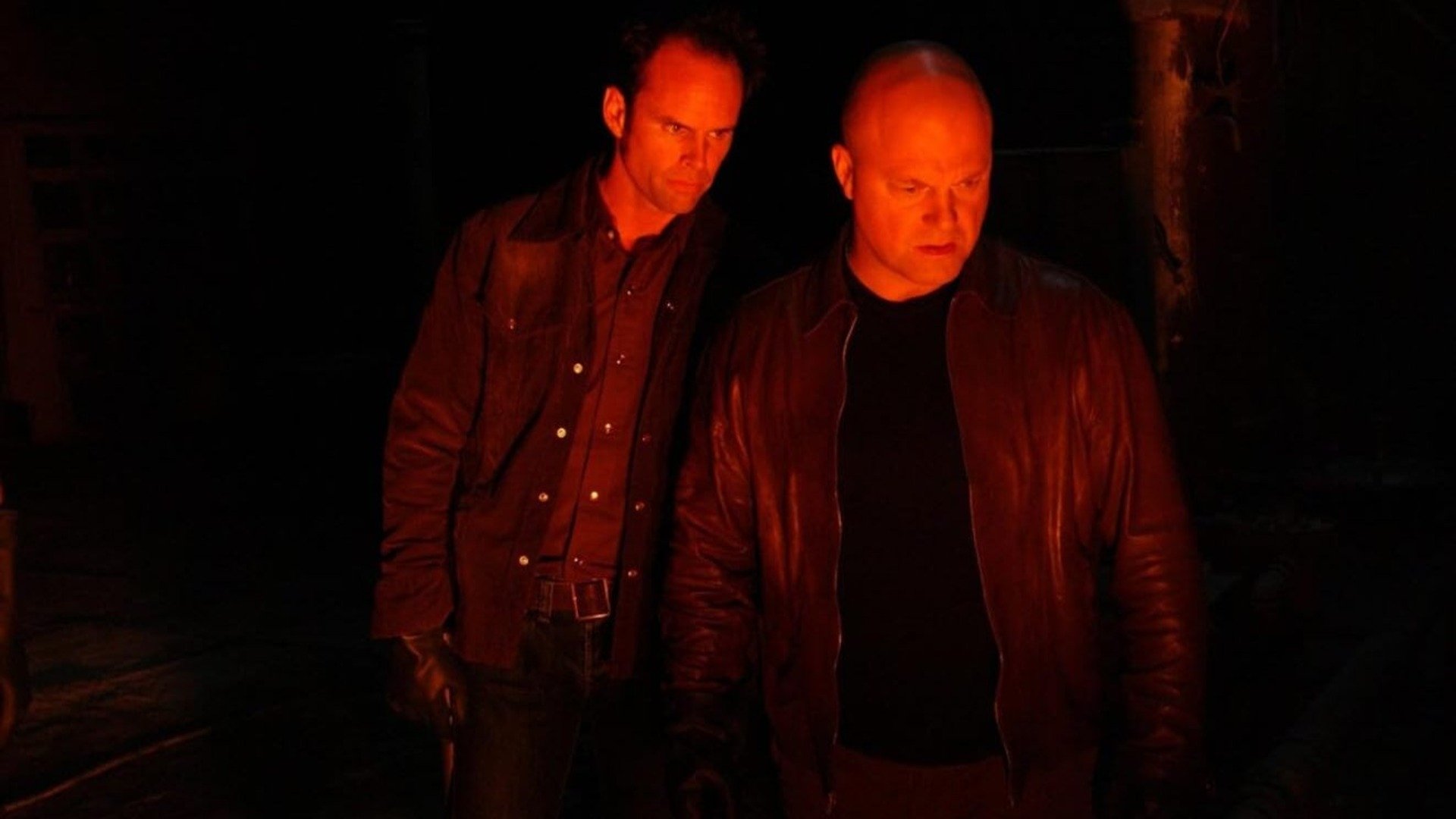
The season's emotional fulcrum, however, is Lem's moral crisis. Initially conceived as a supporting player, Curtis "Lem" Lemansky emerges through Kenny Johnson's understated performance as the team's wounded conscience. The death of innocent Sosi—a young Armenian girl who bleeds out in Lem's arms during All In—serves as his breaking point. His subsequent attempt to incinerate the "blood money" in an industrial furnace represents the season's most wrenching moment: a desperate act of purgation that his colleagues interpret as betrayal. The confrontation that follows, wherein Shane briefly draws his weapon upon his own brother-in-arms, transforms the Strike Team from allies into wary, resentful captives of shared guilt. By the finale Open Tilt, Lem's exile is complete; he remains physically present but spiritually severed from the unit.
While the Strike Team grapples with external threats, Captain David Aceveda undergoes the season's most radical character transformation. The episode Mum delivers arguably the series' most narratively consequential moment since the pilot: Aceveda's brutal sexual assault by gang member Juan Lozano. This violation—meticulously crafted to be emasculating, humiliating, and captured on mobile phone video—irrevocably alters the Captain's trajectory. Benito Martinez's performance across subsequent episodes charts a devastating psychological journey from traumatised victim to something approaching hardened avenger.
What Power Is… marks the culmination of this metamorphosis. When presented opportunity for vengeance, Aceveda demonstrates remarkable restraint, weaponising institutional power rather than physical violence. He informs Lozano that he has studied his life and knows precisely how to dismantle it through bureaucratic means—a chilling assertion of intellectual superiority that transforms the Captain from bureaucratic antagonist to formidable operator. Yet this regeneration is crosscut with subtle corrosion; by Open Tilt, his removal of a wedding ring and ambiguous encounter with a street prostitute suggest that the Barn's moral contamination spares no one, not even its ostensible authority figures.
Season Three's commitment to serialised storytelling yields mixed results. The early episodes demonstrate sophisticated patience, particularly Playing Tight's methodical table-setting and Bottom Bitch's uncomfortable examination of Vic's corrupted protective instincts. The latter features one of the most shocking and narratively seismic moments in the series' early run—Vic forcing a streetwalker to perform fellatio on his service weapon—a scene that embodies the show's willingness to transgress even viewer sympathies established with its antihero protagonist.
However, the season suffers from pronounced narrative congestion in its middle section. Posse Up attempts to service too many disparate threads—officer Tommy Hisk's family murder, Dutch's "Cuddling Rapist" investigation, and Vic's illicit safe-cracking operation—resulting in diluted dramatic impact. Similarly, Riceburner and Strays function as "filler" of the most expendable variety; the former's hunt for Korean gangster Charlie Kim reduces complex ethnic politics to mechanical procedural, whilst the latter's infamous concluding scene—Dutch's unconscious strangulation of a stray cat—feels manufactured rather than earned, "a cheap trick rather than a meaningful escalation" of the series' moral themes.
The season partially recovers with the concluding trilogy. Fire in the Hole re-establishes the Armenian threat as existential rather than merely inconvenient, whilst All In and Open Tilt deliver the inevitable reckonings. Yet even here, the finale lacks the transformative electricity of its predecessors. Where Season Two concluded with the heist, Open Tilt offers only the grim, obligatory sigh of exhaustion—a pyrrhic victory that resolves immediate threats whilst arranging inevitable future collapse.
Season Three distinguishes itself through unexpected cultural specificity. Safe integrates the narcocorrido—ballads chronicling criminal exploits—into its central mystery, becoming reportedly the first major American drama to do so. This plotline captures a pre-streaming era of grassroots music distribution whilst embedding the narrative in specific Los Angeles subcultures. Similarly, Slipknot explores accelerating demographic change and ethnic tension through a manufactured hate crime that threatens to ignite racial warfare, grounding its fiction in the city's historical memory of the Watts riots.
The season maintains its post-9/11, mid-Iraq War disillusionment through carefully layered details. Dutch's inability to extradite the mythologised assassin Margos Dezerian from Greece subtly reflects shifting global geopolitics and rising anti-American sentiment. Meanwhile, the Strike Team's tactics—improvisational, brute-force, disastrously counterproductive when confronting the professionally ruthless Armenian mob—suggest an implicit critique of vigilante unilateralism.
Season Three of The Shield represents a necessary evolution for a series that had already peaked in pure shock value. By trading visceral spectacle for patient psychological unravelling, Ryan and his writers—particularly Kurt Sutter, Glen Mazzara, and Scott Rosenbaum—demonstrate confidence in their accumulated world-building. The season's greatest strength is its understanding that consequences, properly explored, generate tension equal to any heist or murder.
Yet this sophistication comes at the cost of consistency. The narrative's middle sag, populated by forgettable filler episodes and undercooked procedural subplots, prevents the season from achieving the sustained brilliance of its opening and closing movements. Furthermore, the finale's comparative anticlimax—whilst thematically appropriate in its exhaustion—denies viewers the cathartic release that structured previous seasons.
Ultimately, Season Three serves as essential, if occasionally flawed, transitional architecture. It destroys the Strike Team as a functioning unit, transforms Aceveda from bureaucratic nuisance to damaged antagonist, and establishes that Mackey's criminality has metastasised beyond his capacity to control it. The Armenian money, mostly reduced to ash by season's end, nevertheless accomplished its narrative purpose: it revealed that these men were never truly partners, only accomplices awaiting the appropriate pressure to fracture. In this brutal illumination of compromised loyalty and corruption's inevitable entropy, Season Three secures its place as the series' most thematically coherent, if narratively uneven, achievement.
(NOTE: All reviews can be accesed via this link.)
Blog in Croatian https://draxblog.com
Blog in English https://draxreview.wordpress.com/
InLeo blog https://inleo.io/@drax.leo
BTC donations: 1EWxiMiP6iiG9rger3NuUSd6HByaxQWafG
ETH donations: 0xB305F144323b99e6f8b1d66f5D7DE78B498C32A7