Television Review: The Wire (Season 1, 2002)
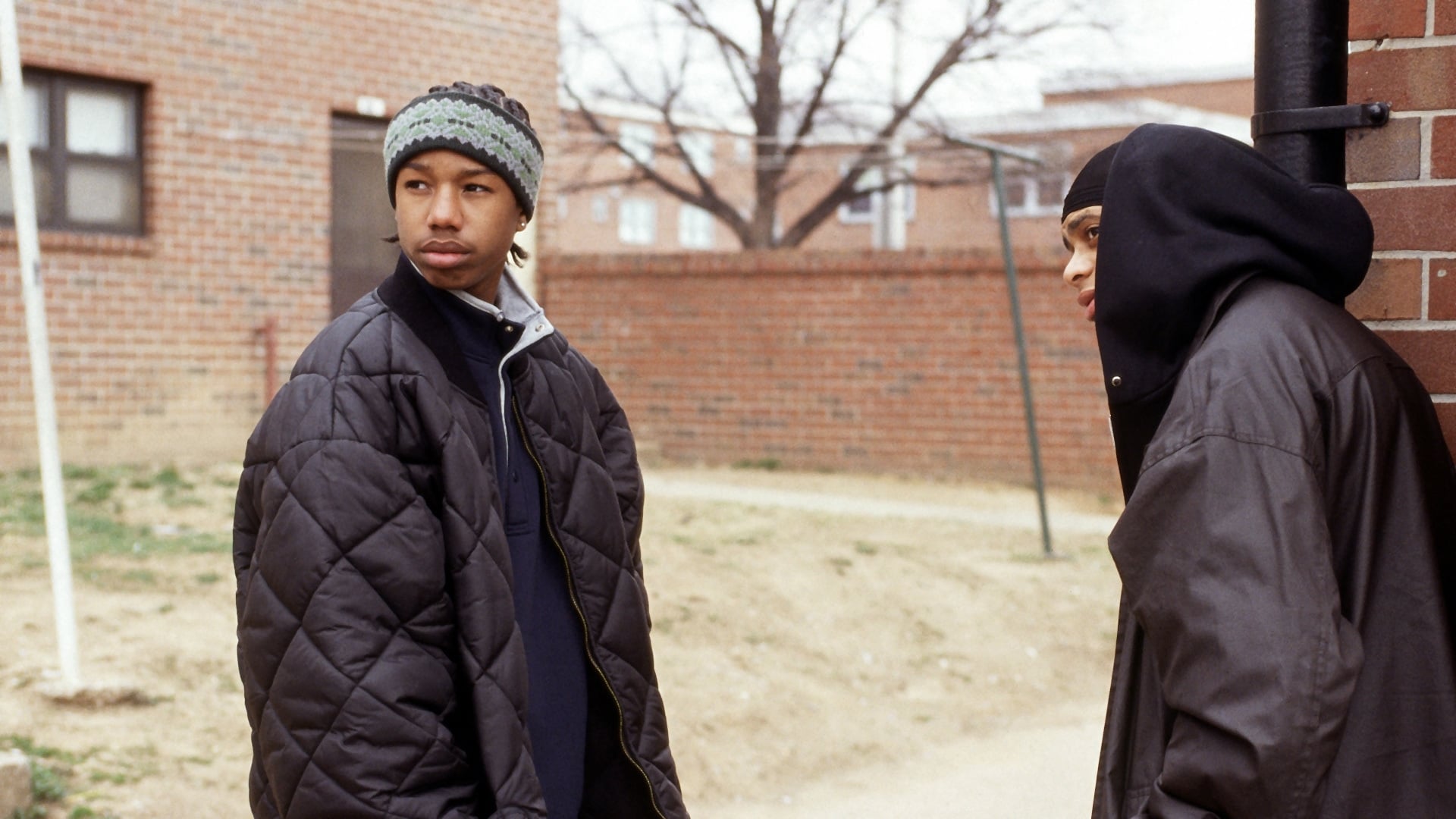
When HBO first unleashed David Simon’s The Wire upon an unsuspecting television landscape in 2002, it represented something unprecedented: a television drama that functioned not as episodic entertainment, but as a sustained, novelistic autopsy of an American city. Over the course of thirteen episodes, Season One constructs an intricate narrative architecture that eviscerates the conventions of the police procedural, refusing the tidy catharses of CSI or Law & Order in favour of something far more unsettling: systemic truth. This is not drama designed to comfort viewers, but to confront them with the grinding, often futile reality of institutional life in post-industrial Baltimore.
The season’s audacious scope is established immediately in The Target, which critics have rightfully lauded as one of television’s most assured pilot episodes. Where lesser series might bombard viewers with exposition, Simon – drawing upon his pedigree as a Baltimore homicide journalist and his earlier collaboration on Homicide: Life on the Street – employs what might be termed a "cold plunge" methodology. We are immersed without warning into the quotidian violence of West Baltimore, the bureaucratic inertia of the Police Department, and the iron-fisted bureaucracies of both the police establishment and the Barksdale Organisation. The effect is deliberately disorientating yet riveting; we learn the rules of the game through the accumulation of detail: the coded language of the street corner and the precise mechanics of witness intimidation. By episode’s end, when the witness William Gant is gunned down on the pavement, we understand precisely how deep the rot extends. It is a masterclass in narrative distancing that earns its plaudits as bedrock-laying television.
The season’s central tension emerges from the collision between two organisational hierarchies, each paralysed by its own dysfunction. The police investigation, led by Lieutenant Daniels, operates not as an efficient crime-fighting machine but as a manifestation of institutional emasculation. As depicted in The Detail and The Buys, the task force is consigned to a water-stained basement, manned by a mottled assortment of incompetents, political liabilities, and genuine talents such as the perpetually sidelined Lester Freamon. The episode The Pager – notably the first written by Simon’s former police collaborator Ed Burns – exemplifies both the series’ brilliance and its occasional unevenness. Burns’ relative inexperience as a teleplay writer results in clunky didacticism, particularly in scenes of heavy-handed social commentary. Yet his presence imbues the precinct with an unimpeachable authenticity; his triumphant handling of Prez’s cerebral redemption through code-breaking demonstrates that non-combatants possess their own forms of intelligence worthy of narrative attention.
Against this institutional frailty, Simon juxtaposes the ruthless efficiency of the Barksdale syndicate. Avon and Stringer Bell operate not as chaotic thugs, but as corporate executives of narcotics, complete with middle-management structures and quarterly reviews. The famous "McNugget scene" – originally scripted for Homicide: Life on the Street years earlier – becomes a startling emblem of this duality, as street-level operatives debate capitalist theory whilst peddling poison. D’Angelo Barksdale’s chess lesson to the corner boys in The Buys provides the season’s most devastating metaphor: the pawns are disposable, the king may move only one square at a time, and the game itself is fixed against those who labour at the bottom. It is a moment of such thematic density that it transcends mere character development to become the show’s animating philosophy.
The season progresses with a narrative momentum that is glacial yet inexorable – precisely the point. Old Cases and One Arrest demonstrate Simon’s refusal of Hollywood velocity. The famed "F-word" scene between McNulty and Bunk demonstrates both the series’ commitment to verisimilitude and its occasional tendency toward exhibitionistic realism. As critics note, the relentless profanity rapidly curdles from authentic to theatrical, momentarily disrupting the documentary-like fabric the show labours to construct. Similarly, revelations regarding Deirdre Kresson’s murder expose the gulf between institutional procedure and street reality: the detectives stumble toward truth whilst D’Angelo confesses it concurrently, highlighting how information asymmetries doom both investigation and justice.
The introduction of Omar Little in The Buys marks a pivotal evolution, though his fullest flowering comes later. Michael K. Williams’ portrayal of the stick-up artist with a moral code – or rather, a code distinct from both police and criminal hierarchies – provides the season’s most charismatic anti-hero. Yet Omar is never allowed to devolve into romantic mythologising. By the time we reach Game Day and The Cost, Omar’s invulnerability has been punctured by chance wounds and the murder of his lover Brandon. He remains a player, but merely one piece on a board he does not control.
The season’s structural intelligence reaches its apex in the final quarter. The Cost – rated by critics as among the season’s strongest episodes – refuses the catharsis of traditional procedurals. The botched sting operation that leaves Kima Greggs critically wounded and Orlando Blocker dead operates with Hitchcockian dread precisely because the audience comprehends the inevitability of failure within this particular system. It is not suspense that drives the narrative, but tragic inevitability. When Wallace, the sensitive corner boy who merely sought escape, begs for his life before his childhood companions Bodie and Poot in Cleaning Up, it represents perhaps the season’s most traumatising moment. His murder is not melodramatic but mundanely horrific – the "game" consuming its most vulnerable adherents not through grand conspiracy, but through banal expediency.
The finale, Sentencing, resolves the season with appropriately bitter irony. Avon’s incarceration is achieved, but through means so morally compromised and systemically warped that victory proves indistinguishable from defeat. D’Angelo’s recantation – crushed by familial obligation and the threat of extrajudicial violence – and Wee-Bay’s false confessions demonstrate how the machinery of justice incentivises deception over truth. McNulty’s exile to the Marine Unit and Daniels’ stalled career path reveal that in Simon’s Baltimore, competence and integrity are professional liabilities. Only through the rare muted triumphs – Freamon’s return to Homicide, Herc’s unexpected maturation – does the series preserve a sliver of hope against the encroaching nihilism.
What distinguishes Season One from merely "gritty" crime dramas is its sophisticated sociology. The show operates as what Simon termed a "story about the American city," examining how bureaucracies like the police department replicate the pathologies they purport to combat. From Rawls’ creative statistics to Burrell’s political machinations, from Daniels’ pragmatic fabrications to Prez’s violent ineptitude, we witness an institution that functions not through shared purpose but through accumulated compromises. The Wire itself – the surveillance technology giving the season its title – becomes metaphor: a means of listening that rarely translates into understanding, let alone change.
Over thirteen episodes, the season sustains a cumulative power rare in television storytelling. Individual episodes vary in execution – experimental scripts by Ed Burns or Joy Lusco lack the narrative economy of Simon’s finest hours, and certain directorial choices (such as the gratuitous sensuality of Old Cases’ conclusion) momentarily betray the series’ sober mission. Yet taken as a whole, Season One establishes the template for what television might achieve when freed from the constraints of episodic closure. It demands patience, rewards attention, and refuses comfort. If the mark of genuine art is its capacity to alter our perception of the world we inhabit, then The Wire‘s first season succeeds magnificently.
(NOTE: All reviews can be accesed via this link.)
Blog in Croatian https://draxblog.com
Blog in English https://draxreview.wordpress.com/
InLeo blog https://inleo.io/@drax.leo
BTC donations: 1EWxiMiP6iiG9rger3NuUSd6HByaxQWafG
ETH donations: 0xB305F144323b99e6f8b1d66f5D7DE78B498C32A7