Television Review: The Wire (Season 2, 2003)
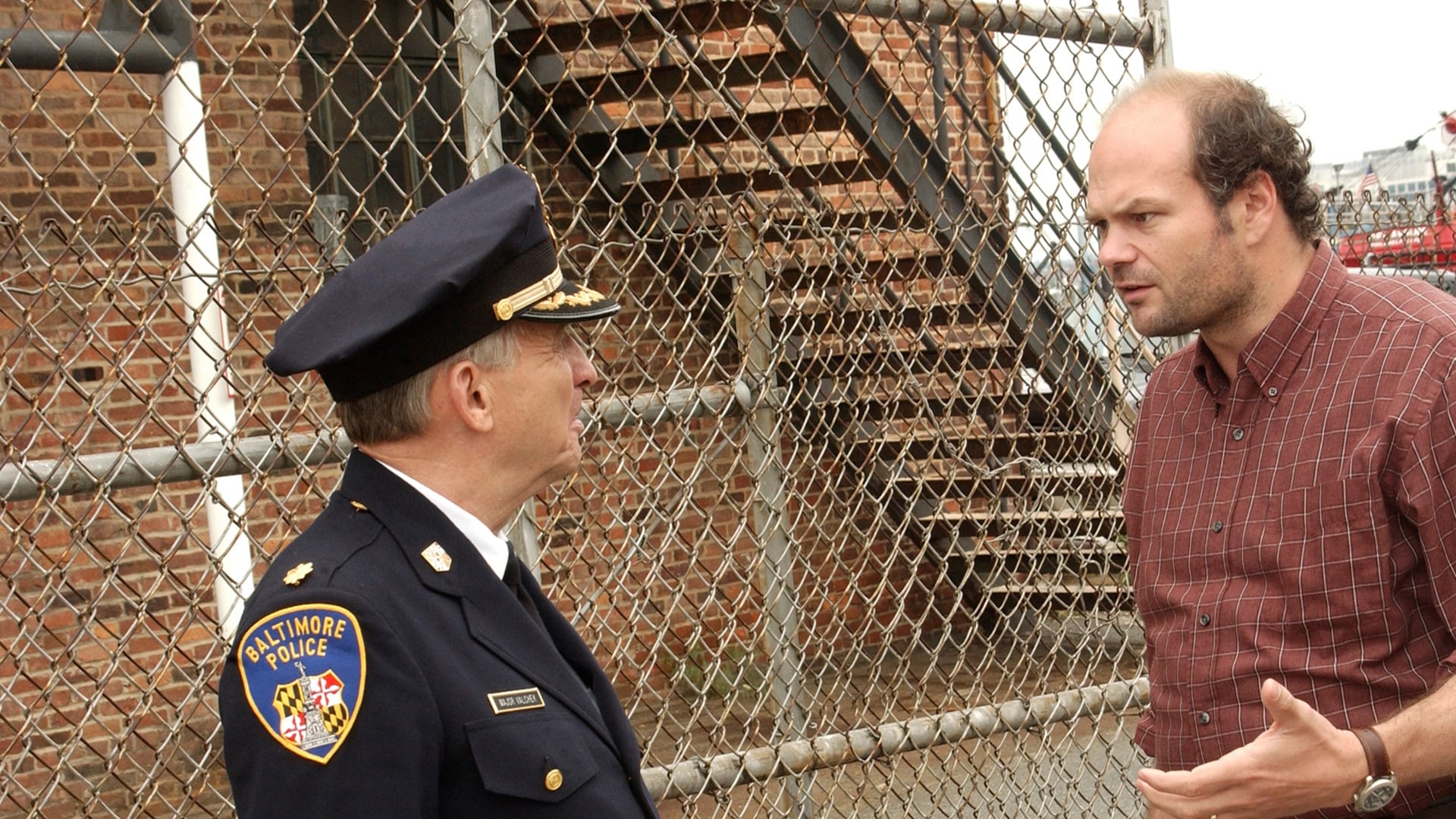
David Simon's sophomore season of The Wire remains perhaps the most audacious narrative pivot in television history. Where the inaugural season meticulously constructed a microcosm of Baltimore's drug trade, Season Two deliberately dismantles that achievement, shifting focus from the corners of West Baltimore to the decaying industrial waterfront of the Port of Baltimore. This geographical relocation betrays nothing less than Simon's ambition to transform his police procedural into something grander: a systemic autopsy of the American city itself, examining how global economic forces crush local communities with the same ruthless efficiency that street-level violence claims corner boys. The result is a season of extraordinary thematic reach and undeniable structural imperfections—a work of television that frustrates as often as it illuminates, yet ultimately delivers some of the medium's most devastating tragic portraits.
The season's bold conceptual gambit is established immediately in Ebb Tide, wherein the series pivots from the familiar terrain of the Barksdale Organisation to the labyrinthine world of international shipping, containerised cargo, and the dying stevedores' union. Simon's genius lies in recognising that the violence pervading Baltimore's streets cannot be understood in isolation; it represents merely the visible effluent of economic systems operating at vastly larger scales. The port, with its millions of annual containers creating perfect cover for smuggling operations, becomes the season's central character—a mechanical leviathan indifferent to the human lives it devours. Yet this necessary expansion of scope comes at an immediate narrative cost. The early episodes suffer from noticeably slower pacing as Simon systematically introduces an entirely new milieu: the Polish-American dockworkers led by union treasurer Frank Sobotka, the enigmatic "Greek" and his international syndicate, and the institutional machinations of the Major Case Unit's investigation.
This deliberate tempo has proven divisive. While Hard Cases and Backwash demonstrate how patient storytelling can generate tension through the slow accumulation of detail, episodes like Duck and Cover and Stray Rounds expose the perilous tightrope of long-form television. George Pelecanos's script for the eighth episode, in particular, exhibits what narrative dead weight—plot developments telegraphed well ahead of their execution, character decisions artificially delayed for dramatic effect, and significant screen time devoted to subplots that contribute minimally to the central arc. When Jimmy McNulty's exile to the Marine Unit—a professional purgatory that provides Dominic West with ample opportunity to portray self-destructive despair—could have concluded several episodes earlier had Lieutenant Daniels simply insisted on his inclusion, the artificiality of the delay becomes conspicuous. Similarly, Ziggy Sobotka's descent into tragicomic dissolution occasionally lapses into caricature, his pranksterish antics in Duck and Cover feeling less like organic character development than runtime-filling quirkiness.
These pacing deficiencies are exacerbated by occasional tonal dissonance. "Stray Rounds" opens with the devastating, random killing of a nine-year-old boy by gang gunfire—a moment of unbearable pathos that the episode then brazenly undercuts with the darkly comic spectacle of McNulty infiltrating a brothel while adopting a preposterous British accent. The tonal whiplash feels less like sophisticated narrative counterpoint than structural incoherence. Likewise, the season's handling of material beyond Baltimore's familiar parameters reveals occasional uncertainty. Simon has tendency to present the Greek organisation with an almost mythic mystique that the homegrown Barksdale crew never possessed—"enigmatic phantoms" that the parochial institutions of Baltimore are ill-equipped to handle. Geographical and cultural inaccuracies, including misidentifications of French locations and Eastern European documentation, betray a certain myopia: for all Simon's forensic attention to Baltimore's vernacular, the world beyond the Chesapeake blurs into abstraction.
Yet where Season Two succeeds, it achieves heights that transcend television's conventional boundaries. The season's structural masterpiece arrives precisely at its midpoint with All Prologue, an episode that transforms accumulated inertia into devastating kinetic energy. D'Angelo Barksdale's murder—staged with clinical precision as suicide within the supposedly secure prison system—ranks among the series' most shocking moments precisely because it arrives precisely when the character seems poised for redemption. Stringer Bell's cold orchestration of this elimination, treating familial loyalty as a fatal business liability, crystallises the season's moral architecture: in Simon's Baltimore, hope for individual transformation is systematically extinguished by institutional demands. Director Steve Shill's documentary-like rendering of the assassination—no musical cues, no lingering shots, merely the horrifying banality of institutionalised murder—demonstrates The Wire operating at the absolute apex of its powers.
The season's tragic enterprise centres on Frank Sobotka, portrayed by Chris Bauer with gruff, heartbreaking humanity. Unlike the criminal entrepreneurs of Season One, Frank engages with illicit enterprise not for personal enrichment but from desperate, almost noble intention: the preservation of decent livelihoods for his fellow stevedores against the crushing tide of technological obsolescence. His horrified reaction to the presentation of Rotterdam's automated harbour operations—where robotic efficiency has eliminated human labour entirely—encapsulates the season's emotional core: the recognition that working-class dignity is being systematically obliterated by forces beyond any individual's control. Frank's trajectory from respected union patriarch to compromised criminal to murdered body fished from the Patapsco River represents television's most devastating portrait of deindustrialisation's human costs. That his death results partly from the stupidity and vindictiveness of others—Valchek's petty vendetta, Landsman's communication failures, Rhonda Pearlman's procedural rigidity—merely reinforces Simon's thesis that noble intentions inevitably succumb to institutional dysfunction.
The season's conclusion, Port in a Storm, delivers the hollow victory that the narrative logic demands. The Greek and Vondas escape justice entirely; their organisation suffers merely a temporary financial setback before relocating operations elsewhere. Frank's union faces federal decertification. Nick Sobotka, the season's surviving witness, finds himself consigned to witness protection in circumstances of abject humiliation—redundant in the new economy as his skills at the dockyards are no longer required. Colonel Rawls, the institutional functionary least responsible for the investigation's limited successes, triumphs professionally through improved clearance rates. The closing montage—politicians breaking ground on luxury condominiums replacing the grain pier, Proposition Joe receiving fresh narcotics shipments from the same trafficking network, Beadie Russell returned to her dead-end port patrol—confirms what the season has argued relentlessly: the machinery of exploitation continues unabated, indifferent to the individual tragedies it generates.
Contemporary reassessment has vindicated Season Two's prescience. What viewers initially dismissed as narrative digression from the "main" drug storyline now reads as remarkably prophetic examination of globalisation's domestic consequences—the economic transformations that would subsequently devastate vast swathes of American industrial communities. The season's willingness to confront uncomfortable truths about deindustrialisation, the weaponisation of immigration policy, and the hollowing-out of organised labour renders it arguably The Wire's most relevant season for twenty-first-century audiences. If Season One provided an anatomy of the drug war's failures, Season Two traced the economic roots of that conflict—the desperate measures to which declining communities resort when legitimate opportunities evaporate.
Ultimately, Season Two of The Wire represents artistic ambition of a sort rarely attempted in television—let alone sustained across twelve episodes. Its flaws are substantial: occasional pacing lethargy, tonal inconsistencies, and certain narrative contrivances that sacrifice realism for dramatic convenience. Yet these imperfections pale beside its achievements: the creation of Frank Sobotka, one of television's most tragically complete characters; the devastating demonstration that systemic economic forces destroy lives as surely as bullets; and the unwavering commitment to depicting institutional failure without the consolations of cathartic resolution. If this season is indeed The Wire's nadir—a claim that seems increasingly indefensible with critical distance—then it is a nadir of extraordinary depth and significance, a work that transformed what television could attempt and, in transforming it, made the medium capable of articulating truths about American life that previously resisted dramatic expression.
(NOTE: All reviews can be accesed via this link.)
Blog in Croatian https://draxblog.com
Blog in English https://draxreview.wordpress.com/
InLeo blog https://inleo.io/@drax.leo
BTC donations: 1EWxiMiP6iiG9rger3NuUSd6HByaxQWafG
ETH donations: 0xB305F144323b99e6f8b1d66f5D7DE78B498C32A7