Television Review: The Wire (Season 3, 2004)
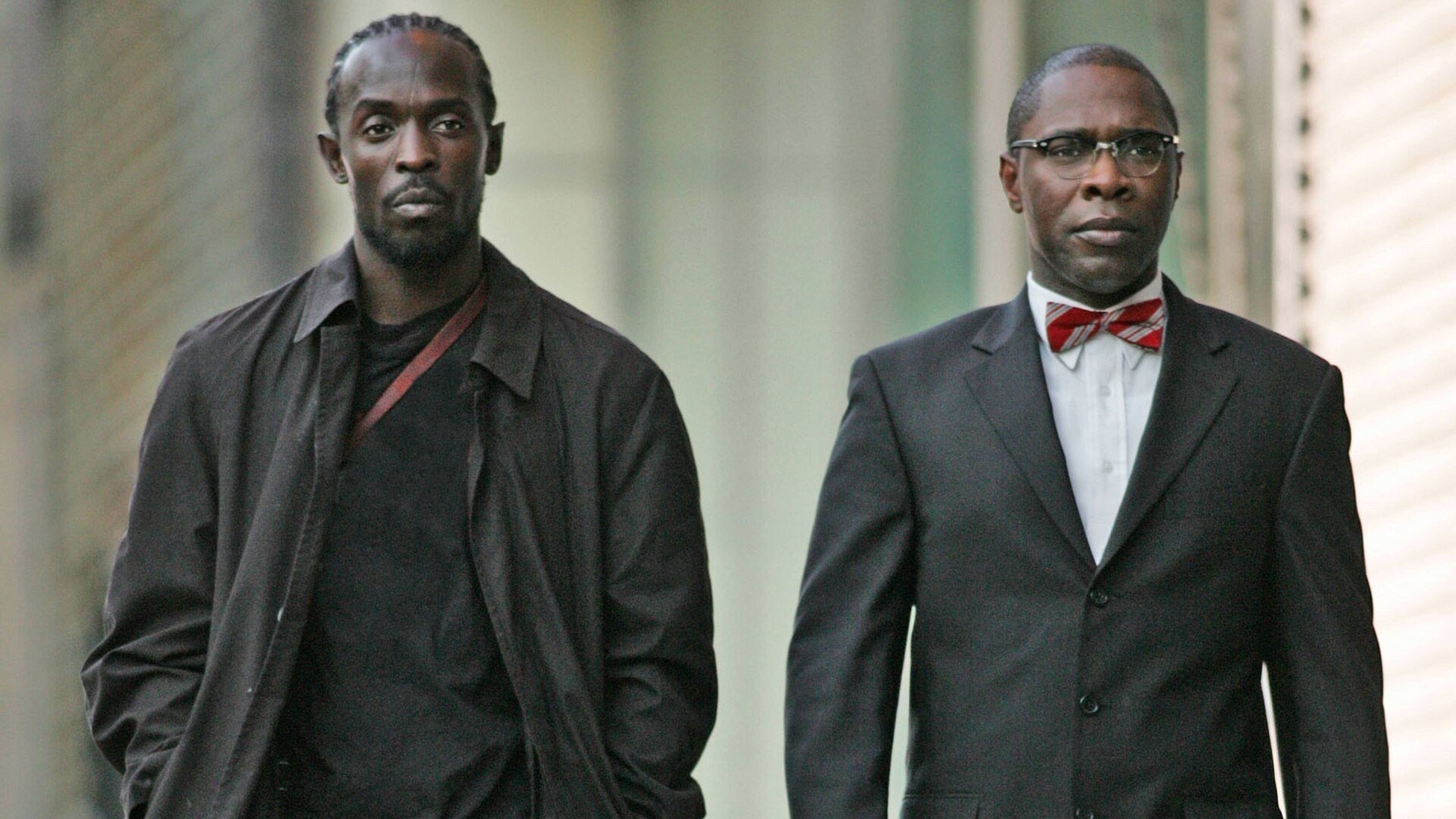
Season Three of David Simon's The Wire, which aired in late 2004, stands as perhaps the most structurally audacious and thematically coherent of the series' five instalments. Where the inaugural season introduced us to the Barksdale organisation and the Major Crimes Unit, and the second expanded into the dying port economy, this third chapter pivots decisively to interrogate what might be termed the political superstructure—the intricate machinery of governance, policing, and electoral politics that both arises from and perpetuates Baltimore's systemic decay. The season's brilliance lies in its cumulative argument: that meaningful reform is not merely difficult but structurally impossible within existing institutional frameworks.
The season commences with Time After Time, an economical premiere that establishes the season's central concerns without recourse to tedious exposition. David Simon's script introduces Mayor Clarence Royce, a figure embodying hollow political theatre whose demolition of the tower projects—touted as progress toward "affordable and safer housing"—proves to be electoral spectacle that utterly fails to impress those actually inhabiting the streets. This crystallises the season's core insight: the true obstacle to meaningful change lies not solely with corner boys but with the symbiotic, self-serving relationship between City Hall and police command. The introduction of Councilman Tommy Carcetti, portrayed with Machiavellian charm by Aidan Gillen, signals the season's political dimension. Carcetti's ambition, his ruthless exploitation of the murder rate for electoral advantage, and his seeming disregard for racial barriers in Baltimore politics present a complex figure; it paved the way for his iconic, similarly Machiavellian turn as Littlefinger in Game of Thrones.
Yet the season's most significant additions are to be found on the streets. The emergence of Marlo Stanfield, introduced with masterful subtlety, marks the arrival of a new, terrifyingly efficient force in Baltimore's drug economy. We do not witness Marlo commit violence; we observe its cold, calculated aftermath. Jamie Hector's minimal screen time radiates an unnerving, silent menace, signalling a villain whose pure, amoral pursuit of power will dominate the series' latter half. Equally significant is Dennis "Cutty" Wise, the former Barksdale soldier returning after fourteen years in prison. Chad L. Coleman's portrayal captures profound alienation; Cutty is a man utterly alienated from the world he left behind, his bewilderment providing a uniquely perceptive lens precisely because he is not inured to the sad realities of West Baltimore.
The season's narrative engine, however, is Major Howard "Bunny" Colvin's radical experiment: the creation of "Hamsterdam," designated zones where drug dealing is tacitly tolerated. Episodes four through ten trace this audacious policy's implementation and inevitable unravelling with unflinching precision. George Pelecanos's Hamsterdam script exposes "the chasm between theoretical policy and street reality"—corner boys immersed in immediate survival cannot comprehend abstract concepts of Swiss drug policy. Colvin's desperate measure, which initially appears successful in reducing violence, gradually reveals itself as morally untenable. Good intentions without proper oversight or accountability don't just fail—they actively create new hells where none existed before.
The episode Straight and True crystallises a profound paradox at the season's heart: Baltimore operates simultaneously as a claustrophobic village where networks are astonishingly interwoven, yet those in authority regard the communities they police as utterly inscrutable alien territories. This myopia proves catastrophic. When Colvin attempts to relocate an elderly resident to what he believes is a safe home, he discovers too late it is actually a witness protection safe house—a ruse" that exposes his fundamental misunderstanding of human nature. The experiment's collapse is documented with devastating clarity in Moral Midgetry and Reformation, where Richard Price and Ed Burns trace how well-intentioned interventions are "ultimately devoured by the very institutions they seek to bypass."
Running parallel to Colvin's institutional experiment is Stringer Bell's personal tragedy of self-deception. His dream of transcending the drug trade through legitimate business—specifically real estate development with corrupt State Senator Clay Davis—proves to be a fundamental miscalculation about his own capabilities. Where Stringer excelled at the brutal logic of the streets, he flounders confronting the smooth, deeply entrenched corruption of legitimate power structures. Idris Elba's performance in the penultimate episode Middle Ground captures this devastation with masterful restraint; Bell reconciles with his fate in a final encounter with Avon so laden with dramatic irony that it elevates the scene beyond mere gangland execution into profound tragedy.
The season's finale, Mission Accomplished, takes its title from George W. Bush's infamous banner, and the allegory is unmistakable. The episode functions as both season coda and potential series conclusion, demonstrating how power structures perpetuate themselves regardless of individual actors. Stringer Bell lies dead, his body crumpled beside Jimmy McNulty, who appears utterly hollowed out—his nemesis snatched away moments before triumph. Major Colvin suffers humiliating demotion, forced early retirement on a reduced pension. Avon Barksdale is arrested on weapons charges, yet this merely creates space for Marlo's more brutal regime. The city at episode's end is demonstrably worse off than when the season began.
The craftsmanship throughout deserves particular note. The writing staff assembled by Simon represents an extraordinary constellation of literary talent. Richard Price, Dennis Lehane, George Pelecanos, Ed Burns, and Joy Lusco each contribute distinctive voices while maintaining narrative coherence. Price's All Due Respect, featuring the devastating misunderstanding of Cheese's wiretapped confession about a murdered dog, demonstrates how "desperate projection of narrative onto wiretap" leads to institutional humiliation. Lehane's Dead Soldiers weaves together Omar's fatal miscalculation, the meta-textual tribute to departed producer Roland Collesbery, and Carcetti's political manoeuvrings with exceptional economy.
The season is not without its flaws. Some episodes stumble into the territory of preachiness, particularly when Colvin delivers grand soliloquies articulating the series' critique of the War on Drugs—moments that risk substituting character for mouthpiece." Middle Ground contains a Western-style standoff between Omar and Brother Mouzone that feels "slightly too theatrical and stylised," momentarily disrupting the naturalism that defines the series. The finale includes questionable "fan service" in explicit nude scenes that "feel gratuitous within the episode's otherwise restrained aesthetic."
Yet these are minor blemishes on an otherwise flawless season. What elevates Season Three beyond mere television into cultural achievement is its unflinching structural analysis. Simon's Baltimore operates according to the Marxist base-superstructure model whether by conscious design or intuitive grasp; the season represents "a profound, structurally sophisticated Marxist critique of the American urban condition."It argues that Baltimore's crises stem not from individual moral failings but from "deeply embedded, interlocking systems of power—economic, political, and eventually cultural—that perpetuate inequality and violence.
The season concludes with a poignant closing montage: Herc and Colicchio arresting young dealers, Carver and a contented McNulty at roll call, Hamsterdam reduced to rubble, Cutty training boxers, Beadie Russell gazing at the harbour. Each image tells a micro-story of institutional failure and individual resilience, suggesting that while systems may be broken beyond repair, "life continues with its mixture of tragedy and hope." For those seeking the definitive artistic statement of early twenty-first century American television drama, Season Three of The Wire remains the essential, if ultimately devastating, touchstone.
(NOTE: All reviews can be accesed via this link.)
Blog in Croatian https://draxblog.com
Blog in English https://draxreview.wordpress.com/
InLeo blog https://inleo.io/@drax.leo
BTC donations: 1EWxiMiP6iiG9rger3NuUSd6HByaxQWafG
ETH donations: 0xB305F144323b99e6f8b1d66f5D7DE78B498C32A7