Television Review: The Wire (Season 4, 2006)
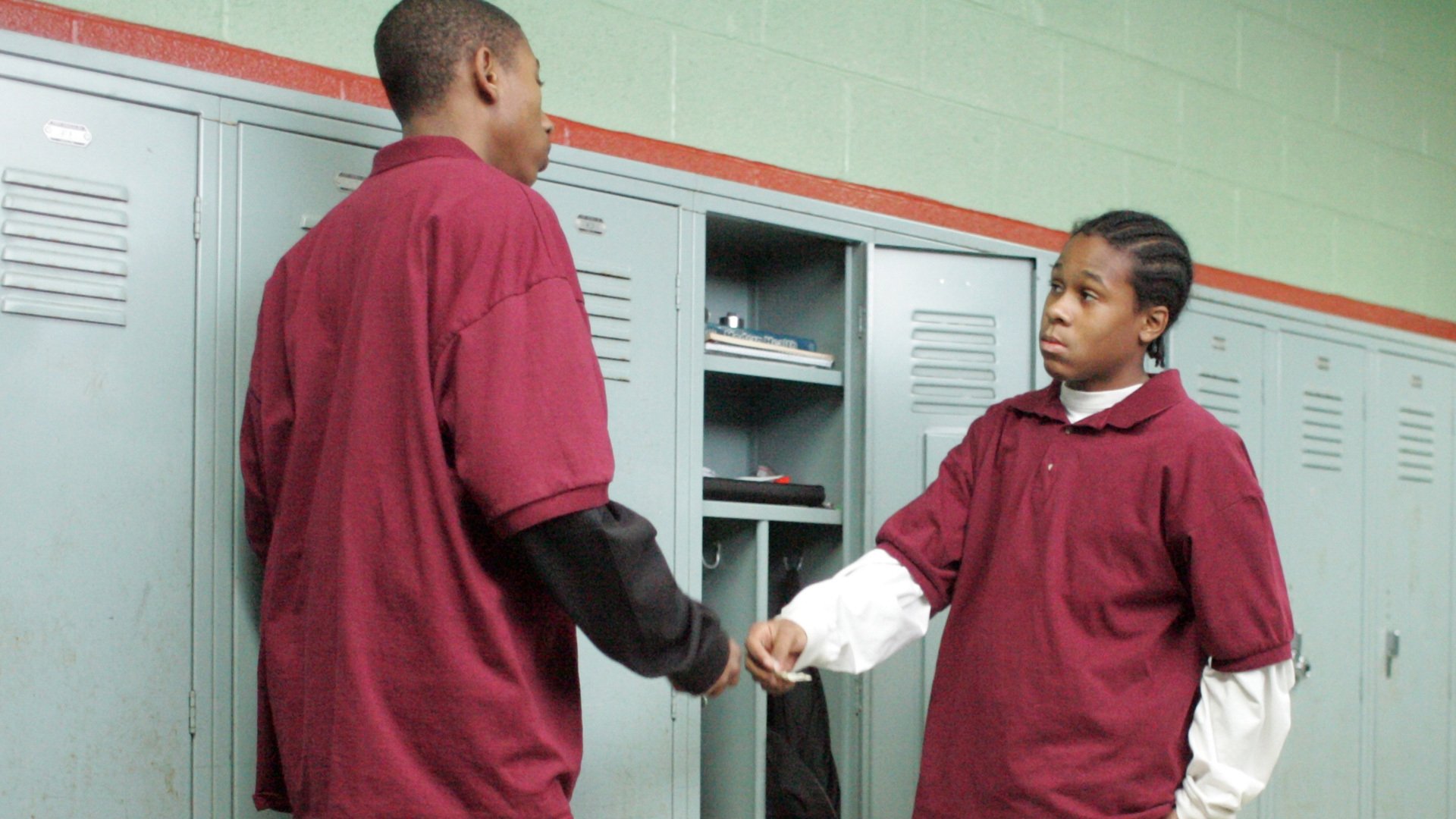
David Simon's The Wire has long been heralded as television's most devastating critique of urban decay, yet Season Four marks a qualitative shift into territory darker than anything preceding it. Where earlier seasons dissected the police department, the docks, and the political machine, this fourth instalment directs its scalpel toward the most harrowing frontier yet: Baltimore's crumbling public education system. The result is not merely another chapter in the series' sprawling narrative but arguably its most emotionally devastating and thematically profound achievement—a thirteen-episode meditation on how institutions systematically consume the innocent.
From its outset, Season Four represented a considerable gamble. The Wire "could have concluded with Season 3 and stood as a perfectly coherent, self-contained television masterpiece." The demolition of the Barksdale organisation and Hamsterdam's collapse provided a natural terminus. To extend the narrative required not merely continuing plots but expanding the show's sociological scope. Simon's solution—examining the public school system—plunged the series into profound moral darkness, for here the casualties weren't hardened criminals or cynical bureaucrats, but children.
This pivot necessitated patience from viewers accustomed to the established rhythm. The premiere, Boys of Summer, struggles under the weight of necessary exposition. It is heavily weighted towards servicing the established characters, leaving the new generation of boys frustratingly underdeveloped. Michael, Randy, Namond, and Dukie initially feel like archetypes rather than fully realised individuals. Only Randy, whose unwitting participation in Lex's murder provides immediate narrative weight, escapes this sketchiness. Yet this deliberate pacing serves a purpose: by delaying the school year's commencement until the third episode (Home Rooms), the season amplifies the institution's significance, positioning education not as backdrop but as the very crucible where Baltimore's systemic failures are most viscerally enacted upon its most vulnerable citizens.
Edward Tilghman Middle School emerges as Season Four's central location—a decaying edifice where, as the reviewer notes, "basic safety is a luxury." The contrast between the institution's ostensible purpose and its actual function could not be starker. Prez's disastrous first day, culminating in a razor slashing across a student's cheek, signals that this classroom will be no arena for inspirational pedagogy. The show wisely refuse sentimental "saviour" tropes: Prez is catastrophically out of his depth, fundamentally misunderstanding the reality of his students' lives.
The season's most incisive critique targets the perverse incentives created by federal policy. Corner Boys (episode eight) excavates how No Child Left Behind, with its punitive funding tied to test scores, actively incentivised the hollowing out of the curriculum. Prez is informed explicitly that the school's survival hinges entirely on standardised test performance, creating an environment where teaching is reduced to relentless, narrow 'test prep.' Knowledge is sacrificed at the altar of metrics; the pursuit of passing scores actively prevents genuine educational development. This systemic analysis transcends mere storytelling—it constitutes documentary observation drawn from Simon's collaborator Ed Burns, whose own experiences as a Baltimore teacher authenticate every bureaucratic nightmare depicted.
The four boys at the season's heart represent distinct responses to systemic abandonment. Michael Lee, the stoic protector, undergoes the most chilling transformation. His "chillingly rational calculation" to accept Marlo's employment—to protect his brother Bug from an abusive stepfather—marks him as the season's sharpest young mind selling his soul for temporary security. By the finale, "Michael isn't Michael anymore"—he has become "a weaponised shell, his intelligence now harnessed for destruction rather than survival.
Randy Wagstaff's descent proves equally devastating. His entrepreneurial spirit and relative stability, nurtured by a caring foster mother, cannot withstand the brutal logic of the streets. When his cooperation with police marks him as a "snitch," the consequences culminate in one of the season's most heartbreaking scenes: his foster mother's immolation via Molotov cocktail, leaving Randy condemned to the horrors of a group home where older, larger boys instantly mark him for years of systematic robbery, brutal beatings, and the ever-present threat of sexual violence.
Dukie Weems, meanwhile, embodies quiet vulnerability and ill-fitting clothes from his introduction. His advancement to high school—technically a success—becomes a death sentence without Prez's protective presence. Prez's hollow reassurance that Dukie may return for help is undercut by Principal Donnelly's admonishment that Prez should have his own children rather than using Dukie as a surrogate—a moment exposing how Dukie is one of many more children that need people like Prez, his individuality erased by bureaucratic indifference.
Only Namond Brice escapes this grim trajectory, and his salvation requires what the extraordinary, almost miraculous confluence of forces—Cutty Wise's intervention, Bunny Colvin's sanctuary, and crucially, Wee-Bey's recognition that his son possesses neither the temperament nor the constitution for the gangsta life. Namond's entry into Colvin's middle-class home stands as the sole exception proving the rule: survival requires individual acts of grace operating entirely outside the system's machinery.
Counterposed to these fragile hopes stands Marlo Stanfield, whose ascension marks a qualitative shift in Baltimore's drug trade. Where the Barksdale organisation maintained somecode and community, Marlo's regime operates through chilling efficiency, absolute paranoia, and a terrifying rationality. His innovation—hiding bodies in abandoned rowhouses, lime-dusted and forgotten—renders violence invisible, confounding even Lester Freamon's methodical investigations.
Marlo's pathological fragility proves more disturbing than his brutality. His execution of a security guard over a mere lollipop represents "the least justifiable, least strategically sensible murder depicted in The Wire up to that point"—petulance masquerading as strength. While his poker losses trigger cycles of violence, his near-total absence of overt emotion conveyed through Jamie Hector's chilling minimalism make him the series' most genuinely terrifying antagonist.
Tommy Carcetti's mayoral campaign and subsequent tenure provide the season's other major arc. Margin of Error offers a rare moment of optimism—Carcetti's improbable primary victory, Curtis Mayfield's "Move On Up" underscoring its euphoria. Yet there is foreboding beneath. The victory is narrow, bought in part with dirty money, and achieved within a system still dominated by despicable figures like Clay Davis.
By Unto Others and A New Dawn, this optimism curdles into disillusionment. Carcetti discovers that as a white mayor, he simply cannot fire a Black commissioner without catastrophic political fallout—his hands bound by "the very racial dynamics he sought to transcend." His eventual decision to reject Republican aid for the schools—prioritising gubernatorial ambition over immediate need—represents "purely political calculation" that condemns Baltimore's children to continued dysfunction. There is a prescient parallel to Barack Obama's 2008 campaign. The Wire understood the intoxicating euphoria of such moments while whispering the inevitable sequel: the crushing weight of reality.
Season Four maintains the series' formal excellence across its thirteen episodes. Alliances should be praised for its subversive use of zombie mythology—the boys interpreting Marlo's victims through horror film vocabulary because the truth is too terrible to comprehend. This pop-cultural filtering provides a semi-ironic, deeply melancholic homage to Stand By Me while illuminating how children process trauma when institutions fail to explain.
Individual episodes achieve varying excellence. Soft Eyes and Home Rooms should be praised their careful groundwork; Alliances excels in its narrative cohesion. The premiere is burdened by exposition. Yet even weaker instalments serve the season's architectural demands. The reviewer acknowledges occasional stumbles—Corner Boys's reliance on unexplained No Child Left Behind context potentially alienates international audiences; Misgivings contains minor narrative choices that strain credibility, particularly Namond's somewhat contrived transformation at Colvin's dinner table.
The season's conclusion in Final Grades delivers a near-unrelenting cascade of institutional failure and personal devastation. Its seventy-eight-minute runtime allows the weight of each tragic resolution to settle fully upon the viewer. Yet the finale's pivot back toward McNulty's re-entry into the Major Case Unit slightly undermines the season's unique focus. While dramatically necessary for the series' overall arc, this return to police-centric narrative "momentarily pulls focus from the season's most vital, harrowing subject: the children themselves."
Season Four of The Wire stands as television's most devastating examination of how systems fail the vulnerable. It understands that the tragedy of Baltimore's children stems not from individual pathology but from the cold, deliberate calculus of a system that prioritises funding streams, political survival, and bureaucratic inertia over the lives entrusted to its care. The school is not broken by accident—it functions exactly as designed, producing manageable statistics rather than educated citizens.
The season's genius lies in its refusal of easy morality. Well-meaning figures—Prez, Colvin, even Carcetti—are ultimately cogs in a machine designed for failure. Their efforts are systematically undermined not through active malice but through institutional inertia and perverse incentives. Meanwhile, predators like Marlo thrive in the vacuum created by this collapse, harvesting the abandoned with "chillingly detached calculation."
If Season Four demands patience, it rewards that patience with emotional and intellectual profundity rarely attempted on television. Its final image—Carver trudging through hospital corridors, Randy's broken promises echoing—reminds us that in Baltimore, the game is rigged, and the most innocent pay the highest price. This is not pessimism for its own sake but documentary realism raised to the level of tragedy.
(NOTE: All reviews can be accesed via this link.)
Blog in Croatian https://draxblog.com
Blog in English https://draxreview.wordpress.com/
InLeo blog https://inleo.io/@drax.leo
BTC donations: 1EWxiMiP6iiG9rger3NuUSd6HByaxQWafG
ETH donations: 0xB305F144323b99e6f8b1d66f5D7DE78B498C32A7