Television Review: The Wire (Season 5, 2008)
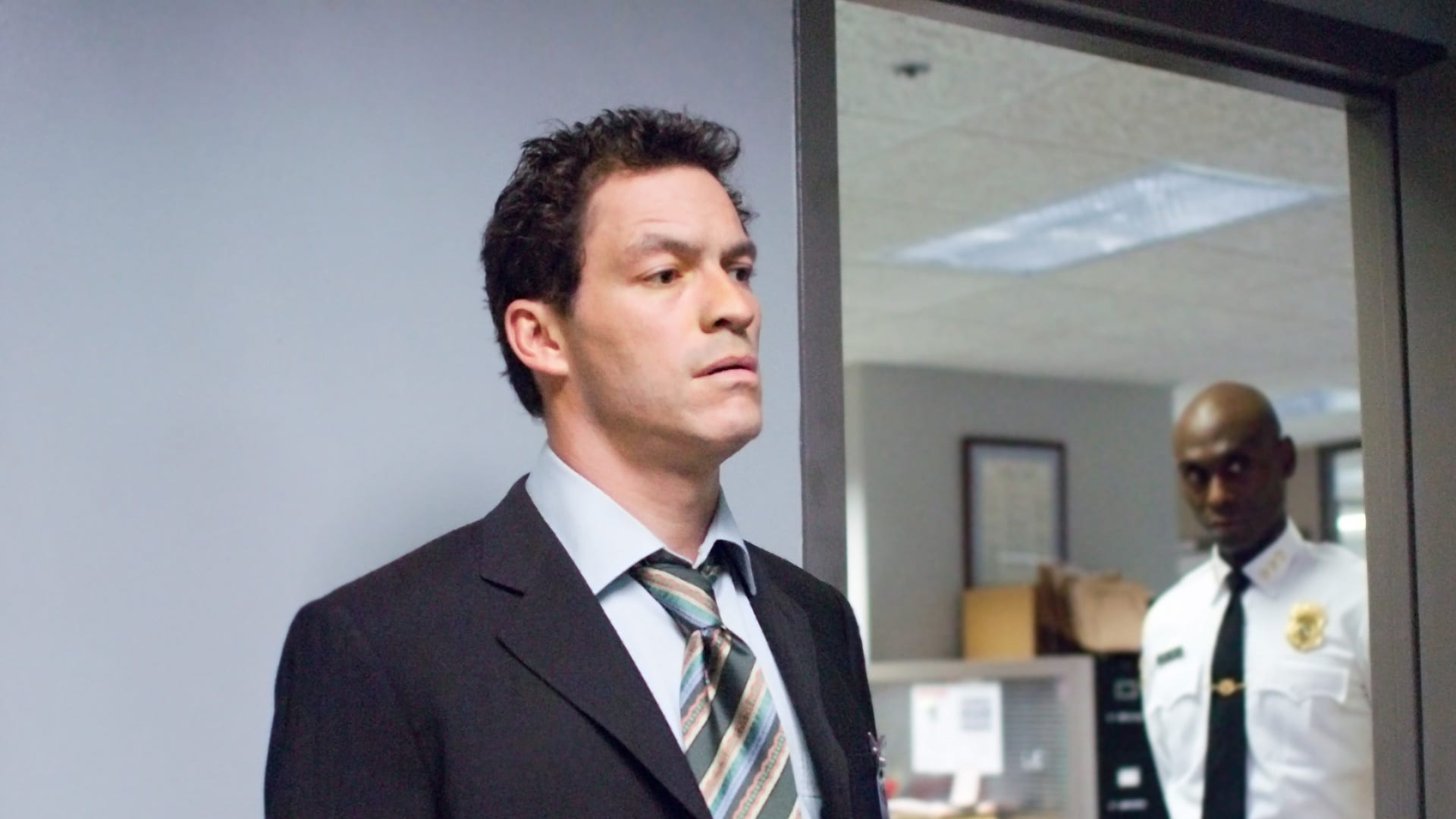
When David Simon’s panoramic portrait of Baltimore reached its fifth and final season in 2008, it did so under circumstances that seemed to embody the very institutional decay the series had spent four years anatomising. HBO’s decision to truncate the season from thirteen episodes to a mere ten—a piece of corporate budget-cutting that mirrored the austerity measures crippling Baltimore within the fiction—imposed a narrative compression that would fundamentally reshape the show’s concluding movement. The result is a season that contains moments of transcendent power and thematic clarity, yet remains the most critically divisive chapter of The Wire’s otherwise unimpeachable run. Where previous seasons unfolded with the patient inevitability of Greek tragedy, Season Five often hurtles towards its conclusions with a rushed intensity that sacrifices the show’s characteristic verisimilitude for plot mechanics.
The season’s most audacious narrative gamble—the fabrication of a serial killer by Detective Jimmy McNulty—represents both its thematic apex and its most precarious structural plank. From its inception in Unconfirmed Reports, this plotline presents a moral abyss that Simon and his writers probe with characteristic ruthlessness. McNulty, ignominiously returned to Homicide and stripped of the purpose he found in the Major Crimes Unit, conceives of an increasingly elaborate hoax: staging the murders of homeless men to manufacture media frenzy and secure investigative resources. This is not sudden madness, but the inevitable, horrifying culmination of years of institutional betrayal and personal despair.
Yet the execution of this premise reveals the season’s tonal inconsistencies. Lester Freamon’s transformation from the show’s moral and intellectual anchor to an active enabler of McNulty’s fraud—potrayed as pragmatic, almost gleeful endorsement—strains credulity, requiring narrative shortcuts that earlier seasons would have studiously avoided. The unsettling ambiguitie" around Bunk Moreland’s potential complicity in Unconfirmed Reports exemplify this: the script’s deliberate obscurity regarding whether Bunk suspects the truth and chooses silence, or remains genuinely oblivious, reads as narrative evasion rather than moral complexity. As the reviewer observes, the season’s compressed timeline prevents the necessary character beats from landing with their accustomed weight.
The newspaper storyline—Simon’s ostensible reason for returning to his former employer, The Baltimore Sun—proves the season’s most persistent weakness. Where Season Four’s education system felt "immersive, visceral, and central to every narrative thread,"the media plotline in Not for Attribution operates with frustrating opacity, its pervasive use of insider journalistic jargon creating a significant barrier to engagement. Gus Haynes, the principled city editor widely interpreted as Simon’s fictional alter ego, verges on saintly idealism—a beacon of integrity perhaps too transparently positioned as the author’s mouthpiece. The character of Scott Templeton, the ambitious fabricator, generates the season’s keenest satire of journalistic ethics, yet his inconsistent characterisation—moments of apparent compassion muddying an otherwise clear critique—weakens the narrative thrust.
These structural complaints aside, Season Five achieves moments of austere brilliance that rival anything in the series’ prior output. Transitions, written by Ed Burns, orchestrates two pivotal departures with ruthless economy: the political ousting of Commissioner Burrell and the execution of Proposition Joe. The latter scene—Robert F. Chew’s quietly desperate performance matched against Jamie Hector’s chilling impassivity—ranks among the series’ most devastating set pieces. Joe’s death marks a crucial transition in Baltimore’s criminal ecosystem, replacing the Velvet-voiced diplomat with Marlo Stanfield’s pure, calculating, robotic evil.
The season’s most profound achievement may be Clarifications, in which Dennis Lehane—the crime novelist recruited to Simon’s writing staff—dismantles the mythology of Omar Little with methodical precision. Omar’s death is deliberately anti-climactic: no final confrontation with Marlo’s enforcers, no blaze of glory, merely a single bullet from a child, Kenard, in a corner shop. It features Simon’s most potent visual metaphor for institutional indifference"—Omar’s corpse mistakenly tagged and stored alongside that of an unidentified white man in the morgue, his complex life reduced to a bureaucratic error, a misfiled corpse. This is narrative integrity of the highest order, refusing the heroic catharsis that lesser dramas would provide.
Season Five also displays a marked tendency towards meta-textual resonance and self-referentiality that occasionally borders on self-parody. The casting of Lawrence "Donnie" Andrews—the real-life inspiration for Omar Little—to portray Donnie, Omar’s doomed confederate with Omar replicating the actual sixth-floor leap that defined Andrews’s own criminal past in React Quotes, achieves profound narrative alchemy. Conversely, the repeated lifting of material from Simon’s earlier work—Scenes from Homicide: A Year on the Killing Streets and its NBC adaptation appearing verbatim—suggests creative exhaustion, the author mining his own archives out of necessity rather than inspiration.
The denouement in -30- (named for the journalistic signifier of "the end") largely satisfies the series’ standards, providing a finale that crystallised its entire thesis about the intractable machinery of urban decay. The episode’s great insight is that the very corruption McNulty and Freamon sought to circumvent becomes their salvation: the political pragmatism that prevents their prosecution is the same force that enabled Marlo’s rise. The closing montage—with Michael Lee assuming Omar’s mantle, Dukie condemned to Bubbles’s cycle of addiction, and Marlo himself hollowed out by legitimacy—confirms the series' fatalistic worldview. The city consumes its children, generation after generation; the faces change, the roles remain depressingly constant.
Contemporary resonance infuses the reviewer’s assessment with added urgency. Where More with Less’s opening observation that "Americans are pretty stupid people by and large. We pretty much believe whatever we’re told" felt prophetic in 2008, it reads as "post-mortem" in an era of algorithmic echo chambers, weaponised disinformation, and tribalistic media consumption. Simon’s critique of journalism’s decline, once specific to Baltimore, now appears national in scope—a blueprint for the national media’s collapse.
Ultimately, Season Five of The Wire stands as a compromised masterpiece, a necessary elegy for American urban institutions delivered under enforced constraints. Its flaws—narrative compression, underdeveloped subplots, occasional didacticism—are inseparable from the conditions of its production, making it a meta-commentary on the very institutional dysfunction it portrays. If it lacks the sustained brilliance of Seasons Three or Four, it retains sufficient moments of moral clarity and emotional devastation to secure its place within television's highest echelons. -30- doesn’t just end a television series; it delivers the final, resonant note in a five-season symphony of American urban realism, a note that continues to echo with chilling, undeniable clarity.
(NOTE: All reviews can be accesed via this link.)
Blog in Croatian https://draxblog.com
Blog in English https://draxreview.wordpress.com/
InLeo blog https://inleo.io/@drax.leo
BTC donations: 1EWxiMiP6iiG9rger3NuUSd6HByaxQWafG
ETH donations: 0xB305F144323b99e6f8b1d66f5D7DE78B498C32A7