Symphonies, Opera, and Chamber Works: Exploring the Compositions of John Oliver Beall
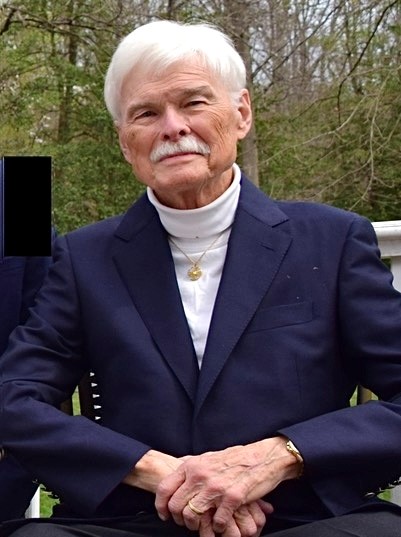
A composer’s identity is ultimately revealed through the character of their music. In the case of John Oliver Beall, his body of work reflects a composer grounded in formal clarity, expressive restraint, and a deep engagement with both musical tradition and regional influence. Across chamber works, symphonies, and opera, his compositions demonstrate a consistent concern with structure, thematic development, and meaningful musical narrative.
Beall’s early works already show a refined sense of instrumental writing and balance. The Sextet for Piano and Winds (1976) illustrates his careful handling of ensemble interplay, where each instrument contributes to a transparent and well-proportioned texture. That same year, his Sonata for Alto Saxophone and Piano, his first published composition through Southern Music Company, established his presence within the broader classical music community. Even in these early pieces, there is a clear emphasis on coherence and disciplined musical argument.
By the early 1980s, Beall’s music began to engage more directly with atmosphere and place. On Chestnut Ridge (1981) reflects this shift, suggesting landscape through musical gesture rather than overt depiction. This sensitivity to environment would become an important aspect of his compositional voice, particularly in later orchestral works.
His large-scale orchestral writing reveals a strong command of form and long-range development. Symphony No. 1 (1985) demonstrates his ability to shape extended musical ideas while maintaining structural clarity. The work balances thematic continuity with contrasting sections, showing a composer attentive to both architectural design and expressive pacing.
A more fully realized synthesis of his musical language appears in Symphony No. 2, Spruce Knob (2003), commissioned by the West Virginia Symphony Orchestra for the opening of the Clay Center for the Arts in Charleston. The symphony is rooted in both personal experience and regional identity. Drawing on the Appalachian folk melody “Come All You Fair and Tender Ladies,” as well as musical motives derived from the letters of his own name (B-flat, E-flat, A), the work integrates multiple thematic elements into a unified structure.
The symphony unfolds as a kind of musical journey, reflecting the physical and emotional experience of ascending Spruce Knob, the highest point in West Virginia. Beginning quietly, the music gradually builds in momentum and intensity, culminating in a climactic arrival that evokes the expansive view from the summit. A contrasting sense of stillness follows, as the work retreats, mirroring the descent and concluding in a return to its opening material.
This architectural arc, both programmatic and abstract, exemplifies Beall’s ability to merge narrative suggestion with formal discipline.
Beall’s engagement with narrative is also evident in his opera Ethan Frome (1997), based on the novel by Edith Wharton, with a libretto by Jack Held. In this work, he translates literary drama into musical form with sensitivity to pacing and character. The opera’s performance at West Virginia University as part of the School of Music’s centennial celebration, and its subsequent broadcast on West Virginia Public Television, extended its reach and demonstrated its effectiveness beyond the academic setting.
Chamber music occupies a central place in Beall’s output, offering a more intimate space for musical exploration. Works such as the Piano Quartet (2001) emphasize clarity of texture and close interaction among instruments, while the Double Concerto for Violin and Contrabass (2007) explores an unusual pairing, creating a dialogue that highlights contrast in register and timbre.
Among his most representative chamber works is The Wondrous Love Variations for Viola and Piano (1999), based on the early 19th-century American hymn tune “Wondrous Love.” Rather than treating the melody superficially, Beall develops a set of variations that explore a wide expressive range while maintaining a strong sense of unity. The piece reflects his broader compositional approach: respect for historical material combined with a disciplined yet imaginative process of transformation. Its significance within his catalogue lies in how clearly it embodies his musical voice.
Recordings of his music, including performances by members of his own family, have been reviewed in publications such as The American Record Guide, where critics have noted both the craftsmanship of the compositions and the interpretive qualities of the performances. These recordings provide valuable insight into how his music is realized in practice, particularly in chamber settings.
Beall’s works have been performed by major ensembles including the Dallas Symphony Orchestra, the Rochester Philharmonic Orchestra, the Pittsburgh Symphony Orchestra, and the United States Marine Chamber Orchestra. In addition, broadcasts on National Public Radio and international stations in Europe and Asia have brought his music to a wider audience.
The continued publication and distribution of his compositions have ensured their accessibility to performers. From Southern Music Company to later associations with Carl Fischer, MMB Music, and Theodore Front Musical Literature, his works remain available for study and performance, supporting their ongoing presence in the repertoire.
Taken together, the compositions of John Oliver Beall reflect a career defined by thoughtful craftsmanship, structural integrity, and a meaningful engagement with musical and regional traditions. His work avoids excess in favor of clarity, allowing the substance of the music itself to remain central. Through both large-scale and intimate forms, his music continues to offer a distinctive and enduring contribution to American classical composition.