SLC33-W5: My Community, My Story – Festivals, Culture & Traditions
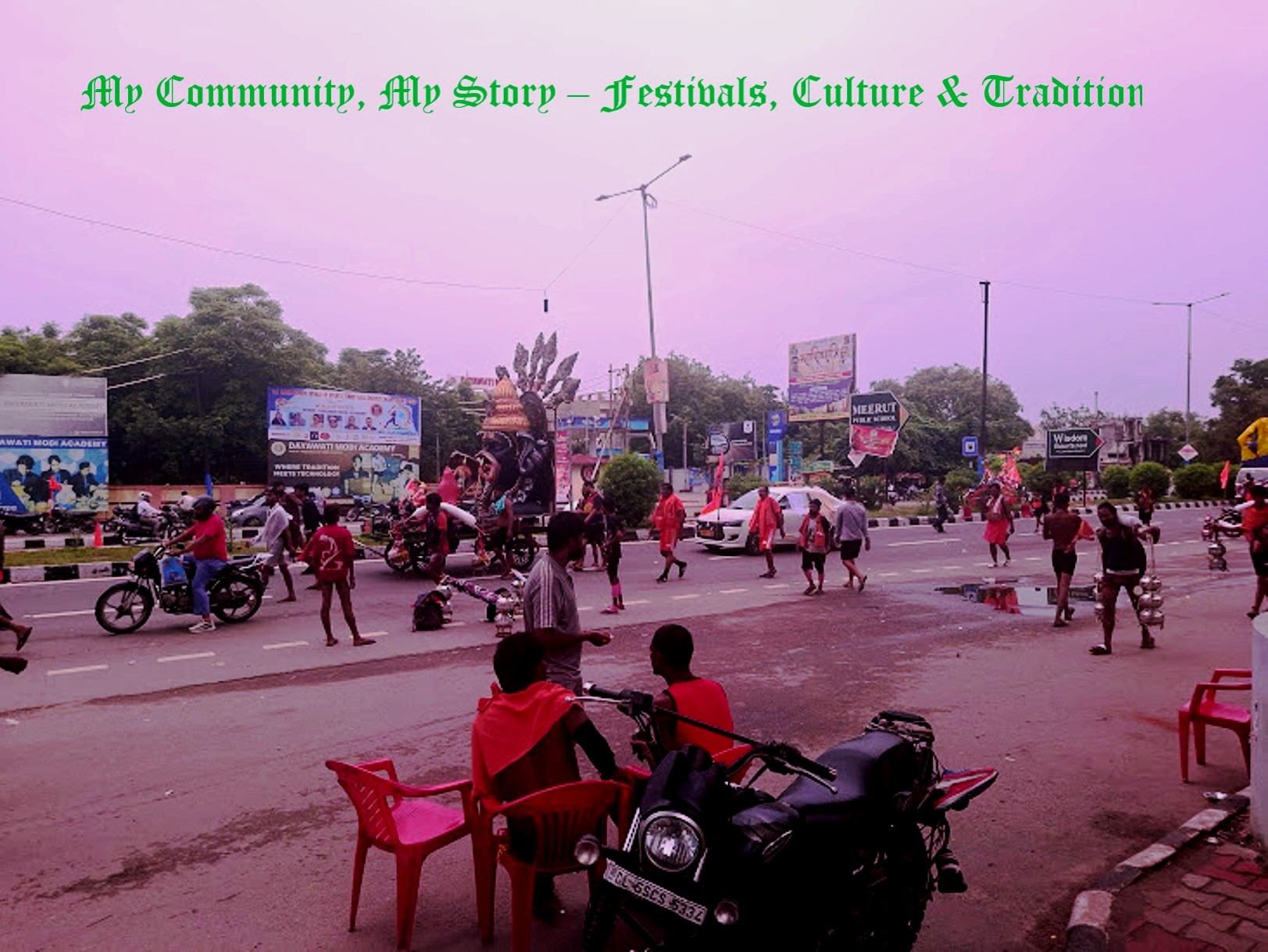
It had just rained at about 7 in the morning 7th July 2026
What is the name of the culture, festival, or tradition that is celebrated in your community? Tell us where it usually takes place and share the Google Map, Steematlas, and Google Plus location.
I will talk about Kanwar Yatra a World Record community program "The Kanwar Yatra' it is an annual Hindu pilgrimage dedicated to Lord Shiva, held during the holy month of Shravan. Devotees, known as Kanwariyas, travel—often barefoot from sacred places such as Haridwar, Gangotri, Gaumukh, or Sultanganj to collect water from River Ganges.
YouTube Video Day View 7th July 2026
They carry it in decorated bamboo slings called Kanwars and later offer it to Shiva temples during Jalabhishek (9pouring holy water on Lord Shiva) brought from River Ganges. They all wear saffron clothes, and chant “Bol Bam” and “Har Har Mahadev,” while observing discipline, fasting, celibacy, and abstinence from intoxicants.
The journey represents devotion, endurance, and spiritual purification, and is especially prominent across northern India. In 2026, the pilgrimage began on July 30 and concluded yesterday on 11th August even though some people start as early as in 3rd week of July because they cover a lot more distance.
In your community, why is this festival or tradition important to your community?
I am telling you about a unique festival, which is not just a cultural practice, but hundreds of years old tradition in my country which is celebrated by Hindu community. It is an by annual celebration, which is celebrated with grand customs, a cultural event, a ceremony in which almost 100 million people take part in different parts of India and would you believe almost 50 million pass through in front of my colony where I live.
Yes, I will share with you all this special event which is unique in the sense it brings people together in my country and community and they all speak the same few words during the entire period which lasts about 15 days and they spend all their time walking on foot traveling 100-500km carrying water on their shoulders from the holy River Ganges to their own towns and villages.
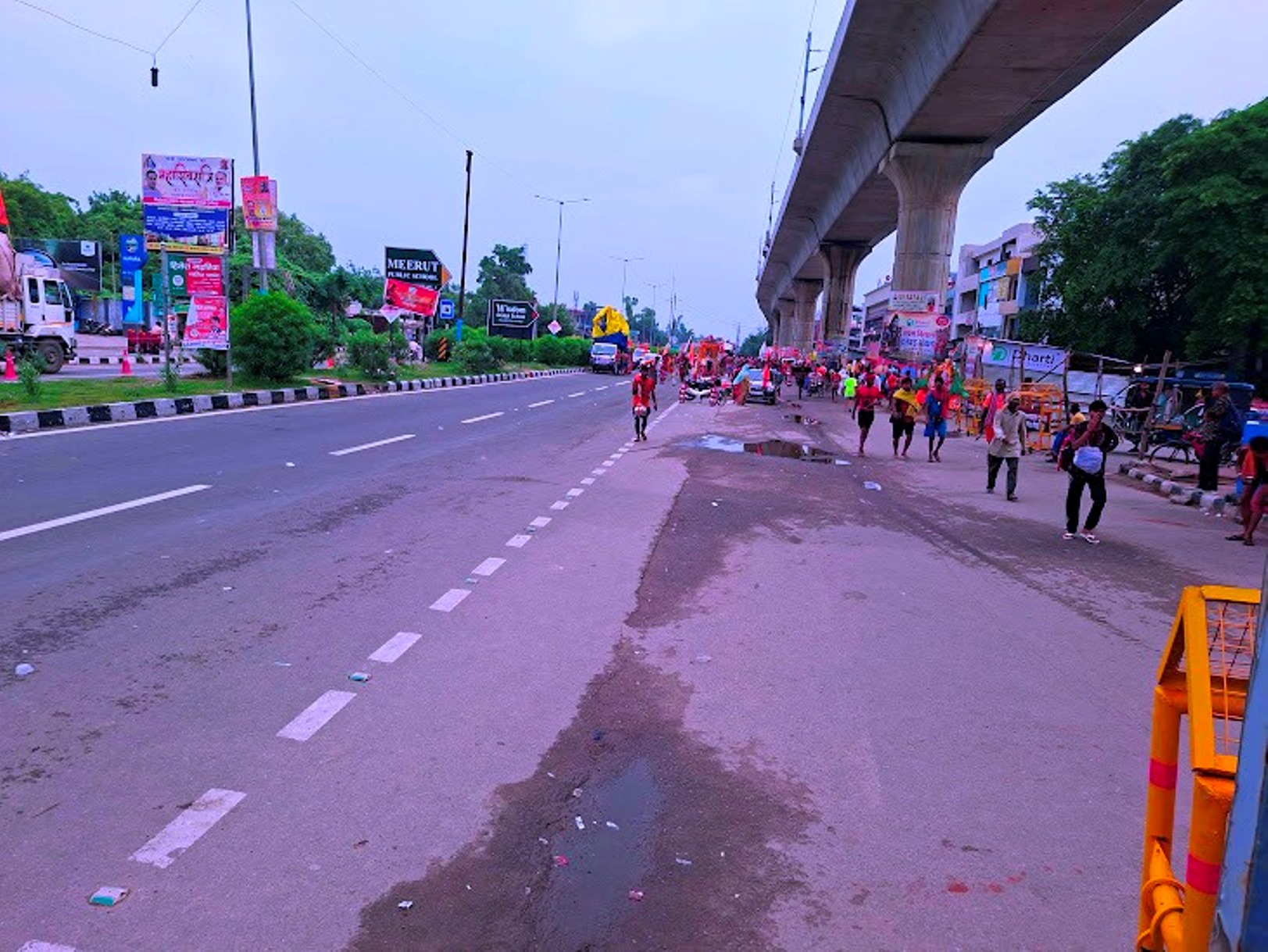
A few meters ahead under the metro track 7th July 2026
What activities do they like: music, dance, food, ritual, clothing, etc.
During the Kanwar Yatra, devotees participate in a lively blend of worship, community service, music, and celebration. Their central ritual is collecting Ganga water, carrying it in decorated Kanwars, and offering it to a Shiva lingam, often on Shravan Shivratri. Along the route, they chant “Bol Bam,” “Bam Bam Bhole,” and “Har Har Mahadev,” sing bhajans which are religious songs, listen to drums, and keep dancing in processions especially when they stop at a comminty camp for food and rest.
YouTube Night View 9th July 2026
Modern yatra groups travel with mobile DJ trucks, loud devotional remixes, LED lights, and decorated vehicles, although authorities often impose sound and safety limits. Temporary camps, called seva shivirs, provide resting spaces, drinking water, medical assistance, foot massages, bathing facilities, and charging points.
Many camps and local communities organise food service, serving free vegetarian meals, fruits, tea, juices, and simple vegetarian food; onion, garlic, meat, alcohol, and tobacco are commonly avoided. Pilgrims usually wear saffron or orange cotton T-shirts, shorts, trousers, scarves, headbands, and sometimes flags or Rudraksha beads.
They bathe, maintain cleanliness, observe restraint, protect the Kanwar from touching the ground, and walk barefoot or in simple footwear. The atmosphere therefore combines solemn prayer with energetic singing, dancing, volunteering, shared meals, and public expressions of Shiva devotion, and colourful displays of faith along pilgrimage routes.
Tell us what you enjoy the most about the tradition or celebration.
The most enjoyable part of the Kanwar Yatra is its powerful sense of togetherness. Friends, families, and fellow devotees walk together, encouraging one another through chanting, bhajans, dhol beats, and occasional dancing.
The colorful saffron clothing, decorated Kanwars, flags, lights, and lively processions create a memorable festive atmosphere. Many people also appreciate the kindness found along the route: volunteers offer free water, vegetarian meals, medical help, resting places, and foot care in temporary camps.
Sharing food and stories builds friendship among people from different backgrounds. For devotees, the greatest joy comes from combining physical challenge with faith—walking for Shiva, fulfilling a vow, finding inner peace, and finally offering Ganga water at the temple. The celebration feels both spiritual and communal.
I used to bring water myself a few decades ago but never walked but brought it on my motorbike which was for the sake of joy. We used to cover this distance of 130 km from my house to Haridwar in about 10 hours due to heavy rush and stopping at various camps eating and watching people dance to the tunes of devotional music. We mostly did on last day so the return journey was covered in about 2-3 hours since the roads were comparatively empty by then.
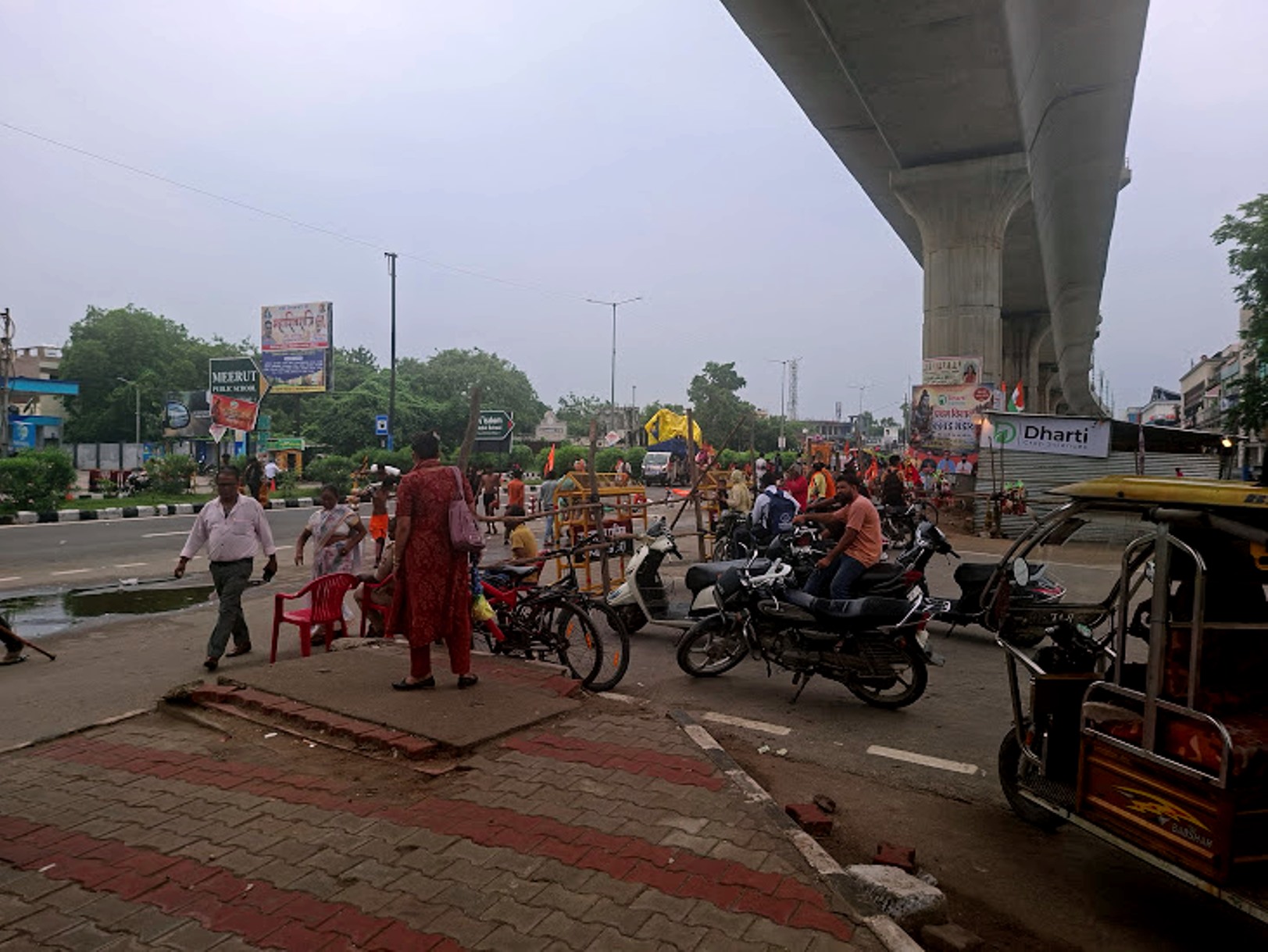
Police keeps barrier on our colony's gate so no one goes on the road
Share with us how it brings people together in your community, and tell us if you would recommend visitors experience it and why?
In our community, the Kanwar Yatra brings people together through faith and service. Residents, shopkeepers, volunteers, temple groups, and organisations cooperate to welcome pilgrims. They prepare bhandaras, distribute water and fruit, arrange medical assistance, clean the roads, guide traffic, and provide temporary shelters.
People from different castes, ages, and backgrounds sit together, eat prasad, sing bhajans, and support tired walkers. This teamwork creates a feeling of compassion and belonging. I would recommend visitors experience the yatra, especially those interested in spirituality, culture, music, and community life.
We all can witness colourful Kanwars, devotional chants, camps, and acts of selfless service. Visitors should remain respectful, dress modestly, ask permission before photographing people, follow safety instructions, and avoid disturbing rituals or crowded processions.
I asked a question from Google- "How many kanwariya brought water in 2026 from Haridawr which is close to my house appx 130 km"
An estimated record-breaking 48 million (4.8 crore) Kanwariyas visited Haridwar to collect holy Ganga water during the 2026 Kanwar Yatra, with police and administration officials reporting that approximately 4.43 to 4.8 crore devotees successfully collected and carried the sacred water back by the conclusion of the pilgrimage on Sawan.
Information
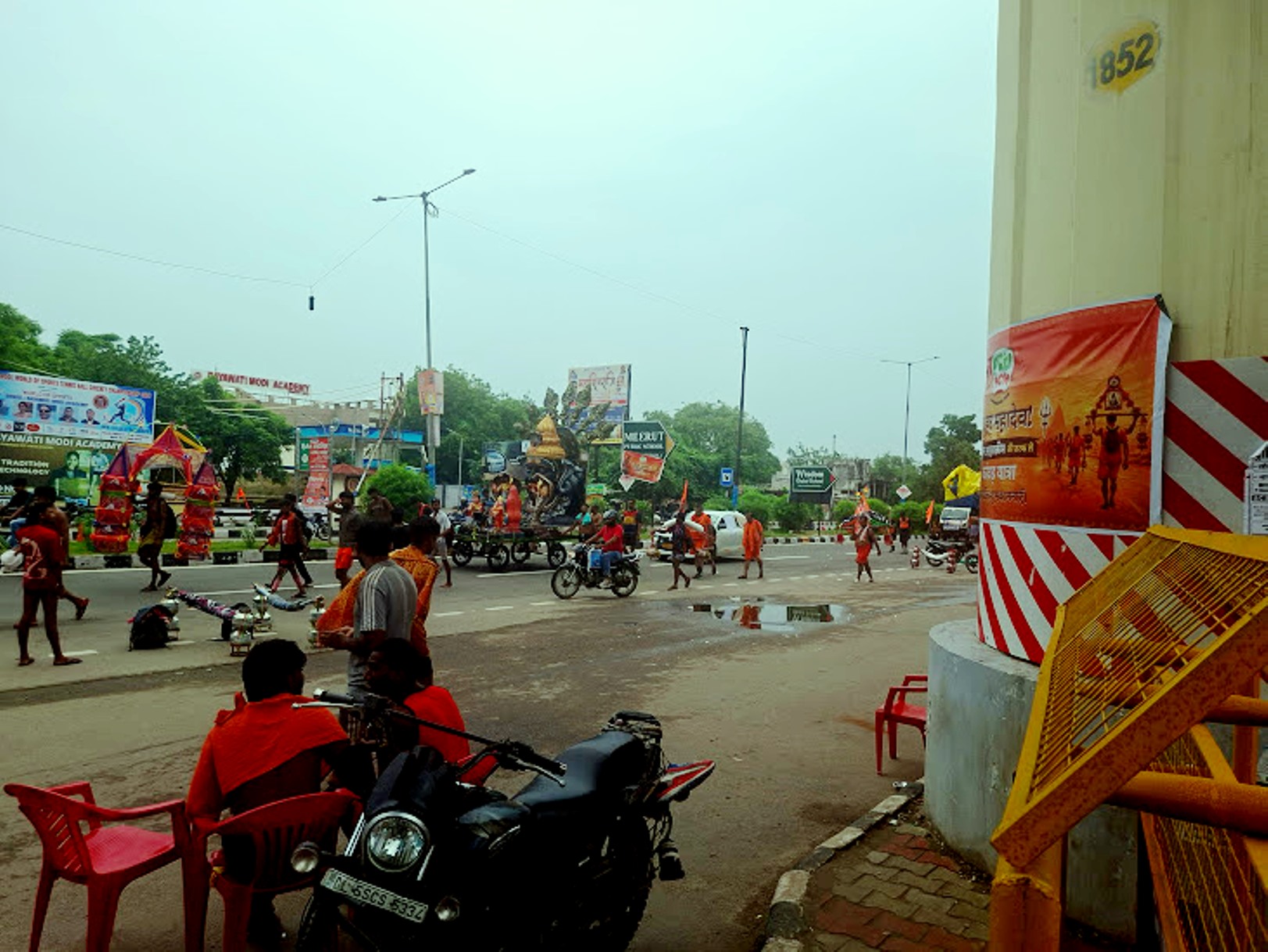
Way to camp where they eat and rest- only saffron color clothes clad allowed as you can see heavy barricades.
| NH 58 | Pallavpuram, Modipuram, 250110, India |
|---|---|
| Google map link | Map |
| Google Plus code | 3P35+C5 Meerut, Uttar Pradesh |
| Steematlas link | //:# (!steematlas 29.05445684 lat 77.70809945 long Pallavpuram, Modipuram, India d3scr) |

I invite my friends @ripon0630 @ridwant and @swaleha to take part in this contest by @josepha
Note: I took these pictures and made videos within last couple of days and made this video a few days ago.
Beneficiary @steem-atlas
Review/Grading Format
Category Points
Review:
Religious traditions or cultural celebrations are usually unique in India, based on how many Indian movies I have watched. The way Indian people dance and play their ban is what usually makes me feel happy watching India celebration.
0.00 SBD,
45.01 STEEM,
45.01 SP
Thanks for the evaluation!
https://x.com/dv11_s/status/2087439811355525379?s=20