Recorrido por el pueblo más encantador "El Peñón": Historia y tradición
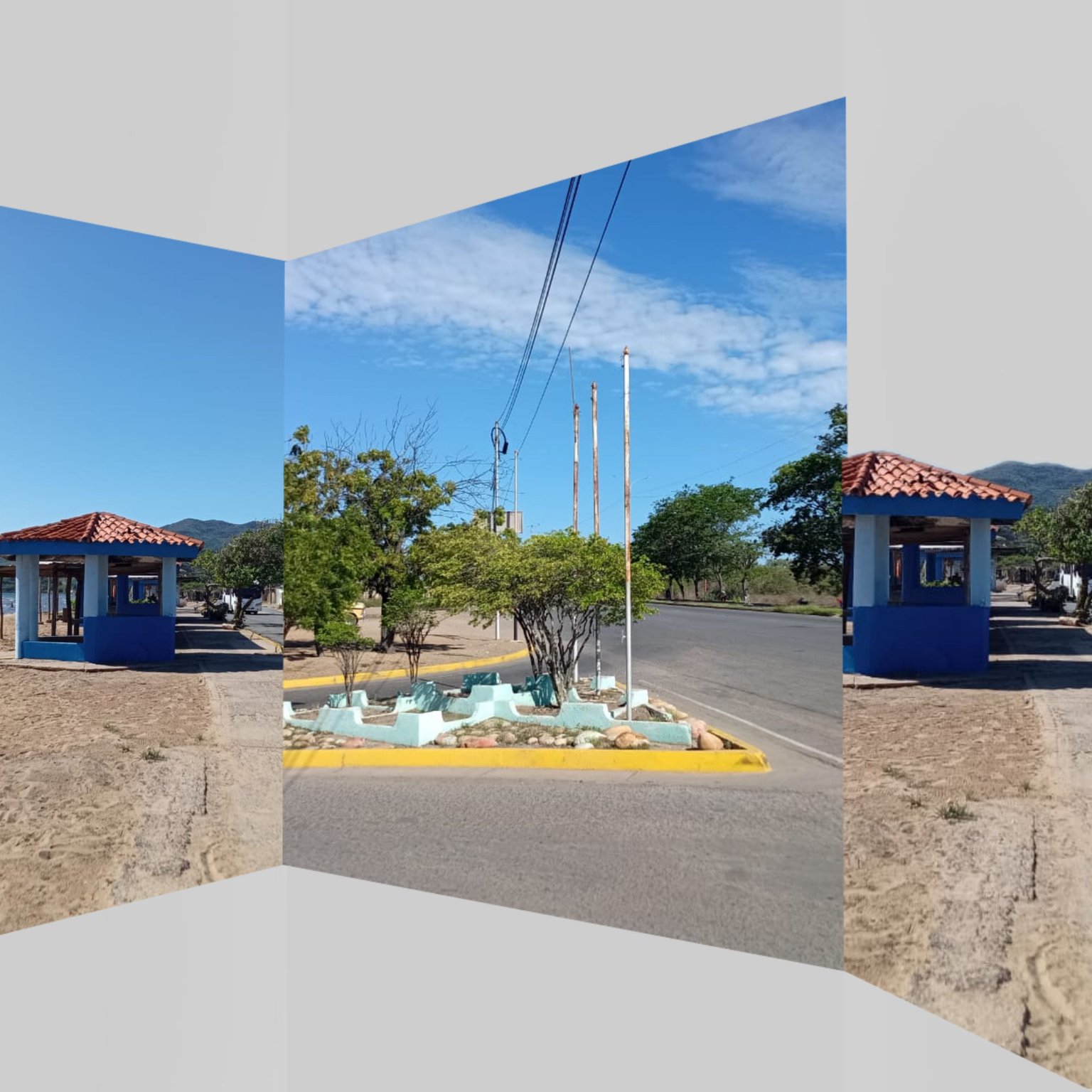
Continuing my tour of El Peñón, I invite you to join me in exploring some of its streets—especially La Marina Street, located right by the beach. Here, you will find several beachside kiosks made of concrete with tiled roofs; their shape resembles the bohío, a traditional indigenous dwelling featuring cylindrical walls and a triangular roof (historically thatched with palm fronds and walled with mud). Unlike the fully enclosed bohío, however, these beach kiosks—designed for visitor recreation—feature only a low wall and central cylindrical columns. They are equipped with a table, with a central column rising from it to support the roof. According to a local resident, these kiosks were recently painted and repaired, giving them a fresh, attractive look; they are dark blue, creating a striking contrast against the sea.
As I have mentioned in previous posts, El Peñón is a beautiful coastal town boasting an excellent location and a lovely beach. The beach is perfect for children, thanks to its shallow waters and gentle waves. It stretches for several kilometers, offering beautiful scenery and a view of a lovely mountain at the far end, where the beach meets the avenue and the main highway leading to the Paria Peninsula. In addition to the aforementioned kiosks, this coastal area features open-sided shelters and fishing zones; the streets are generally paved with asphalt, and the houses display a variety of architectural styles.