Simple Things That Made My Nepal Trip So Special
I've been to like fifteen countries or something, I lost count honestly, and I kept thinking I had this travel thing down. Nepal just completely threw me off because literally nothing happened the way I thought it would and I was honestly expecting the usual tourist experience with the mountains and temples and all that stuff that everyone goes there to see and photograph, which is funny because that's the whole reason most people go but it didn't really do it for me at all. I remember skimming through https://en.wikipedia.org/wiki/ Nepal before the trip just to get a bit of background, but actually being there felt nothing like reading about it.
Instead I got stuck on these incredibly random small moments that happening that like nobody would ever post on Instagram because they're not that interesting to look at, just like me sitting somewhere or having a conversation or drinking tea, and I can't stop thinking about them even though I know when I tell people about it they think I'm being weird like I'll be like "oh there was this moment where I just sat in a café for hours" and they're like "cool so what happened" and I'm like "nothing really I just sat there" and they kind of just nod politely but don't actually get it. But I can't stop replaying those moments in my head, like they meant something deeper than the actual tourist stuff I did, and I don't know how to explain that to people without sounding ridiculous.
So my flight got delayed in Delhi and honestly I was already tired before that even happened, like I'd been traveling for like twelve hours at that point and just wanted to be in Kathmandu and in a bed, but instead I'm sitting in Delhi airport for another three hours which is just great, and then when I finally do get on the plane I'm so exhausted I can barely keep my eyes open. By the time I landed it was midnight and I was basically just done with everything at that point, I was frustrated and tired and annoyed because I'd spent all this money on this trip and it was already going wrong before I even got there, and my brain was like completely fried from the travel and jet lag and switching flights and all of that. I remember sorting my visa out weeks before the trip using https://www.efficienttourism.com/nepal-visa-from-dubai/, so at least that was one thing I didn't have to think about after landing. Anyway I got picked up by some taxi driver and he just kind of took me to this random tea house in Bhaktapur, I honestly have no idea why we went there or how I ended up there or even where Bhaktapur was in relation to where I was supposed to be going, I just remember being in the back of a taxi that smelled weird and wanting to sleep more than I've wanted anything in my life.
:The Art of Sitting Still in a Chaotic City:
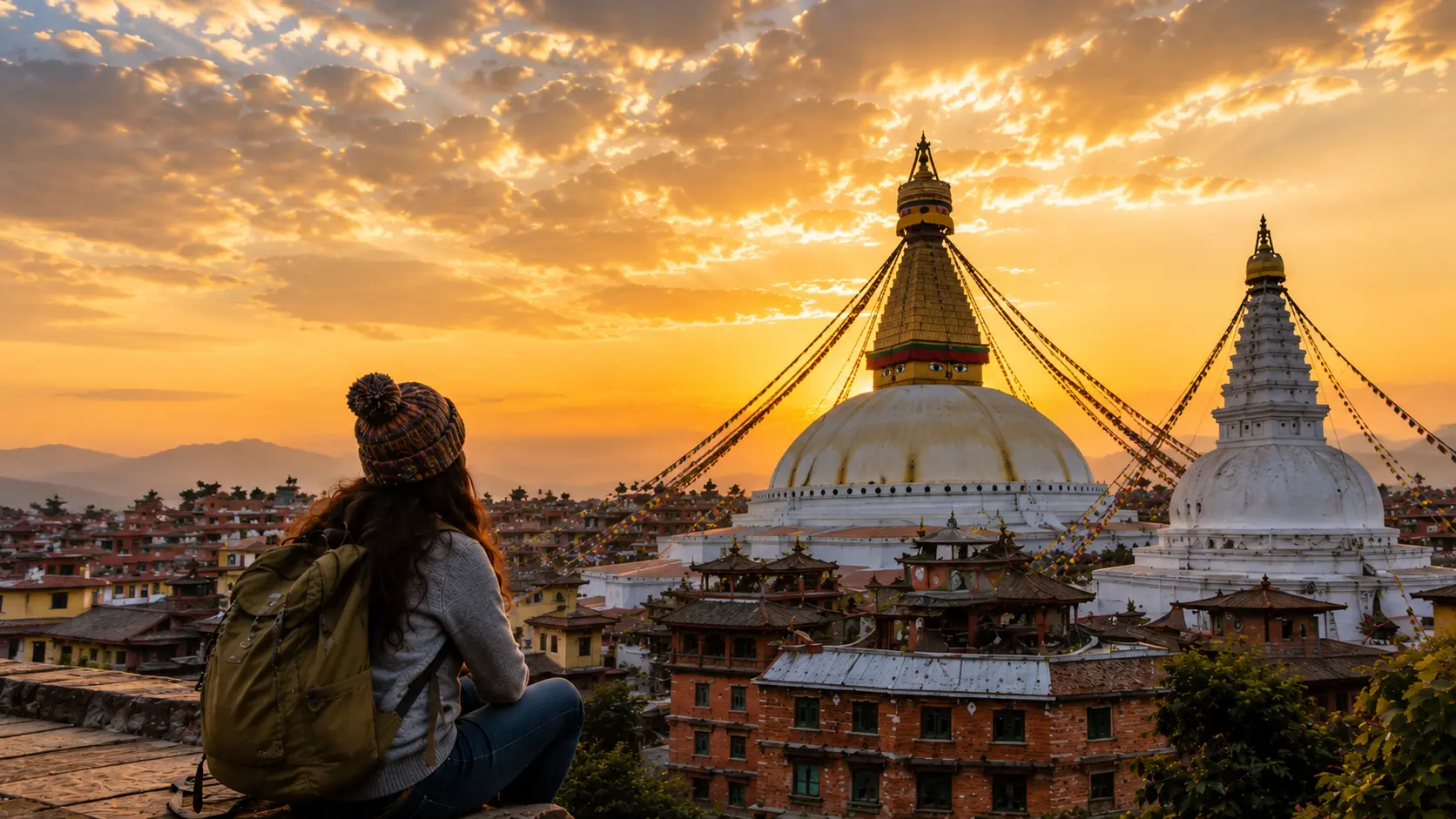
Kathmandu is absolutely insane with horns blaring at 7am and people yelling and this smell of incense and exhaust and fried food all mixed together. The first few days I did that tourist checklist thing where you hit temples and squares, but by day four I was burnt out.
I wandered into a rooftop café in Thamel because I was lost, ordered milk tea, and just stayed there without any plan. I sat for three hours watching the city, watching motorbikes cut through traffic and kids playing cricket in tiny alleyways and women hanging laundry between buildings. The café owner kept refilling my tea without asking, and an older Nepali man offered me his newspaper even though I couldn't read it. I learned more about that city in three hours of doing nothing than from visiting all the temples combined, which sounds cliché but is genuinely true.
Key Takeaways:
• Unplanned downtime creates authentic memories because you're actually present
• Watching real life teaches more than any guidebook
• Best connections happen when not optimizing for content
:Conversations Over Commercialization:
I met Priya at a café in Patan and we got talking about design because she mentioned her pottery studio and my web design background made me interested. She invited me to her home, which was bold for a stranger, but I obviously said yes. I expected a tourism trap where she'd sell things, but Priya genuinely cared about each piece. She'd explain why she chose certain glazes because they reminded her of sunsets from learning pottery with her grandmother, or how she mixed them herself because commercial glazes felt fake. We said maybe fifty sentences total but drank endless tea and sat quietly while she worked at the wheel with comfortable presence that needed no words.
That's when I realized authenticity can't be bought on a tour or booked through an app, it only happens when somebody shares what they care about without expecting anything in return.
Key Takeaways:
• Real connections happen through genuine conversations, not planned itineraries
• Listening to people's stories beats transactions
• Supporting independent artists impacts real lives
:Finding Magic in Simple Mornings:
Bandipur is an old town untouched by heavy tourism, and my room faced the main street where I woke early to watch it come alive, vendors opening shops, schoolkids jumping around, one guy sweeping his street greeting neighbors by name, women carrying vegetable loads with impossible grace. There's something real about witnessing a place when nobody's performing for tourists, it's just life happening normally. One morning a girl offered me a flower for free and looked confused when I asked the price because she just wanted to give it with no transaction involved. I left her rupees anyway and watched her face light up.
The memories I kept weren't photos but normal un-Instagram-worthy things like the 6am light and momos from a woman's front yard and conversations about people's kids, none of which made a travel narrative but it's all I think about months later.
Key Takeaways:
• Real places emerge before tourists wake up and curate for cameras
• Favorite memories won't photograph well, so you live them instead
• Small kindnesses matter more than scheduled experiences
:The Unexpected Kindness of Strangers:
Halfway through the trip I got food poisoning from street momo and felt absolutely miserable, couldn't leave my room, genuinely scared being alone in a foreign country. My guesthouse owner Ramesh saw me looking terrible and immediately knew what was wrong, he just made me ginger tea and brought soup and checked on me throughout the day, never charging extra or making it weird. When I asked why he was so kind to a stranger, he said something I think about constantly: "You are far from home. Family helps family." I wasn't his family, just some tourist, but he treated me like I was part of something bigger. That's when I realized kindness in Nepal isn't transactional, it's just how people live, everyone looks out for everyone else.
I stayed an extra two days because I wanted to spend more time with him, and by the time I left we were genuine friends, not just host and guest, and we still message on WhatsApp months later which is rare in my experience.
Key Takeaways:
• How people treat you when vulnerable says everything about their values
• Letting people help creates deeper connection than being self-sufficient
• Kindness without agenda reveals what a culture values
:The Privilege of Perspective:
I could afford this trip because I have money and job security many don't have, I could miss flights without stressing and buy Priya's pottery even though she needed money more. Ramesh was kind while working hard for his family, and I had far more financial freedom than he probably has.
Every conversation with someone working hard for money I spend casually creates uncomfortable awareness, not guilt but gratitude mixed with recognition of imbalance. Nepal showed me that stuff I thought made happiness real, like nice restaurants and expensive experiences and constant activity, isn't actually where happiness comes from. The moments that mattered most involved sitting still, drinking tea and talking to people and watching how they live, none of which costs money.
Looking back, I actually started planning the trip by looking at different Nepal itineraries on https://www.efficienttourism.com/nepal-tour-packages/, which gave me a good sense of what was possible. So I eventually booked the package, packed my stuffs accordingly and let the trip unfold on its own. Nepal didn't change my life, but it made me question what actually matters and turns out it's way less stuff than I thought I needed.
Key Takeaways:
• Acknowledging privilege matters for respectful travel
• Meeting people working hard is the most effective perspective shifter
• A good life looks different than we think, simpler is better
:Final Thoughts:
Skip organized tours if you're going to Nepal, stay longer in places than planned even if you miss stuff on your list, talk to people without your phone ready, spend afternoons in cafés doing nothing, order things you can't pronounce.
The special parts of travel aren't things you can buy or schedule, they're weird in-between moments when nobody's performing, just regular messy life that becomes meaningful when you're actually present. That's what made Nepal stay with me, not checking boxes or collecting experiences, but real human connections and realizing a good life looks different than we think. Most of what we think we need is just noise. Go to Nepal or don't, but if you do, just slow down. That's the only advice that matters. :)