"The Trump Who Cried Peace" – Iran, Oil, Israel, and FISA on This Week's INTEL Roundtable
Friday's INTEL Roundtable with Judge Andrew Napolitano, Larry Johnson, and Ray McGovern covered a lot in just over half an hour, but most of it came back to one question: does anyone still believe what Washington says? - A summary of the popular weekly talk show on YouTube.
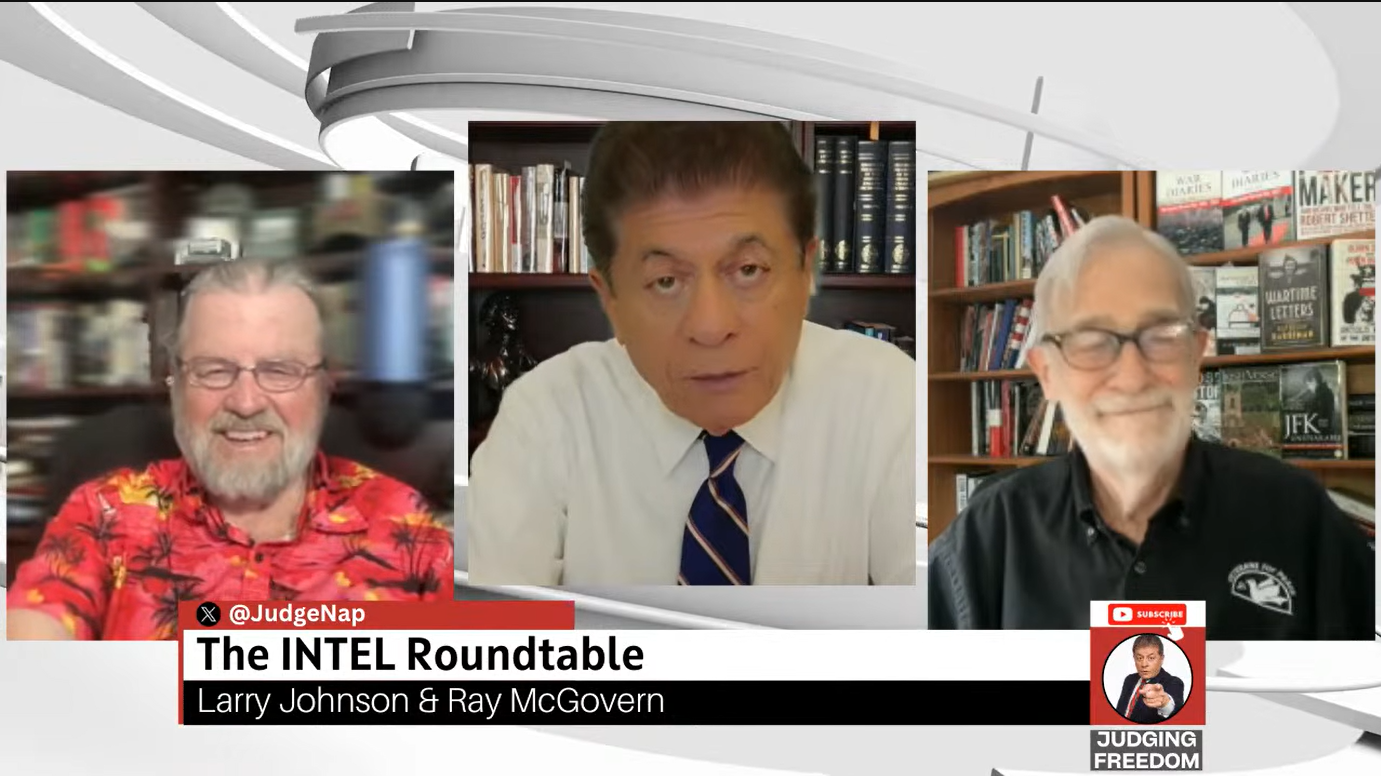
For those who don't follow the show, Napolitano keeps the format simple. He throws out a headline, a clip, or a recent statement, then lets his guests dig into it. Johnson and McGovern are both former CIA officers, and while people won't always agree with their conclusions, they usually bring perspectives that rarely make it onto television.
Trump's 39th Iran Peace Deal
The discussion opened with a CNN montage showing Trump claiming an Iran deal was close, nearly done, or about to happen dozens of times. Napolitano said the count was now around 39.
The problem, as both guests saw it, is that these promises often appear alongside threats of military action.
Larry Johnson joked that Aesop's classic story should be rewritten from The Boy Who Cried Wolf to The Trump Who Cried Peace. One day it's bombing threats, the next day it's peace talks, then back again.
McGovern argued that traditional intelligence channels appear to be largely sidelined and that a very small circle now controls what information reaches the president. He also mentioned attending a Russia Day event at the Russian embassy, where officials publicly praised improving relations while quietly continuing support for Iran.
The message from both men was simple: foreign governments are paying attention to actions, not speeches.
Oil and the Strategic Petroleum Reserve
Napolitano then shifted to oil.
Johnson argued that Washington has drawn down the Strategic Petroleum Reserve far beyond what it was originally intended for. He spent several minutes explaining the difference between light crude and heavy crude and why American refining capacity doesn't always match American production.
His warning was straightforward: if current trends continue, Americans could be looking at significantly higher gasoline prices later this summer.
McGovern's summary was much shorter.
"A house of cards."
Joe Kent, Iran, and Speaking Out
A large part of the conversation focused on Joe Kent's recent argument that the conflict with Iran is fundamentally Israel's war rather than America's.
Napolitano asked whether many people inside the national security establishment privately agree with that position.
Neither guest hesitated.
McGovern pointed out that Kent is already facing scrutiny after speaking publicly, which he viewed as proof that dissent inside the system comes with consequences. He also repeated his criticism of Marco Rubio's influence over the flow of information reaching Trump, using a description that was vintage McGovern and definitely not suitable for polite television.
Johnson took a more practical view. Inside government, he said, there are ways to object, but they often come at the expense of careers, promotions, pensions, and future opportunities. Leak investigations today, he argued, are often less about protecting secrets and more about preventing embarrassment.
Israel, Espionage, and Influence
Another interesting section dealt with reports that Israeli intelligence had been monitoring activity around Trump and Mar-a-Lago.
Johnson treated the story as something far less shocking than newspaper headlines suggested. He linked it to long-standing intelligence relationships and argued that Israeli officials were particularly interested in any negotiations involving Iran.
He also pointed to provisions in the NDAA that would further formalize intelligence cooperation between Washington and Tel Aviv, arguing that many of those arrangements already exist in practice.
Whether viewers agree with him or not, it was one of the more detailed and controversial parts of the discussion.
FISA Expires. Does Anything Change?
The roundtable ended with the expiration of Section 702 of FISA.
Johnson welcomed the move, calling it one of the few positive developments of the week and arguing that the provision had been routinely used against Americans rather than foreign threats.
McGovern was less optimistic.
After speaking with former NSA technical director Bill Binney, he said he sees little reason to believe surveillance activities will meaningfully change. Programs may get renamed, authorities may shift, but the machinery remains.
His conclusion was blunt:
"We're all under surveillance. We have to cope with that."
Final Thoughts
What makes this roundtable worth watching isn't that it provides all the answers. It's that it raises questions that most mainstream discussions never touch.
Whether the topic was Iran, oil prices, Israel, intelligence failures, or domestic surveillance, the recurring theme was a growing gap between official narratives and what many people inside the system apparently believe.
The full episode runs only about half an hour and is worth watching for anyone interested in where U.S. foreign policy may be heading next.
These are just the highlights, watch it on YouTube.
Your objective comments are always welcome.
Follow @ArabiSouri:
Twitter: Arabi Souri
Syria News: www.syrianews.cc
Patreon: https://www.patreon.com/arabisouri
Donations are highly appreciated, just click on the Donate button via PayPal or Credit Card: Donate.
You can also donate Steem/ Tron or SBD or even delegate some much-needed SP.

Seems that lucky number is 39..