Greater Periwinkle: The Quiet Bloom That Colors Forgotten Corners
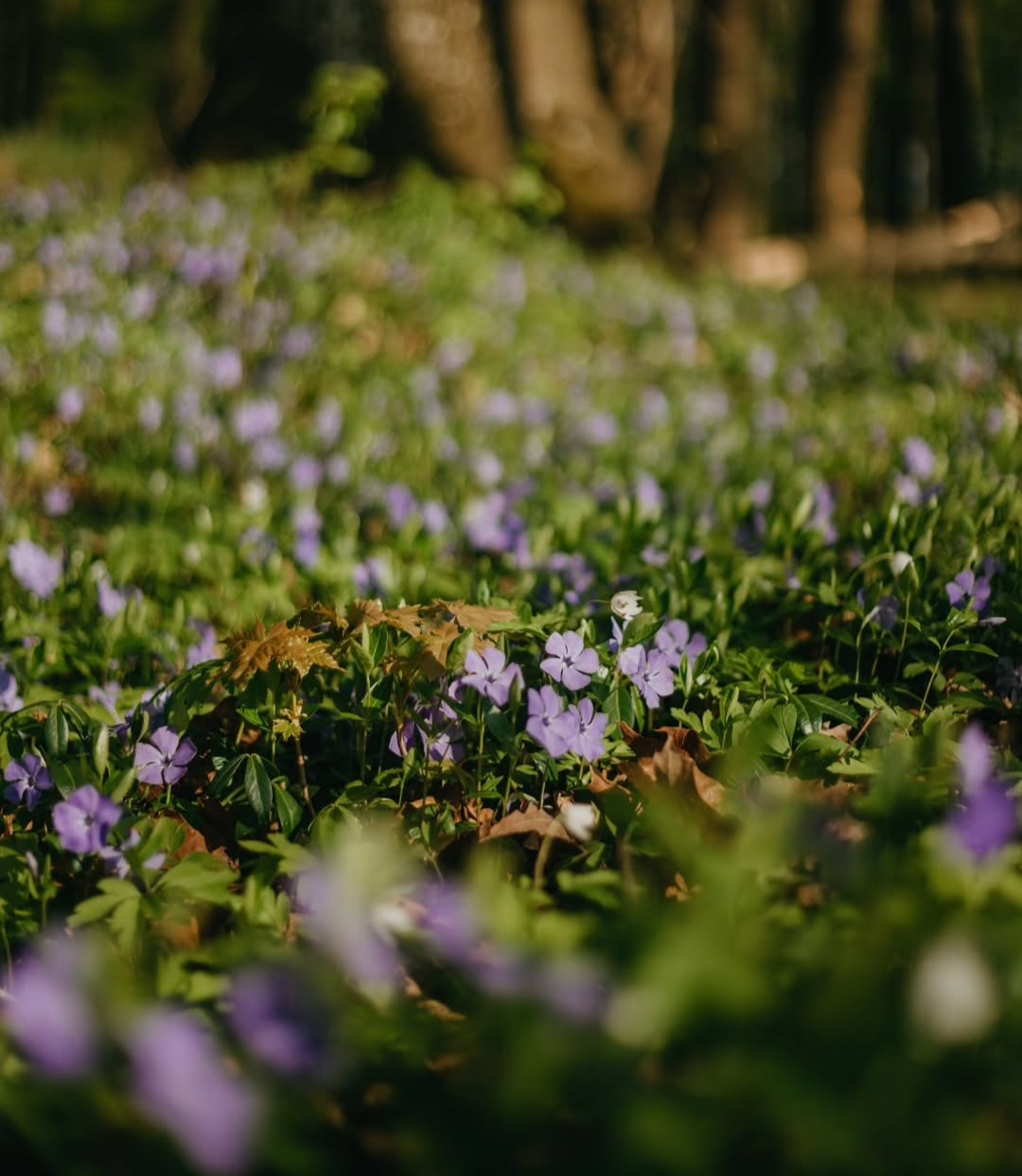
Among the many plants that brighten the edges of gardens and woodland paths, the Greater periwinkle holds a special kind of understated charm. It does not demand attention with towering height or dramatic fragrance. Instead, it spreads gently, weaving a living carpet of glossy green leaves and soft violet-blue flowers that seem to carry a calm, enduring beauty.
The Greater periwinkle thrives in places where other plants often struggle—shaded corners, beneath trees, and along neglected boundaries. Its creeping stems root easily, allowing it to expand steadily over time. In early spring and often again later in the year, its star-shaped blossoms appear like small pieces of sky scattered across the ground, quietly transforming overlooked spaces into scenes of quiet delight.
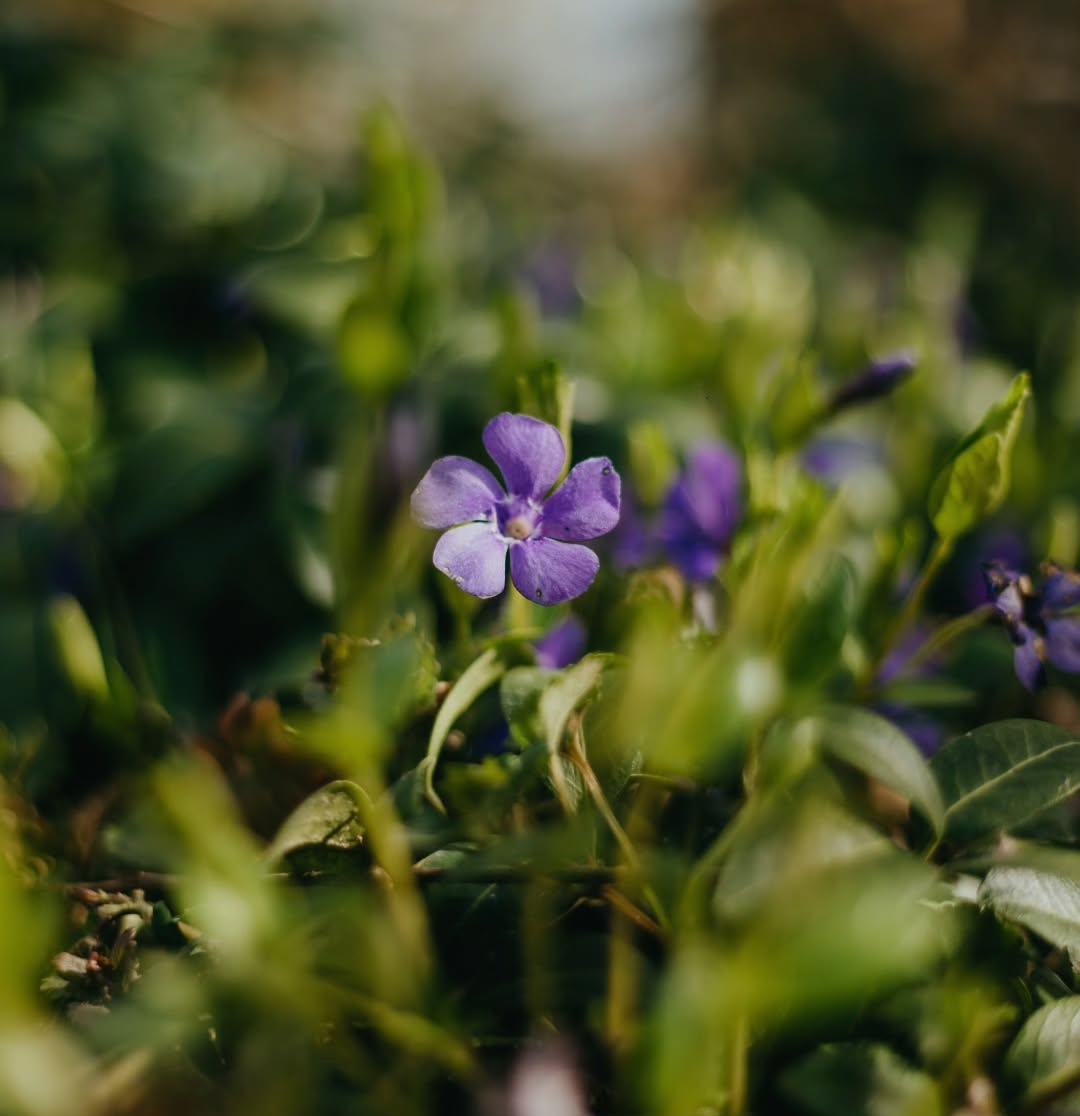
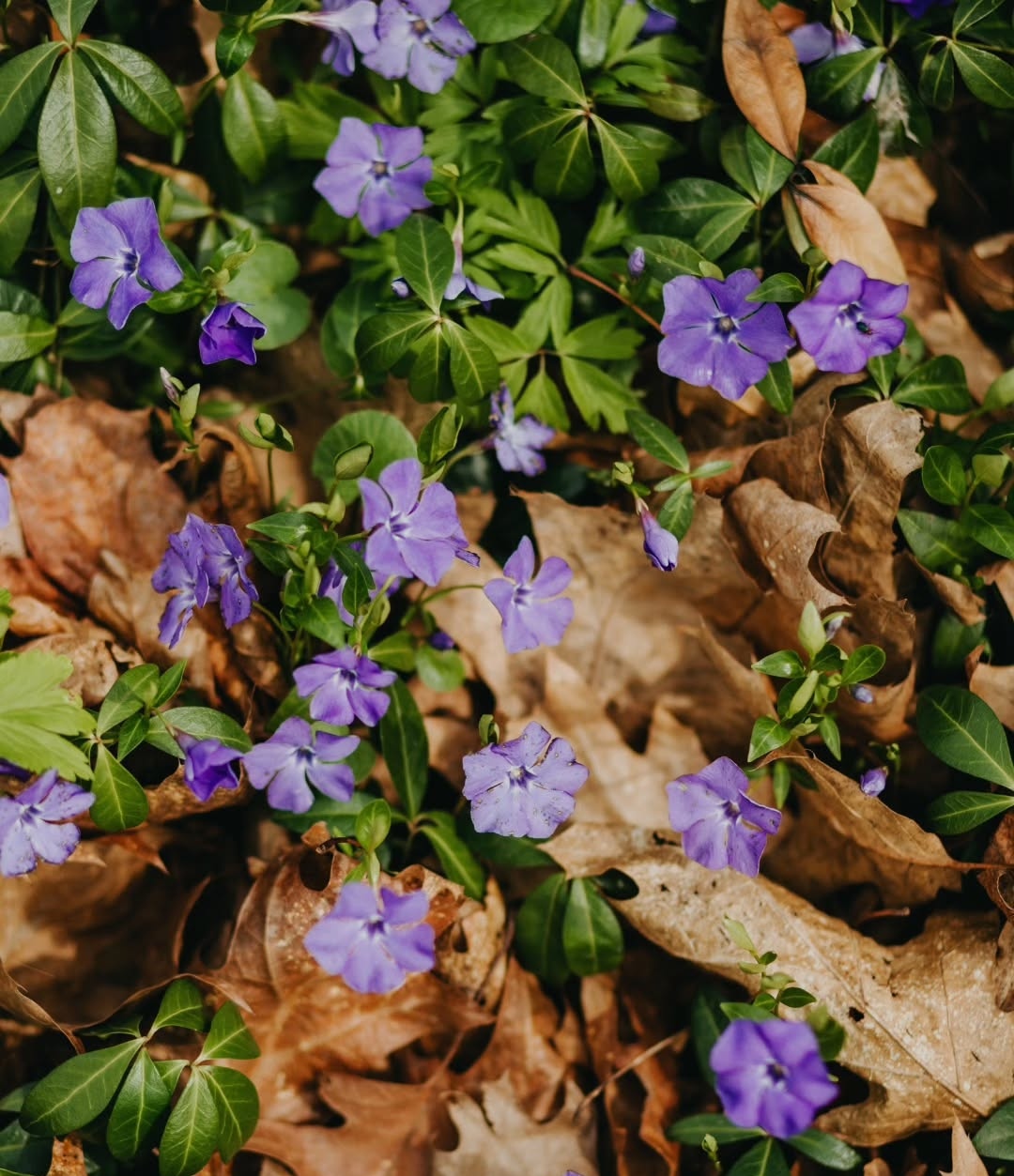
Native to southern Europe but now found in many parts of the world, this resilient plant has become both a garden favorite and, in some regions, a naturalized presence in the wild. Its adaptability makes it a reliable ground cover, valued for controlling soil erosion and suppressing weeds. Yet, this same vigor can sometimes make it overly enthusiastic, reminding gardeners of the delicate balance between cultivation and control.
Historically, the Greater periwinkle has carried symbolic meanings tied to memory, affection, and endurance. In some traditions, it was planted near homes or graves as a sign of remembrance. Its evergreen leaves, persisting through changing seasons, reflect a quiet resilience—a steady presence when much of the landscape fades and renews itself.
Beyond symbolism, the plant has also been explored for its medicinal properties. Like other members of its genus, it contains compounds that have drawn scientific interest. However, its use requires caution, as natural does not always mean harmless. The plant’s chemistry reminds us that nature’s gifts often come with complexity and responsibility.
In the end, the Greater periwinkle is a gentle teacher of persistence. It does not rush, nor does it compete loudly for attention. Instead, it grows steadily, filling empty spaces with life and color. In doing so, it invites us to notice the quiet transformations around us—the small, consistent acts of growth that, over time, create something truly beautiful.
%20(9).jpeg)