How Do Industrial Rubber Bellows Protect Equipment from Dust and Debris
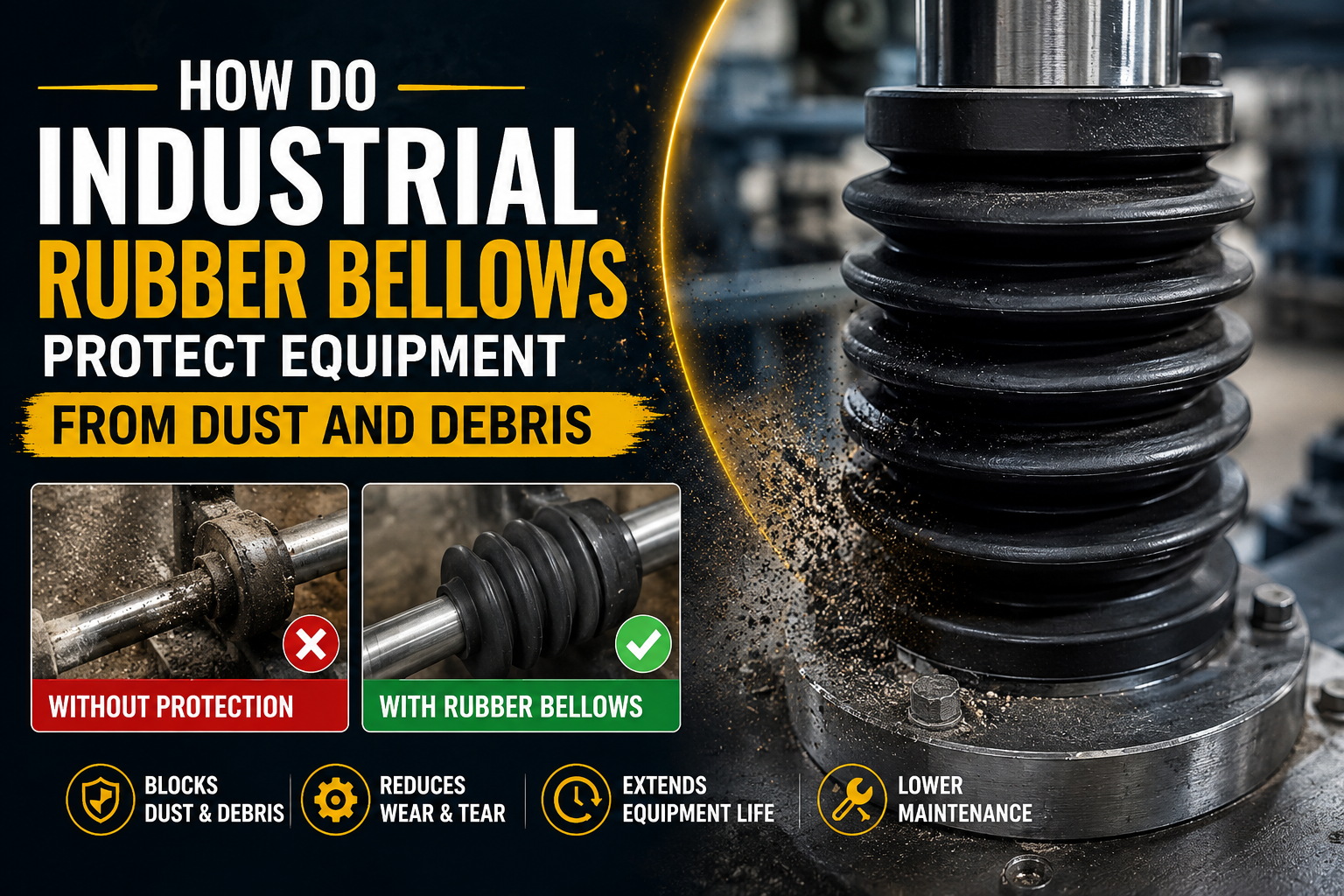
If you have ever walked through a busy factory floor, you know how much dust, metal shavings, oil splashes, and grit fill the air around running machines. It is just part of industrial life. But while every person can brush off a bit of dust, machinery cannot. Even a tiny amount of debris getting into the wrong place can cause a machine to wear out faster, jam up, or break down completely.
This is exactly why industrial rubber bellows exist. They are not the most talked-about component in a machine, but they quietly do one of the most important jobs on the factory floor: keeping the moving parts clean, protected, and working the way they are supposed to. In this article, we will walk through exactly how these bellows protect equipment, why that protection matters so much, and what to look for when working with a rubber bellow manufacturer for your own machinery.
What Exactly Are Industrial Rubber Bellows
Think of industrial rubber bellows as a flexible, accordion-style shield. They look a bit like the folds of an accordion instrument, which is actually where the nickname comes from. These folds are not just for looks. They let the bellows stretch, compress and flex with the machine part it is covering such as:
Rotating shaft/spindle.
Linear rail/guide
A rod (hydraulic or pneumatic)
Unlike a solid, rigid cover, a rubber bellows moves with the machine. This is the key difference that makes it so effective. A rigid cover can only protect what stays still. But most industrial machines are full of moving parts, and those moving parts are exactly where protection is needed most.
Dust & Debris – Why They Are a Major Problem in Industrial Settings
Before we get into how bellows protect equipment, we first need to discuss why dust and debris are such a serious problem in the first place.
In manufacturing environments machines are often surrounded by:
Metal shavings from sawing or grinding
Fine dust from processed materials
Mist of oil or coolant from lubrication systems
General dirt and grit tracked in from the floor
These particles on their own do not appear dangerous. But when they get onto a precision component such as a ball screw or a linear guide, they start to do real damage. Debris may:
Polish polished, scratched metal surfaces
Work into bearings, creating friction
Combine with lubricant and make it into an abrasive paste
Prevent the smooth movement of parts intended to slide or rotate freely
Over time, this leads to slower machine performance, more frequent breakdowns, and parts wearing out far sooner than they should.
How Rubber Bellows Actually Provide Protection
Now let us get into the heart of the matter. How does a simple rubber cover manage to keep all of this out?
They Create a Continuous Seal, Even While Moving
This is the greatest advantage of bellows over other types of covers. They are made from flexible folded rubber. This allows them to expand as a shaft extends, and to compress as it retracts, keeping the seal intact. There is never a time when a gap opens and allows dust to enter, a common problem with rigid or sliding covers.
They Act as a Physical Barrier Against Airborne Particles
The rubber material itself blocks dust, grit, and small metal particles from settling on the component underneath. Instead of landing on a sensitive shaft or rail, the debris simply lands on the outer surface of the bellows and stays there, away from anything it could damage.
They Resist Oils, Chemicals, and Abrasion
Good quality industrial rubber bellows are not just about physical shape. The material itself is selected to withstand the rigors of a factory floor including:
frequent exposure to oils and coolants
light chemical contact
Friction and abrasion, ever-present motion
This guarantees that the bellows will stay protective, without cracking or losing shape over time.
They Protect the Most Sensitive and Expensive Parts
Components like ball screws, linear guides, and hydraulic cylinders are often some of the most precise and costly parts in a machine. A small amount of contamination on these parts can lead to expensive repairs or full replacements. Bellows are the first line of defense keeping these vital components from getting dirty and not functioning properly.
Types of Rubber Bellows Used in Industrial Applications
Not all machines use the same type of bellows. Through the years manufacturers have designed different types of rubber bellows for different shapes, movements and environments. Here are some common ones:
The choice depends on the shape of the part to be protected, the range of motion involved and the conditions under which the machine operates.
Custom Size Rubber Bellows for a Perfect Fit
One thing that people forget is how much fit matters. A bellows that is even slightly too loose or tight will not seal properly, and this defeats the whole purpose. This is why many industries prefer custom size rubber bellows built to the exact dimensions of their machinery, rather than relying on generic, off-the-shelf covers. A precise fit means a tighter seal, smoother movement, and far better protection against dust and debris over the long run.
Small rubber bellows fall into this same category. Not all industrial equipment is large and heavy-duty. But even small precision instruments, sensors and compact machines need protection and that protection is on a smaller scale. For these applications, small rubber bellows are produced, which provide the same dust and debris protection, but in a form factor that can fit into tight spaces without interfering with delicate internal components.
Why This Protection Actually Matters for Your Business
It is easy to overlook something like a rubber bellows as it is not the starring component of a machine. But it will make a big difference to the way you operate. Normally when bellows are working properly you see:
Fewer unexpected breakdowns, since components stay clean and free from grit-related damage
Longer life out of expensive precision parts, since they are not constantly being worn down by debris
Less time spent by maintenance teams cleaning out contamination
A production line that keeps running without unplanned downtime caused by contamination-related failures.
In other words, a well-designed bellows is a small investment that protects a much larger investment, your machinery and your production schedule.
Choosing the Right Manufacturer for Better Dust and Debris Protection
The level of protection your bellows provide depends heavily on who makes them. A generic, off-the-shelf bellows may fit loosely, leave small gaps, or use lower-grade rubber that wears out fast, all of which let dust and debris sneak through over time. This is why many industries prefer working with a custom rubber bellows manufacturer or a rubber bellows manufacturer who can build products around their exact machine specifications instead of settling for a standard size.
A good manufacturer including trusted suppliers of rubber bellows will usually provide:
Rubber bellows custom sized to the exact dimensions of your machine for a better seal.
Rubber bellows custom made for use in unusual shapes or movement patterns that standard products cannot handle.
Bespoke rubber bellows made completely from scratch for specialized or prototype machinery.
Custom rubber bellows for heavy equipment are made of thicker, heavier compounds able to withstand greater loads, vibration and constant exposure to dirt.
Same quality control standards for every batch, so protection doesn’t degrade over time
The better the fit and quality of the build, the less chance there is for dust, debris or moisture to find its way into your equipment.
Conclusion
Industrial rubber bellows may not be the sexiest part of a machine, but they are doing an important job each and every day. They form a flexible, continuous seal around moving parts to keep dust, debris and contaminants away from critical components. That means less downtime, less maintenance cost and machinery that just lasts longer.
If your equipment is exposed to dust, debris or harsh industrial conditions, one of the simplest ways to protect your machines and keep your operations running smoothly is to work with an experienced rubber bellow manufacturer to get the right custom size rubber bellows.
Frequently Asked Questions
What is a custom design rubber bellows manufacturer?
A custom design rubber bellows manufacturer specializes in creating bellows tailored to a specific machine's shape, size, and movement requirements, rather than offering only standard, off-the-shelf sizes. This ensures a better seal, smoother movement, and longer-lasting protection against dust and debris.
Are custom rubber bellows available for heavy equipment?
Yes, custom rubber bellows for heavy equipment are built using thicker, more durable rubber compounds designed to handle higher stress, larger movements, and harsher environments commonly found in heavy industrial and construction machinery.
What is a bespoke rubber bellows manufacturer?
A bespoke rubber bellows manufacturer designs and produces bellows completely based on a client's exact specifications, including shape, fold pattern, material type, and size, rather than modifying a standard product.
How do I know what size of rubber bellows my machine needs?
The best way is to measure the exact dimensions of the component being covered, including its extended and compressed length, diameter, and range of motion, then share these details with your rubber bellows suppliers so they can recommend or manufacture the right fit.
Can small rubber bellows be used in precision machinery?
Yes, small rubber bellows are commonly used in compact or precision equipment where space is limited but protection from dust, debris, and contaminants is still essential for smooth operation.
What types of rubber bellows are available for industrial use?
Common types of rubber bellows include round bellows for rotating shafts, square or rectangular bellows for linear guides, conical bellows for tapered parts, and flat single-fold bellows for tight spaces.