You would like a copy of yourself when you die.
in Popular STEM18 hours ago

You would like a copy of yourself when you die.



Souce


What if, in the future, a part of your personality could continue to exist even after your death—not merely as videos or photographs, but as an artificial intelligence capable of conversing, teaching, answering questions, and even controlling a humanoid robot using everything it learned during your lifetime? That is the proposal behind a project introduced by the U.S.-based company Veterans Recovery Network.


Although the initiative is still in the conceptual stage and many of its promises await scientific and technological validation, it raises a fascinating discussion. Will it one day be possible to digitally preserve aspects of human identity? The project is part of a platform called QAIX, which aims to expand this technology into a much broader ecosystem encompassing robotics, healthcare, artificial intelligence, and highly automated cities.


One of the most intriguing concepts is precisely what is known as "digital DNA"; despite the name, it bears no relation to biological DNA. The concept involves creating an extremely detailed digital replica of a person using a haptic suit equipped with 40 sensors distributed across the body. As the user performs various activities, the system records movements, postures, vital signs, motor patterns, professional skills, and a range of other behavioral data and information.


This data would be processed by artificial intelligence systems to create a digital profile capable of replicating specific aspects of how that person acts, reacts, and performs tasks; according to the creators, this profile could eventually be integrated into humanoid robots or even holographic representations, allowing family members or institutions to continue interacting with the individual's digital version.


It is important to note, however, that this proposal is still far from representing an actual transfer of human consciousness. The technology described aims to replicate behavioral patterns and accumulated knowledge, yet there is no scientific evidence that it is possible to copy memories, emotions, or the subjective experience that defines a person's consciousness.


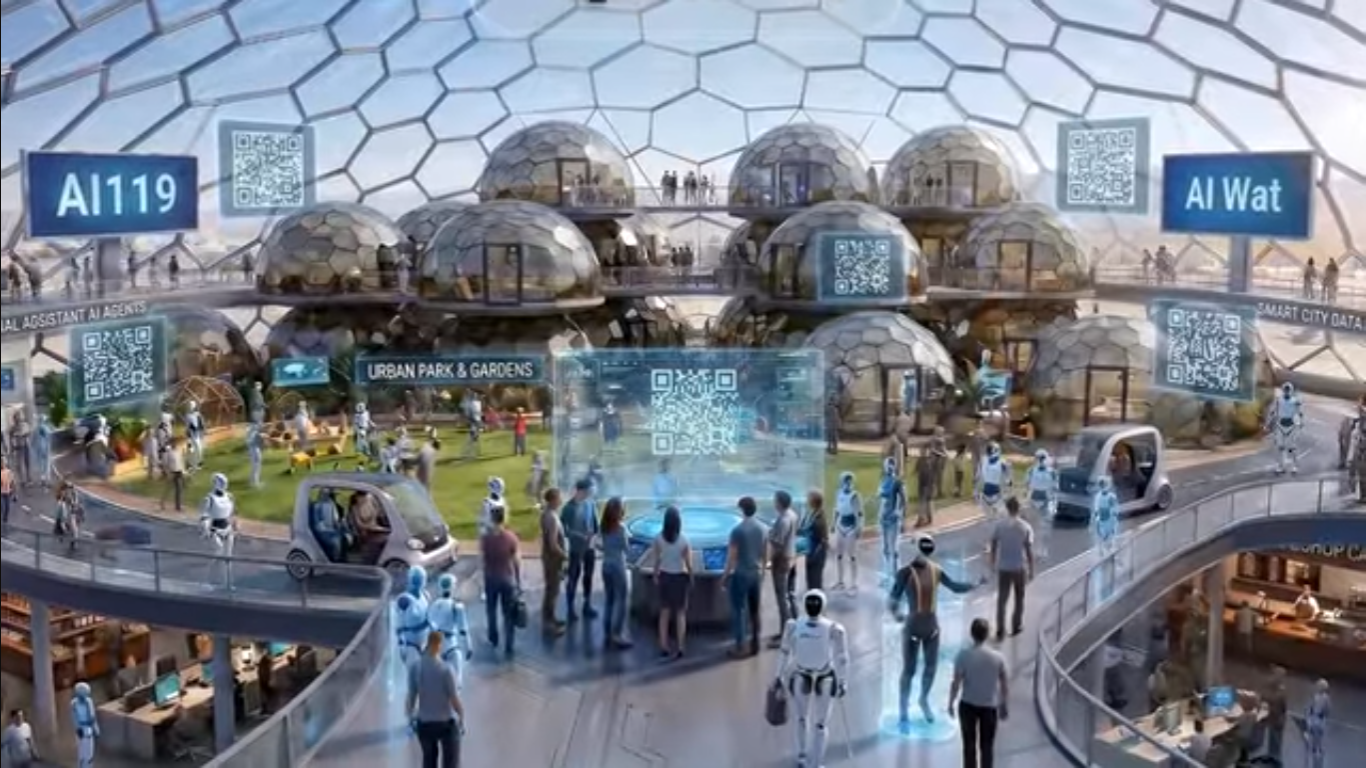
In other words, a system can learn to imitate someone, but that does not mean the person continues to exist within the machine; beyond this concept, the project presents a highly ambitious vision for the future. The proposal includes the creation of hundreds of highly automated communities where robots and artificial intelligence systems would perform most daily tasks—ranging from urban infrastructure to public services—while human professionals would oversee only those situations requiring specialized judgment. To date, there is no public evidence that the technology can faithfully reproduce a person's identity or deliver the described capabilities on a large scale.


Many of these promises remain at the conceptual stage and must overcome scientific, technical, ethical, and legal challenges before any practical application.


Sorry for my Ingles, it's not my main language. The images were taken from the sources used or were created with artificial intelligence