What Determines the Price of Tyres? Key Factors Explained
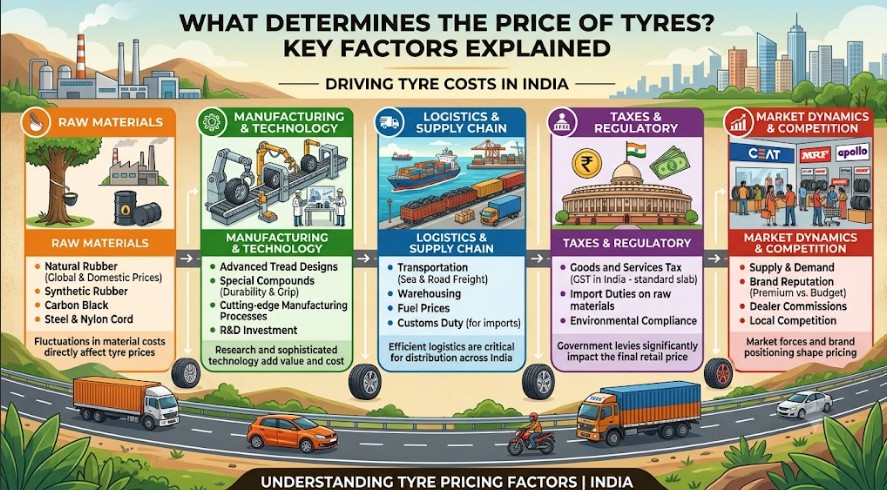
Have you ever wondered why the price of tyres varies so dramatically across different brands and models? Walking into a tyre shop can feel overwhelming when you see costs ranging from budget-friendly options to premium choices that cost three times more. Understanding what drives these price differences helps you make smarter purchasing decisions for your two-wheeler, whether you ride a Hero Splendor or a premium motorcycle.
Material Composition: The Foundation of Tyre Pricing
The rubber compound forms the primary factor determining the price of tyres. Basic natural rubber keeps costs lower for everyday commuters, while advanced formulations command premium prices.
Compound Technology Impact
Silica-infused compounds elevate the price of tyres by 20-30% compared to basic rubber mixtures. These advanced materials offer:
• Enhanced wet-weather grip during monsoons
• Better heat resistance on highways
• Improved durability and longevity
Premium compounds incorporate nylon reinforcement that resists flex and maintains shape under stress. The precise mixing and curing processes required for these materials increase factory overheads, directly affecting the price of tyres.
Construction Complexity
Manufacturing processes significantly influence costs:
|
Feature |
Price Impact |
Benefit |
|---|---|---|
|
Puncture-resistant layers |
+15-20% |
Fewer roadside troubles |
|
Sidewall protection |
+10-15% |
Better cornering stability |
|
Tubeless compatibility |
+25-30% |
Self-sealing capability |
Size and Design Variables
Tyre dimensions directly correlate with material usage and the price of tyres. Larger sizes require more raw materials and complex manufacturing processes.
Size-Based Pricing
A narrow 2.75-18 front tyre uses considerably less rubber than a wider 80/100-18 rear tyre. This size difference translates to:
• 30-40% price variation between front and rear tyres
• Higher costs for tubeless designs versus tube-type variants
• Premium pricing for radial construction over bias-ply alternatives
Tread Pattern Engineering
Specialised tread designs affect the price of tyres through:
• Research and development investments
• Unique mould requirements
• Complex manufacturing processes
V-groove patterns for monsoon grip cost more than basic ribbed designs for dry conditions. Each pattern requires specific tooling and testing, embedding costs into the final product.
Market Dynamics and Brand Value
Brand reputation plays a crucial role in determining the price of tyres. Established manufacturers like MRF command premium pricing through proven quality and extensive warranties.
Competition creates interesting pricing dynamics. When multiple brands offer similar products, prices reach equilibrium. However, companies differentiate through unique features, maintaining varied price points.
Seasonal demand fluctuations also impact costs. Pre-monsoon periods see price increases as supply strains against heightened demand. Kerala dealers often add regional markups for logistics and storage.
Wrapping Up
Understanding what determines the price of tyres empowers you to balance cost with performance needs. Whether you prioritise wet-weather safety or maximum mileage, knowing these factors helps justify your investment.
For riders seeking reliable performance without premium pricing, Eurogrip offers compelling options. Their DuCT (Dual Tread Compound Technology) delivers superior mileage alongside excellent grip, while DrBond reinforcement technology ensures durability throughout the tyre's life. The OpT-PaD design provides even wear patterns and confident handling in both dry and wet conditions. With features typically found in premium tyres, Eurogrip demonstrates that quality needn't always carry luxury price tags, making performance accessible for everyday riders across India's diverse road conditions.