Product lifecycle management (PLM) is the process of managing a product’s lifecycle from inception, through design and manufacturing, to sales, service, and eventually retirement.
As a technology, PLM software helps organizations to develop new products and bring them to market. The software makes it easy to track and share data along the product value chain, from initial design through manufacturing, supply chain management and operations, and asset maintenance.
PLM fundamentals
In an age where innovation is key to business survival and success, PLM plays a critical role in helping manufacturers develop the next generation of products, at a lower cost, and with a faster time to market. While PLM can also be interpreted as a business strategy, three fundamentals impact the way teams work and the ability for organizations to grow and thrive:
Universal, secure, managed access and use of product definition information
Maintenance of the integrity of that product definition and related information throughout the life of the product
Management and maintenance of the business processes used to create, manage, disseminate, share, and use the information
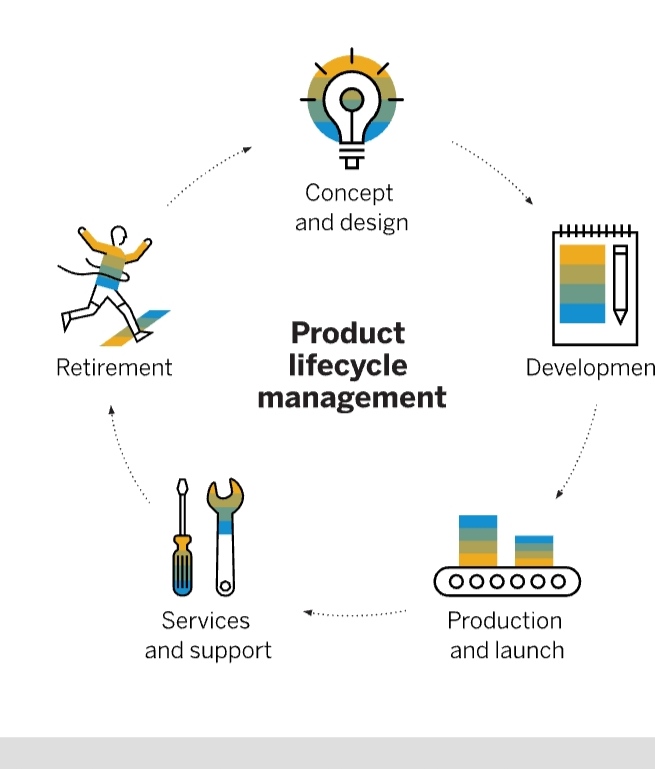
The five phases of product development
There are many different ways to describe the phases of product development and no one industry standard. However, the phases below represent a typical development cycle.
Graphic describing the five phases of product development
Concept and design: The ideation phase, where a product’s requirements are defined based on factors including competitor analysis, gaps in the market, or customer needs.
Develop: The detailed design of the product will be created, along with any necessary tool designs. This phase includes validation and analysis of the planned product, as well as prototype development and piloting in the field. This generates vital feedback on how the product is used and what further refinements are needed.
Production and launch: Feedback from the pilot is used to adjust the design and other components to produce a market-ready version. The production of the new product is scaled – followed by launch and distribution to the market.
Service and support: Following the launch of the new product, the period of time when service and support is offered.
Retirement: At the end of the product’s lifecycle, its withdrawal from the market must be managed – along with any retrials or absorption into new concept ideas.