Quant Trading Explained: Deflated Sharpe Ratio, Backtest Risk and Algorithmic Trading Failures
Quant trading changed markets by replacing human conviction with statistical edge.
Instead of asking:
“What do I think will happen?”
Quant trading asks:
“What pattern has appeared often enough, across enough data, with enough consistency, to justify a repeatable rule?”
That logic helped build some of the greatest investment records in history.
Ed Thorp used probability theory to beat blackjack, then applied the same mindset to options pricing and market-neutral investing.
Jim Simons built Renaissance Technologies and the Medallion Fund into one of the most famous return machines ever created.
Cliff Asness helped turn factor investing into a systematic discipline.
D.E. Shaw, Two Sigma, Jane Street and Citadel Securities helped make data, code and execution infrastructure central to modern markets.
But quant trading has its own graveyard.
The 2007 Quant Quake showed what happens when too many funds discover the same signal and try to exit at the same time.
Goldman Sachs Global Alpha was one of the major casualties.
Knight Capital showed an even more brutal failure mode in 2012, when dormant test code triggered millions of unintended trades in 45 minutes and caused a $440 million loss.
The trading idea did not need to be wrong.
The infrastructure broke.
That is the key difference.
A discretionary investor can fail by being wrong about the world.
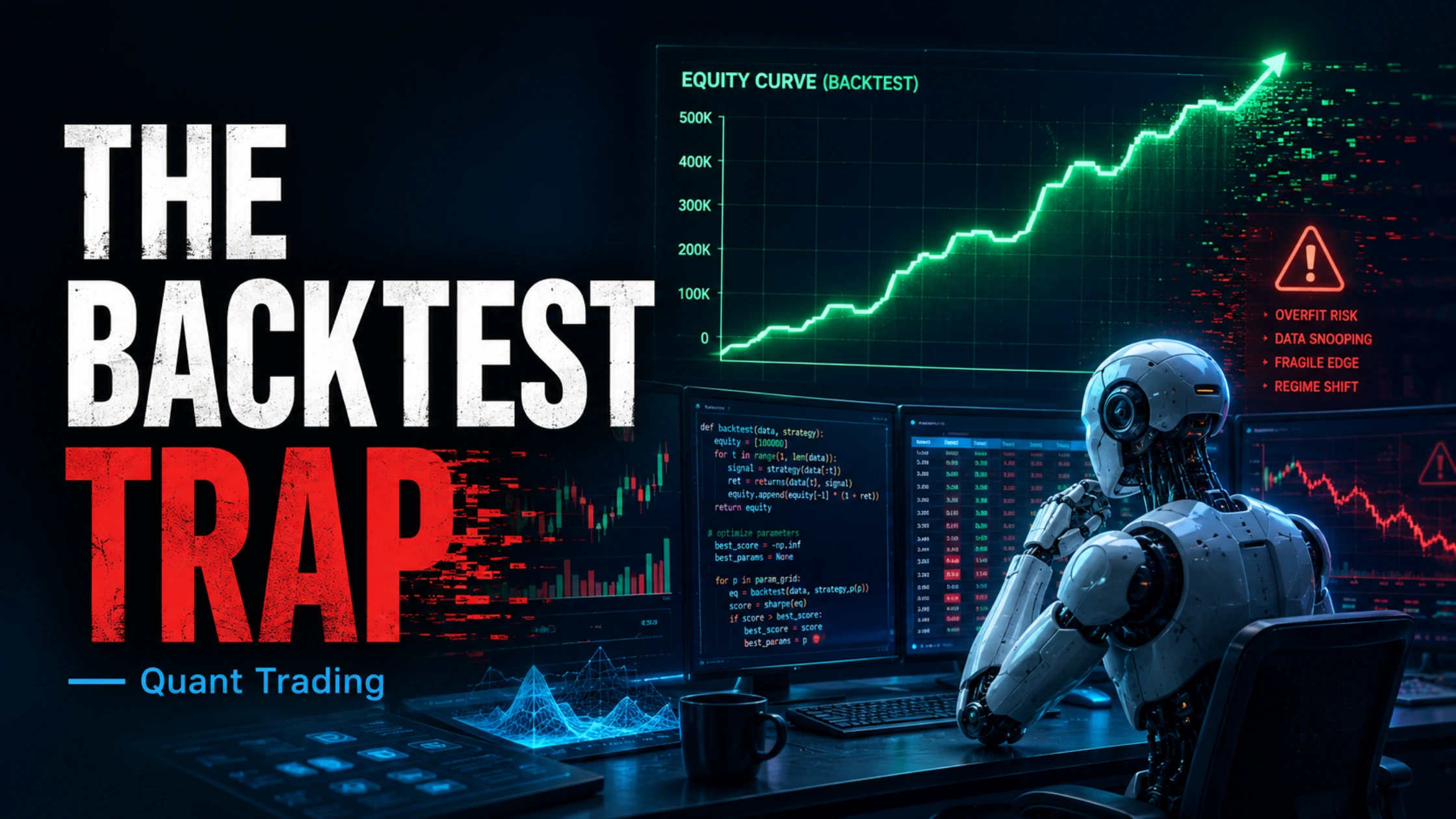
A quant strategy can fail because the signal is crowded, the backtest is overfit or the code misfires.
This matters directly for crypto.
Trading bots, DeFi vaults, funding-rate strategies, market-making systems and AI trading tools often advertise attractive historical performance.
But the headline return is not enough.
The better questions are:
Was the performance live or backtested?
How many strategy variations were tested?
Does it survive fees and slippage?
What happens when liquidity disappears?
Can the code fail?
Is everyone running the same signal?
That is why Decentralised News built the DN Deflated Sharpe Ratio Calculator.
A statistically rigorous edge and a lucky backtest can look identical on a performance chart.
The difference only appears when you adjust for selection bias, track record length and how many versions were tested before the winner was shown.
In modern markets, the best strategy is not the one with the prettiest chart.
It is the one that survives live execution, real liquidity, changing regimes and honest statistics.
Full analysis on Decentralised News: https://decentralised.news/quant-trading-explained
#QuantTrading #AlgorithmicTrading #SystematicTrading #TradingBots #JimSimons #RenaissanceTechnologies #MedallionFund #EdThorp #SharpeRatio #DeflatedSharpeRatio #Backtesting #CryptoTrading #DeFi #TradingStrategy #RiskManagement #MarketMaking #AITrading #FinTech #Investing #DecentralisedNews