China has just unveiled a new lunar rover with wheels and a humanoid upper body/China acaba de mostrar un nuevo rover lunar con ruedas y un cuerpo superior humanoide
Source
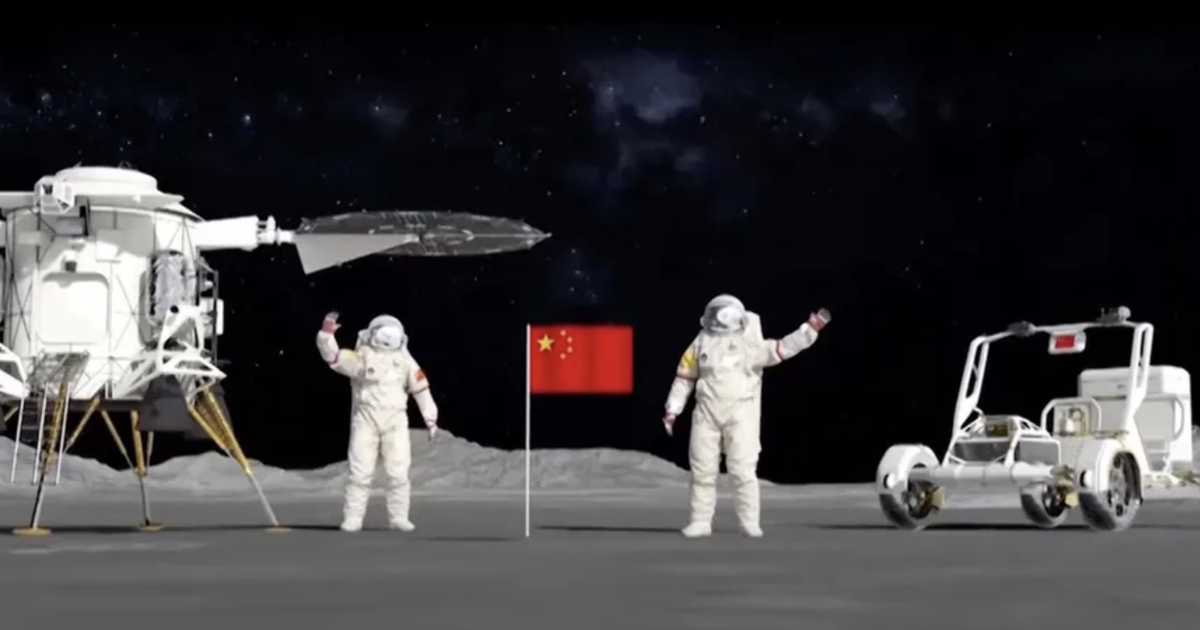
By now, we're all probably well aware that the race to colonize the lunar surface is in full swing, with a clear struggle between the Chinese and American governments to be the first to build a permanent base on the moon. Against this backdrop, China has developed a new rover called the "Multifunctional Lunar Surface Robot and Mobile Charging Station," an innovative hybrid of rover and humanoid designed not only to explore but also to build upon and manipulate the lunar environment.
A estas alturas seguramente ya todos tenemos muy claro que la carrera por colonizar el suelo lunar está en su pleno apogeo y hay una lucha clara entre los gobiernos de China y Estados Unidos para ser el primero en construir una base permanente en la luna. En este escenario, surge el nuevo rover desarrollado por China y llamado "Robot de Superficie Lunar Multifuncional y Estación de Carga Móvil", que es una mezcla innovadora de rover y humanoide diseñado no solo para explorar, sino para construir y manipular el entorno de la Luna.
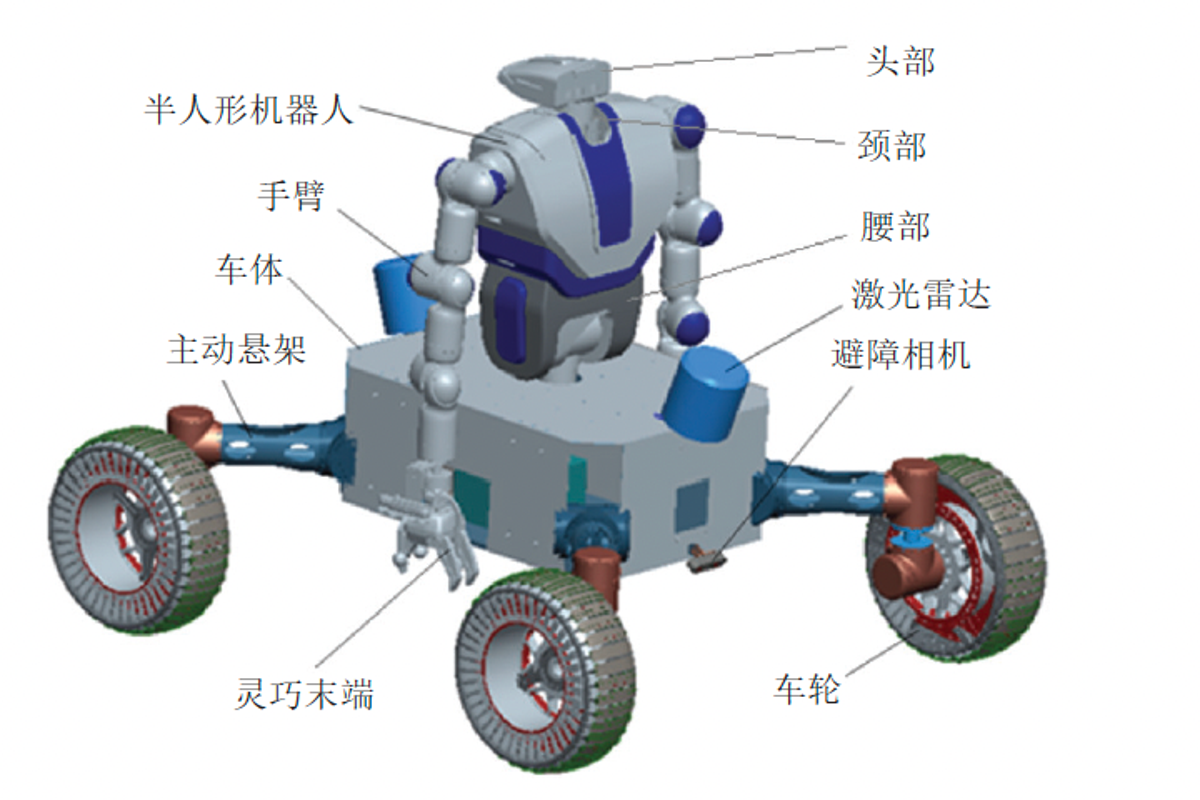
This is a prototype developed by the Hong Kong University of Science and Technology (HKUST) for the Chang'e-8 mission, scheduled for launch in 2028-2029. Its hybrid design addresses a very practical need: it has four wheels instead of legs, allowing it to move more quickly and stably across the Moon's uneven and dusty terrain than a bipedal robot, and with more efficient energy consumption. It has a torso with two articulated arms and hands with a degree of freedom. The reason is simple: most space tools and equipment are designed to be used by human-like astronauts. Instead of redesigning all the tools, you build a robot that can use the ones that already exist.
Se trata de un prototipo desarrollado por la Universidad de Ciencia y Tecnología de Hong Kong (HKUST) para la misión Chang'e-8, cuyo lanzamiento está previsto para 2028-2029 . Su diseño híbrido responde a una necesidad muy práctica, tiene cuatro ruedas en lugar de piernas lo que le permite desplazarse de forma más rápida y estable por el terreno irregular y polvoriento de la Luna que un robot bípedo, y con un consumo de energía más eficiente. Posee un torso con dos brazos articulados y manos con cierto grado de libertad . La razón es simple: la mayoría de las herramientas y equipos espaciales están diseñados para ser usados por astronautas con forma humana. En lugar de rediseñar todas las herramientas, construyes un robot que pueda usar las que ya existen.
Source
Operating on the Moon is extremely complex, which is why this robot incorporates several key technologies for survival and operation. It features artificial intelligence systems that allow it to operate semi-autonomously, navigate using 3D mapping, avoid obstacles like craters, and identify and track objects to determine how to grasp them (since the instruments it must move are from different countries and are not standardized). The greatest challenge is not movement, but survival.
Operar en la Luna es extremadamente complejo, por ello este robot lleva integradas varias tecnologías clave para sobrevivir y trabajar. Cuenta con sistemas de inteligencia artificial que le permiten operar de forma semi autónoma, puede navegar utilizando mapeo 3D, puede evitar obstáculos como cráteres, e identificar y rastrear objetos para decidir cómo tiene que agarrarlos (ya que los instrumentos que debe mover son de diferentes países y no están estandarizados). La mayor dificultad no es moverse, sino sobrevivir.
The robot is designed to last two years at the lunar south pole, where temperatures range from 120°C to -180°C. It will spend twenty-four lunar nights, each lasting more than fourteen Earth days, in complete darkness, during which it will hibernate since it has no solar power and will only "wake up" with the arrival of the new day. It is powered by solar panels and is being designed to also function as a "mobile charging station" for use with other equipment in the future.
El robot está diseñado para durar dos años en el polo sur lunar, donde las temperaturas oscilan entre 120°C y -180°C. Pasará por veinticuatro noches lunares, cada una de ellas con una duración de más de catorce días terrestres en completa oscuridad, durante las cuales hibernará ya que no tiene energía solar y deberá "despertar" solo al llegar el nuevo día. Se alimenta mediante paneles solares y está siendo diseñado para funcionar también como una "estación de carga móvil" para utilizarla en otros equipos en el futuro.
Source
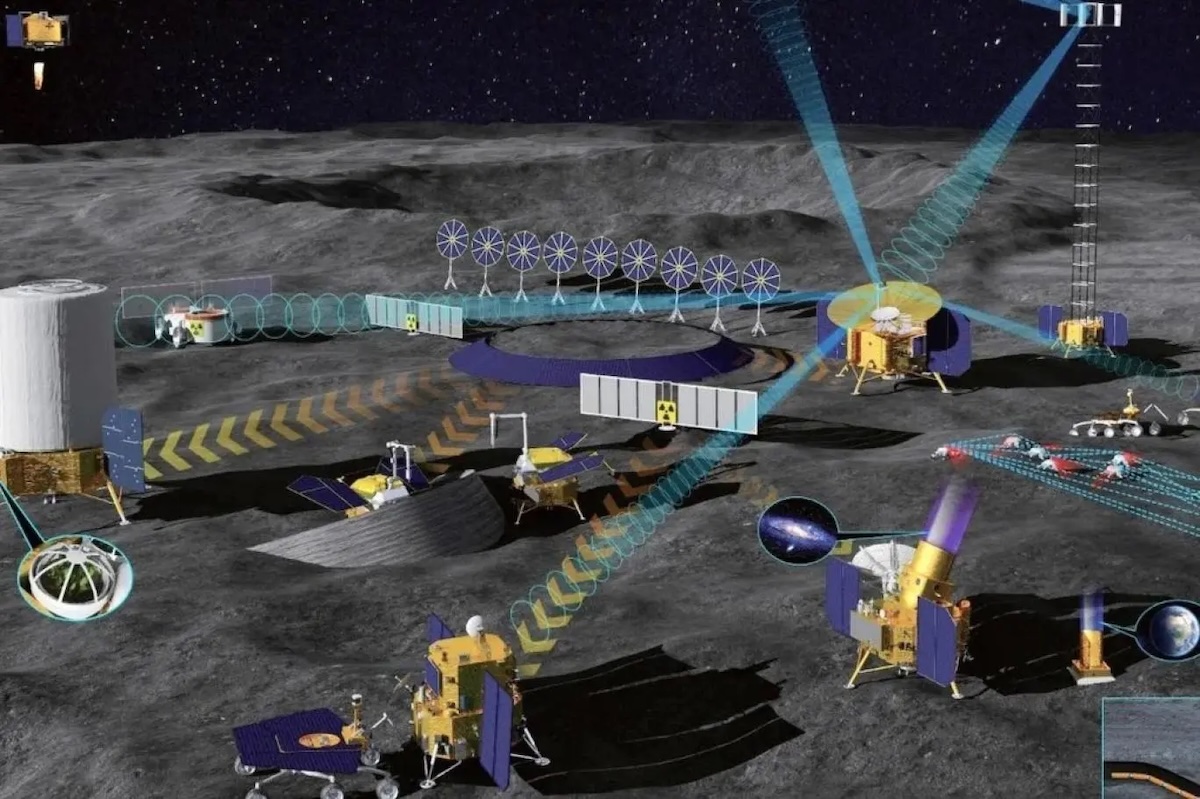
Its primary objective is to lay the groundwork for a permanent human presence. Unlike purely scientific rovers (such as Curiosity on Mars), this one is designed for construction and maintenance work. Its main task will be to transport, unload, and install instruments and sensors at specific locations on the lunar surface. It will also assist in collecting lunar soil and rock samples (regolith). It is a key component of the International Lunar Research Station (ILRS), a joint project between China and Russia to build a base at the Moon's south pole using techniques such as 3D printing.
Su objetivo principal es sentar las bases para una presencia humana permanente. A diferencia de rovers puramente científicos (como el Curiosity en Marte), este está pensado para trabajos de construcción y mantenimiento. Su tarea principal será transportar, descargar y instalar instrumentos y sensores en lugares específicos de la superficie lunar. Actuará como apoyo para recolectar muestras de suelo y rocas lunares (regolito). Se trata de una pieza clave para la Estación Internacional de Investigación Lunar (ILRS), un proyecto conjunto de China y Rusia para construir una base en el polo sur de la Luna usando técnicas como la impresión 3D.
In short, while the Chang'e-7 mission, which will be launched earlier, will focus primarily on exploration and the search for water ice, the Chang'e-8 rover will be the construction worker that will go to prepare the terrain and assemble the infrastructure. There's no doubt that this is truly exciting; at this rate, it's possible that in just a decade we'll have one or more permanent colonies on the Moon, and who knows, maybe even a "Disney Moon"-style resort for literal honeymoons.
En resumen, mientras que la misión Chang'e-7 , que sera lanzada con anterioridad se centrará principalmente en la exploración y búsqueda de hielo de agua, el robot de la Chang'e-8 será el trabajador de la construcción que irá a preparar el terreno y montar la infraestructura. No cabe duda de que esto es algo realmente excitante, a este ritmo es posible que en tan solo una década tengamos en la Luna una o varias colonias permanentes e incluso quien sabe si algún complejo turístico del estilo de "Disney Moon" para lunas de miel literales.
More information/Más información
https://interestingengineering.com/ai-robotics/china-unveils-robot-construction-worker
The construction of a real lunar infrastructure progresses with this exciting phase of activity. One innovatively designed concept is to create a hybrid rover with humanoid type arms and uses wheeled mobility independent of the design of tools that astronauts use for exploration; thus, increasing overall efficiency at the same time.
If successful, the Chang'e 8 Mission should act as a starting point for building the International Lunar Research Station.
There is a transformation from just exploration to being able to utilize robots as builders or "off-world construction crews". This marks a significant change in the current approach to mission type programs performed at Moon.