Humanoid robots operate on a live pig for the first time/Robots humanoides operan a un cerdo vivo por primera vez
Source
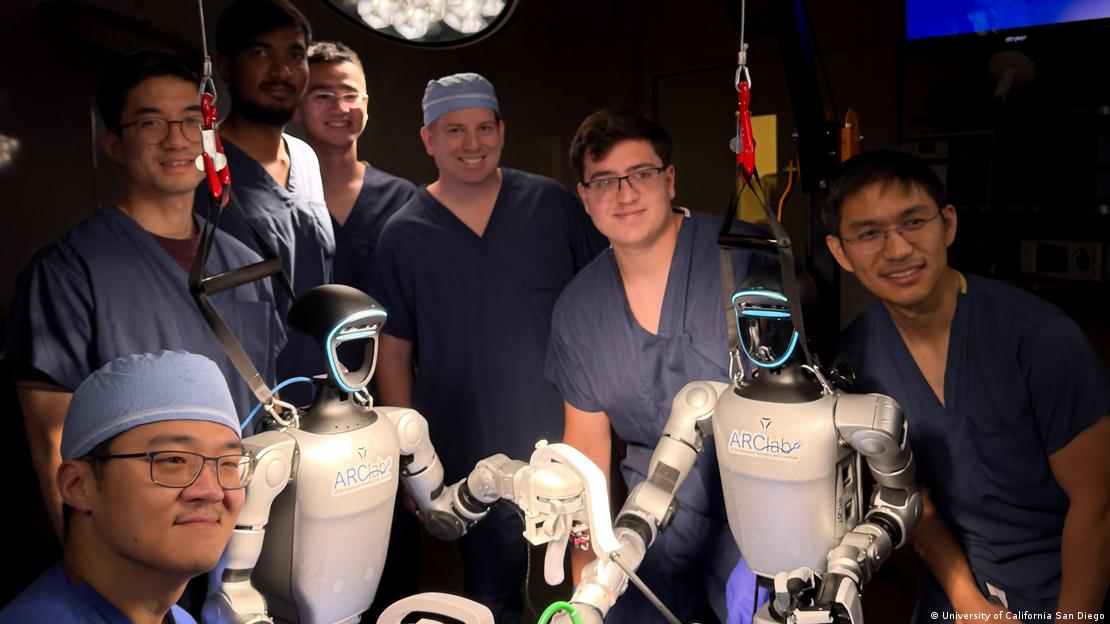
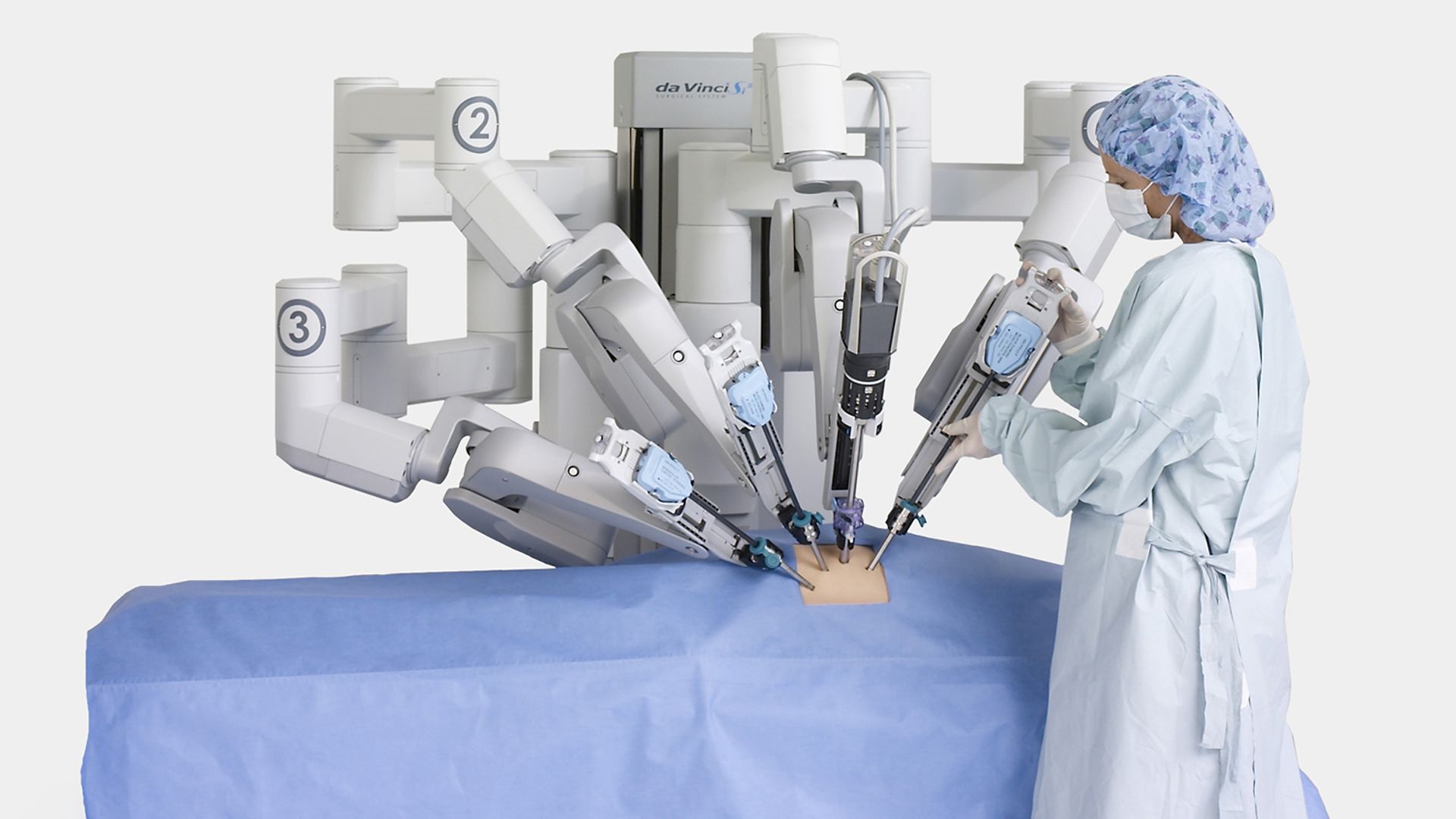
You've probably all heard of the Da Vinci system, a robotic surgery system controlled by a surgeon. However, the key difference between the Da Vinci and the humanoid robots in this news story lies not in the concept, but in their design and purpose. In a preclinical trial conducted by researchers at the University of California, San Diego, two remotely controlled humanoid robots performed laparoscopic surgery on live animals. The experiment involved removing the gallbladders of two live pigs using laparoscopic surgery. This represents a milestone in robotic surgery that could mark a turning point in access to complex operations performed by robots.
Seguro que todos habréis oido hablar de Da Vinci, un sistema de cirugía robótica controlado por un cirujano. Sin embargo, la diferencia clave entre el Da Vinci y los robots humanoides de la noticia no está en el concepto, sino en el diseño y su propósito. En un ensayo preclínico, llevado a cabo por investigadores de la Universidad de California en San Diego, dos robots humanoides teledirigidos realizaron una cirugía laparoscópica en animales vivos. El experimento consistió en extirpar la vesícula biliar a dos cerdos vivos mediante cirugía laparoscópica. Lo que constituye un hito en la cirugía robótica que podría marcar un antes y un después en el acceso a operaciones complejas mediante robots.
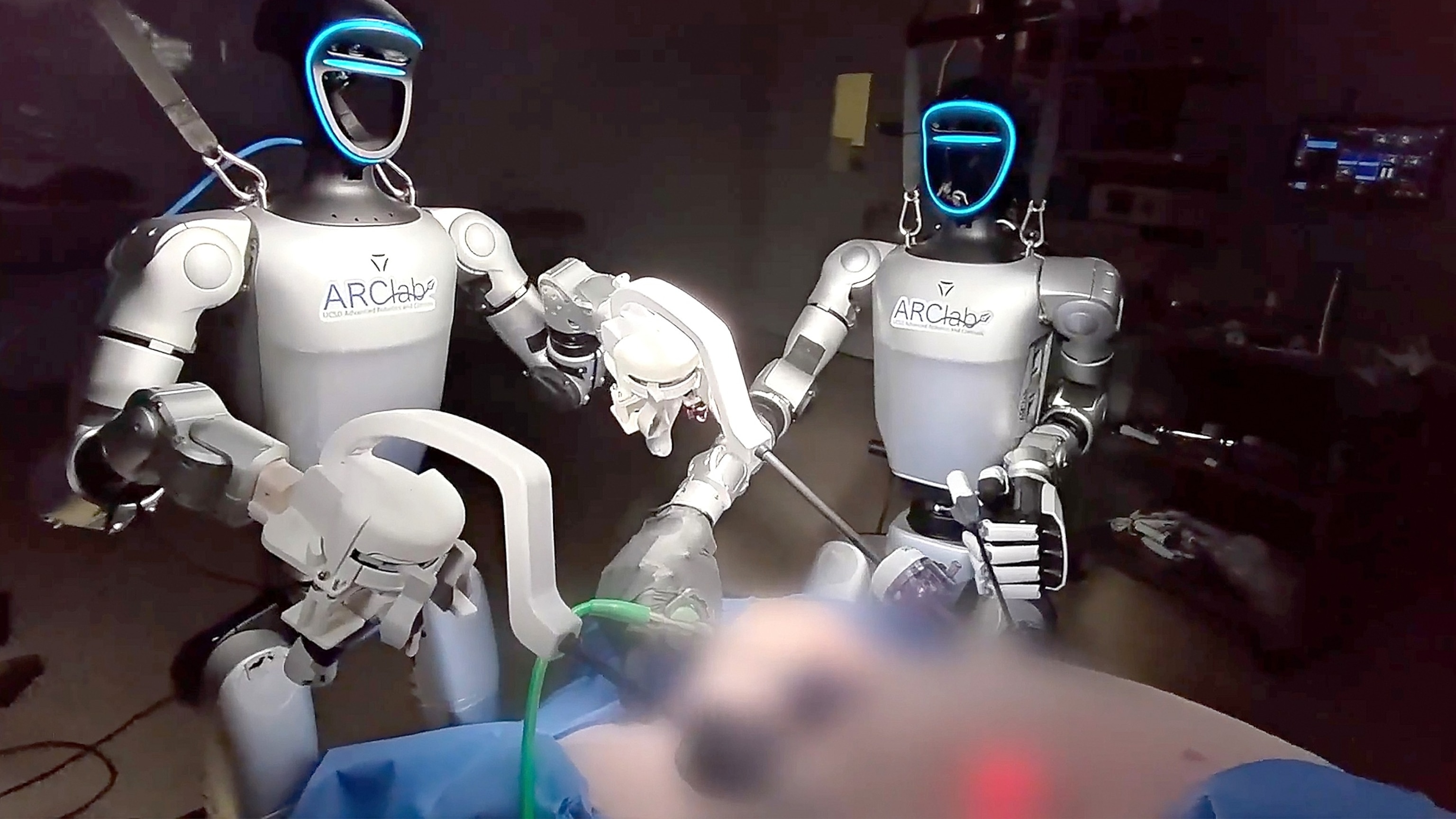
Two procedures were performed. In one, a robot operated alongside a human surgeon acting as an assistant. In the other, two humanoid robots worked together to complete the entire procedure without direct human assistance. Both surgeries were successful, although the second one resulted in minor complications (a small bile spill and superficial bleeding). These were easily managed, demonstrating the technique's viability. The key lies in teleoperation. The robots do not act on their own; instead, they are remotely controlled by an expert surgeon from a console, who translates their movements into precise actions for the robot.
Se realizaron dos intervenciones, en una de ellas un robot operó junto a un cirujano humano que actuó como asistente. En la otra dos robots humanoides trabajaron en equipo para completar todo el procedimiento sin ayuda humana directa. Ambas cirugías fueron exitosas, aunque en la segunda se reportaron complicaciones menores (un pequeño derrame de bilis y una hemorragia superficial), se controlaron sin problemas, demostrando la viabilidad de la técnica. La clave está en la teleoperación. Los robots no actúan por sí mismos, sino que son controlados a distancia por un cirujano experto desde una consola, que traduce sus movimientos en acciones precisas del robot.
Source
The main difference compared to current robotic systems (like the famous Da Vinci) is the type of robot used, which in this case is a robust humanoid robot, with a human-like shape and movements, standing 1.5 meters tall and weighing 27 kg. It is also much more affordable. The Unitree G1 model starts at around €15,000, while the Da Vinci costs over $1.5 million. The new robot is much more versatile; it can use conventional surgical instruments and move around the operating room. In addition to surgery, these robots could perform other tasks in the operating room, such as retrieving instruments or assisting with cleaning, thus integrating more seamlessly into the human workflow.
La gran diferencia con los sistemas robóticos actuales (como el famoso Da Vinci) es el tipo de robot utilizado que en este caso es un robot humanoide robusto, con forma y movimientos humanos de 1.5 m de alto y 27 kg de peso. Además es mucho más económico. El modelo G1 de Unitree parte de unos 15.000 euros mientras que con Da Vinci hablamos de má de 1 millón y medio de dólares. El nuevo robot es mucho más versátil, puede usar instrumentos quirúrgicos convencionales y moverse por la sala. Además de la cirugía, estos robots podrían realizar otras tareas en el quirófano, como acercar instrumental o ayudar en la limpieza, integrándose mejor en el flujo de trabajo humano.
The potential of this technology is revolutionary, but it still faces several challenges. Among its potential benefits, it could democratize surgery by bringing complex operations to rural areas, regions with a shortage of surgeons, battlefields, or even space missions, where it was previously impossible. It would help alleviate the global shortage of surgeons, allowing more patients to be treated. Its price and ease of installation would make robotic surgery more accessible to more hospitals, which could reduce the cost of procedures.
El potencial de esta tecnología es revolucionario, pero aún debe superar varios desafíos. Entre sus beneficios potenciales podría democratizar la cirugía llevando operaciones complejas a zonas rurales, regiones con escasez de cirujanos, campos de batalla o incluso misiones espaciales, donde antes era imposible. Ayudaría a paliar la crisis global de falta de cirujanos, permitiendo atender a más pacientes. Su precio y facilidad de instalación harían la cirugía robótica más accesible para más hospitales, lo que podría reducir los costes de los procedimientos.
Source
But challenges and limitations remain. During testing, the robots needed recalibration several times, and the first surgery lasted six hours (though with practice it was reduced to 30 minutes). There is a slight delay between the surgeon's action and the robot's response, a critical problem in long-distance telesurgery. For now, they are controlled remotely, but the long-term goal is to develop an "autonomous surgical assistant" that can perform specific tasks on its own under human supervision.
Pero aún quedan desafíos y limitaciones por solucionar. Durante las pruebas, los robots necesitaron ser recalibrados varias veces, y la primera cirugía duró 6 horas (aunque con práctica se redujo a 30 minutos). Existe un pequeño retraso entre la acción del cirujano y la respuesta del robot, un problema crítico en telecirugía a larga distancia. Por ahora, son controlados a distancia pero el objetivo a largo plazo es desarrollar un "asistente quirúrgico autónomo" que pueda realizar tareas específicas por sí mismo bajo supervisión humana.
And of course, there are all the ethical and regulatory issues. Increased autonomy raises questions about medical liability in case of error, data privacy, and the need to ensure equitable access to avoid exacerbating inequalities. Experts estimate that, although the advance is historic, it could still be 5 to 10 years before we see these robots routinely in operating rooms. In short, humanoid robotic surgery is an emerging field with immense potential to transform medicine, making it more accessible, efficient, and affordable.
Y por supuesto, todas las cuestiones éticas y regulatorias. El aumento de la autonomía plantea preguntas sobre responsabilidad médica en caso de error, la privacidad de los datos y la necesidad de garantizar un acceso equitativo para no aumentar las desigualdades. Expertos estiman que, aunque el avance es histórico, aún podrían pasar entre 5 y 10 años antes de ver estos robots en quirófanos de forma rutinaria. En resumen, la cirugía con robots humanoides es un campo emergente con un potencial inmenso para transformar la medicina, haciéndola más accesible, eficiente y barata.
More information/Más información
https://www.sciencealert.com/world-first-humanoid-robots-perform-surgery-on-live-animals-this-could-prove-useful-in-space
This is indeed an interesting milestone in the advancement of medicine and technology. What is particularly important in this case is that the breakthrough is associated not with just developing a robot that performs operations, but with the emergence of an entire system that allows experts to perform surgery in the places where there are no surgeons.
The affordability of humanoid robots and their flexibility may prove to be a great advantage over regular surgery robots. Imagine a time when experts from other countries can assist in complicated surgery performed in remote rural hospitals, far away from their own countries.
Yet still, I believe that the human element will play a significant role in surgery. Surgery is a very precise, yet very responsible process that implies the presence of ethical judgment. The greatest challenge lies in striking the right balance between artificial intelligence, robotics, and human expertise.
This study indicates that the future of medicine may not consist in eliminating doctors from the process, but in providing them with more effective tools to save lives.