ThermoCas9, the new molecular “scalpel” against cancer/ThermoCas9, el nuevo “bisturí” molecular contra el cáncer
Source
I imagine that by now everyone has heard of CRISPR-Cas9, the revolutionary gene-editing technology introduced in 2012 that works like "molecular scissors" to cut and modify DNA precisely, quickly, and cheaply, allowing the addition, deletion, or replacement of genetic material, much like the cut/paste function of a text editor. Now, a group of researchers from the United States, the United Kingdom, and the Netherlands are developing a new gene-editing technique: ThermoCas9.
Supongo que a estas alturas ya todos habréis oido hablar de CRISPR-Cas9, la tecnología revolucionaria de edición genética prensentada en el año 2012 y que funciona como unas "tijeras moleculares" para cortar y modificar el ADN de forma precisa, rápida y económica permitiendo añadir, eliminar o reemplazar material genético como la función corta/pega de un editor de texto. Ahora, un grupo de investigadores de los Estados Unidos, Reino Unido y Países Bajos están desarrollando una nueva técnica de edición genética: ThermoCas9.
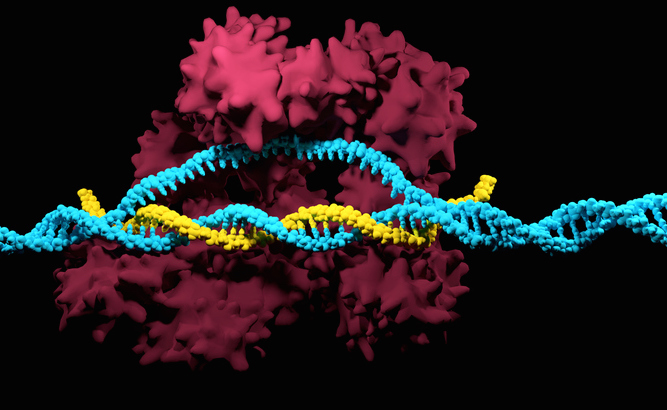
ThermoCas9 is a variant of the aforementioned CRISPR-Cas9. It was discovered in the thermophilic (heat-loving) bacterium Geobacillus thermodenitrificans and has a unique property: it can distinguish between healthy DNA and cancerous DNA based on its "chemical signature," making it a promising tool for high-precision cancer treatments. Unlike the more common Cas9, which comes from a bacterium that lives at moderate temperatures, ThermoCas9 is thermostable. This means it functions effectively in a temperature range from 20°C to 70°C.
ThermoCas9 es una variante de la CRISPR-Cas9 antes mencionada. Fue descubierta en la bacteria termófila (amante del calor) Geobacillus thermodenitrificans y tiene una propiedad única: puede distinguir entre el ADN saludable y el ADN canceroso basándose en su "firma química", lo que la convierte en una herramienta prometedora para tratamientos oncológicos de alta precisión. A diferencia de la Cas9 más común, que proviene de una bacteria que vive a temperaturas moderadas, ThermoCas9 es termoestable. Esto significa que funciona eficazmente en un rango de temperaturas que va desde los 20 °C hasta los 70 °C.
Source
The magic of ThermoCas9 lies in its activation mechanism, which allows it to distinguish healthy cells from cancerous ones. The trick is in a small DNA sequence called PAM (Protospacer Adjacent Motif), which acts as a "lock" that the tool must unlock to cut. Cancer cells have an abnormal pattern of DNA methylation. Methylation is like a small "chemical switch" (a methyl group) that attaches to DNA and regulates gene activity. In cancer, these patterns are altered.
La magia de ThermoCas9 reside en su mecanismo de activación, que le permite distinguir células sanas de cancerosas. El truco está en una pequeña secuencia de ADN llamada PAM (Protospacer Adjacent Motif), que actúa como una "cerradura" que la herramienta debe abrir para poder cortar. Las células cancerosas tienen un patrón anormal de metilación del ADN. La metilación es como un pequeño "interruptor químico" (un grupo metilo) que se adhiere al ADN y regula la actividad de los genes. En el cáncer, estos patrones están alterados .
The PAM sequence recognized by ThermoCas9 contains a human methylation site. If that specific site has a methyl group (the typical "signature" of a cancer cell), the tool cannot fit and does not cut. Conversely, if the site does NOT have the methyl group (as occurs in certain regions of cancer DNA), the tool fits perfectly and proceeds to cut the DNA. In laboratory experiments, ThermoCas9 was shown to cut the DNA of human tumor cells while leaving the DNA of healthy cells intact, demonstrating an unprecedented ability to distinguish between the two cell types.
La secuencia PAM que reconoce ThermoCas9 contiene un sitio de metilación humano. Si ese sitio específico tiene un grupo metilo (la "firma" típica de una célula cancerosa), la herramienta no puede encajar y no corta. Por el contrario, si el sitio NO tiene el grupo metilo (como ocurre en ciertas regiones del ADN del cáncer), la herramienta encaja perfectamente y procede a cortar el ADN. En experimentos de laboratorio, se demostró que ThermoCas9 cortó el ADN de células tumorales humanas mientras que dejó intacto el de las células sanas, demostrando una capacidad sin precedentes para distinguir ambos tipos celulares.

Source
Its properties make it a versatile tool with several important applications. It uses the abnormal methylation of cancerous DNA as a "zip code" to selectively attack and destroy only tumor cells, without harming healthy ones, drastically reducing side effects compared to traditional therapies like chemotherapy or radiotherapy. In industrial biotechnology, its stability at high temperatures is ideal for editing the genome of thermophilic microorganisms, used in industrial processes that require heat.
Sus propiedades la convierten en una herramienta versátil con varias aplicaciones importantes. Utiliza la metilación anormal del ADN canceroso como un "código postal" para atacar y destruir selectivamente solo las células tumorales, sin dañar las sanas, lo que reduce drásticamente los efectos secundarios frente a las terapias utilizadas tradicionalmente como la quimioterapia o la radioterapia. En biotecnología industrial, su estabilidad a altas temperaturas es ideal para editar el genoma de microorganismos termófilos, usados en procesos industriales que requieren calor.
But we must be honest and it's important to point out that, although the laboratory results are very promising, especially for fighting cancer, this technology is still in the preclinical research phase. The scientists' next step is to demonstrate that selective DNA cutting is sufficient to induce tumor cell death effectively and safely. Since the activation mechanism of ThermoCas9 depends on specific DNA methylation patterns, researchers are carefully evaluating whether this behavior remains stable in the complex environment of the human body.
Pero hemos de ser honestos y es importante señalar que, aunque los resultados en laboratorio son muy prometedores, especialmente para la lucha contra el cáncer, esta tecnología aún se encuentra en fase de investigación preclínica. El siguiente paso de los científicos es demostrar que el corte selectivo del ADN es suficiente para inducir la muerte de la célula tumoral de manera efectiva y segura. Dado que el mecanismo de activación de ThermoCas9 depende de patrones específicos de metilación del ADN, los investigadores están evaluando cuidadosamente si este comportamiento se mantiene estable en el entorno complejo del cuerpo humano.
More information/Más información
https://cen.acs.org/biological-chemistry/gene-editing/methylation-sensitive-Cas9/104/web/2026/04