They create humanoid robots for war and they've already been to Ukraine/Crean robots humanoides para la guerra y ya fueron a Ucrania

Source
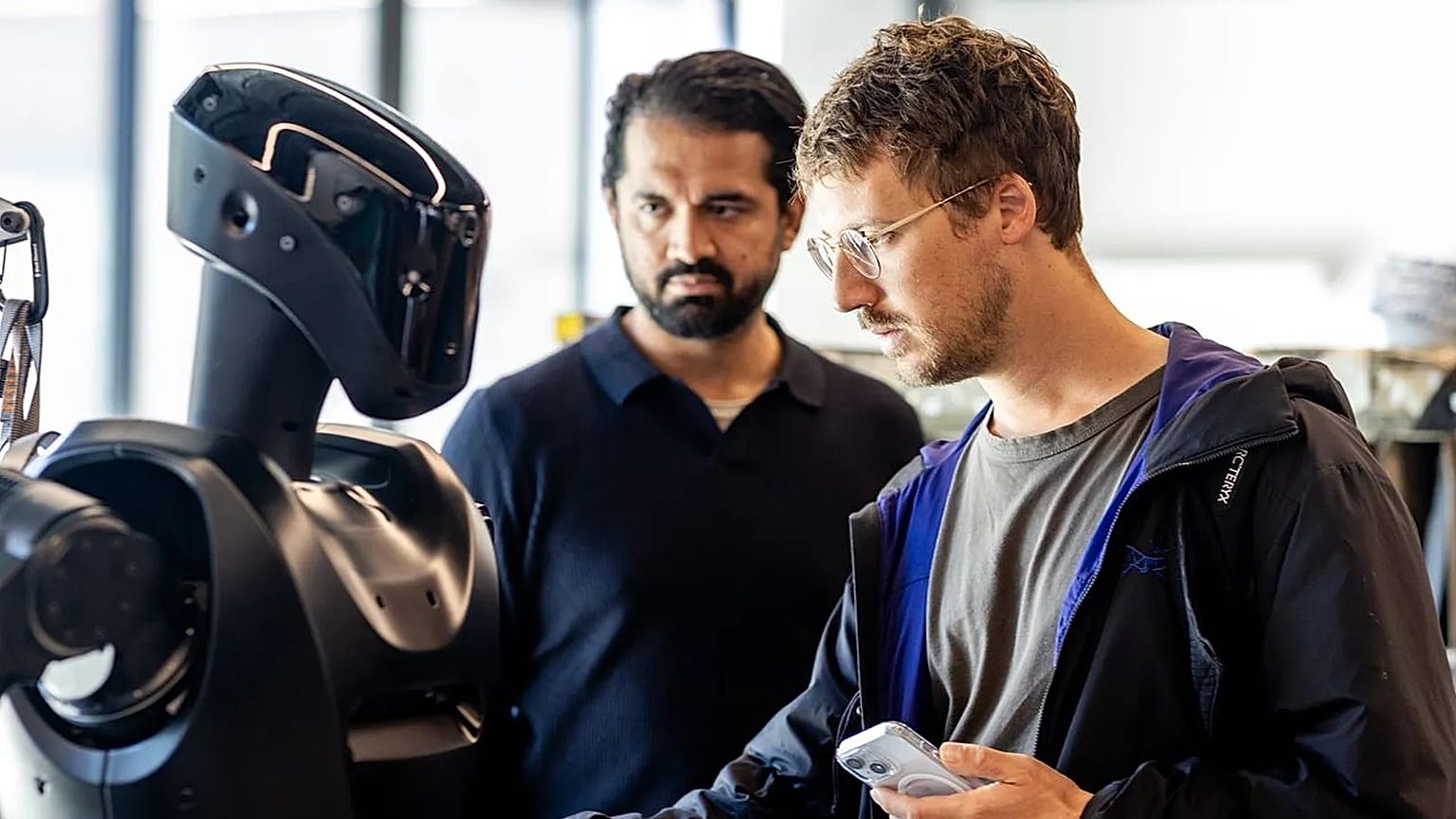
Foundation Future Industries, a company backed by Eric Trump, is developing humanoid robots with an explicit focus on military applications. Its robot, called "Phantom," has already been tested in Ukraine, and the company has ambitious plans to deploy it with the U.S. military in the near future. Founded in 2024, this San Francisco-based startup distinguishes itself from other robotics companies (which typically focus on domestic or industrial tasks) by its stated mission to create robots for "humanity's greatest challenges," including hazardous environments and warfare.
La empresa Foundation Future Industries, respaldada por Eric Trump, está desarrollando robots humanoides con un enfoque explícito en aplicaciones militares. Su robot, llamado "Phantom", ya ha sido probado en Ucrania y la compañía tiene planes ambiciosos para desplegarlo con el ejército de EE. UU. en el corto plazo. Fundada en 2024, esta startup de San Francisco se diferencia de otras compañías de robótica (que suelen enfocarse en tareas domésticas o industriales) por su misión declarada de crear robots para "los mayores desafíos de la humanidad", que incluyen entornos peligrosos y la guerra.
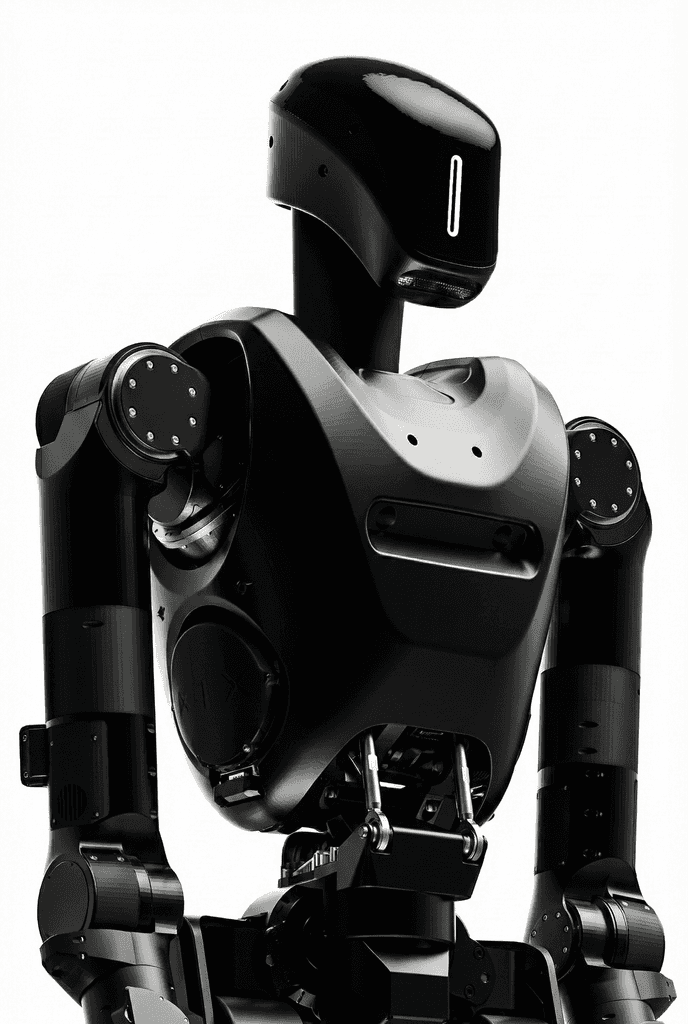
Its main robot is the Phantom, designed in a humanoid form to operate in environments built for people and use the same tools and weapons as a soldier. The current version, the Phantom MK-1, is almost 1.80 m tall, weighs 80 kg, and can carry about 20 kg. Its speed is approximately 6 km/h. It has been tested in Ukraine on logistical tasks, such as collecting supplies in dangerous areas. These tests revealed significant weaknesses. The MK-1 is not waterproof, has insufficient battery life, and its payload capacity is limited, which prevents its large-scale deployment.
Su robot principal es el Phantom y está diseñado con forma humana para poder operar en entornos construidos para personas y usar las mismas herramientas y armas que un soldado. La versión actual, Phantom MK-1, mide casi 1.80 m, pesa 80 kg y puede cargar unos 20 kg. Su velocidad es de aproximadamente 6 km/h. Ha sido probado en Ucrania en tareas de logística, como la recogida de suministros en zonas peligrosas. Estas pruebas revelaron debilidades importantes. El MK-1 no es impermeable, tiene una batería de duración insuficiente y su capacidad de carga es limitada, lo que impide su despliegue a gran escala.
Source
Foundation plans to send an upgraded version, the Phantom 2, to Ukraine. It is claimed to have double the payload capacity and "superhuman" abilities. The company is also actively exploring how to arm its robots, with plans to unveil "kinetic" weapon systems in the coming months. The company's central argument is that robots can perform the most dangerous tasks, such as frontline logistics, building reconnaissance, or explosives handling, while keeping humans safe.
Foundation planea enviar una versión mejorada, el Phantom 2, a Ucrania. Se afirma que tendrá el doble de capacidad de carga y habilidades "sobrehumanas". La compañía también está explorando activamente cómo armar a sus robots, con planes de presentar sistemas de armas "kinéticos" en los próximos meses. El argumento central de la compañía es que los robots pueden realizar las tareas más peligrosas, como la logística en primera línea, el reconocimiento en edificios o la manipulación de explosivos, manteniendo a los humanos a salvo.
In principle, the humanoid form is an advantage in urban combat (buildings, stairwells, narrow corridors), where wheeled or tracked robots have more difficulty moving. They could be the first to enter a suspicious room or building. The long-term vision is that humanoid robots will face each other on the battlefield, transforming warfare into an "economic conflict" where whoever has more and better robots would have the advantage, instead of a war of attrition with its terrible consequences.
En principio, la forma humana es una ventaja en el combate urbano (edificios, escaleras, pasillos estrechos), donde los robots con ruedas u orugas tienen más dificultades para moverse. Podrían ser los primeros en entrar en una habitación o edificio sospechoso. La visión a largo plazo es que los robots humanoides se enfrenten entre sí en el campo de batalla, transformando la guerra en un "conflicto económico" donde el que tenga más y mejores robots tendría la ventaja, en lugar de una guerra de desgaste humano con sus terribles consecuencias.
Source
Despite advancements, the technology is still too immature for the chaos of the battlefield. Experts like MIT professor emeritus Rodney Brooks estimate it will be more than 10 years before humanoids are reliable in complex and unfamiliar environments. Battery life remains a major obstacle. The ability to finely manipulate weapons, change magazines, or open jammed doors is another enormous unresolved challenge. A robot that crashes or is hacked presents significant operational and data security risks.
A pesar de los avances, la tecnología aún es inmadura para el caos del campo de batalla. Expertos como el profesor emérito del MIT, Rodney Brooks, estiman que pasarán más de 10 años antes de que los humanoides sean fiables en entornos complejos y desconocidos. La autonomía de la batería sigue siendo un gran obstáculo. La capacidad de manipulación fina para operar armas, cambiar cargadores o abrir puertas atascadas es otro desafío enorme sin resolver . Un robot que se cae o es hackeado presenta riesgos operacionales y de seguridad de datos significativos .
But, unfortunately, it's only a matter of time. It sounds nice to think that robots will fight wars far from our backyards, but these robots will be at the service of the same old politicians, and in the long run, this won't end well. It's also only a matter of time before some son-of-a-bitch dictator with delusions of grandeur (there are already a few candidates) tries to take over the world with these weapons. It's ironic that humanity continues to exist with this obsession we have with destroying everything.
Pero, para nuestra desgracia, es solo cuestión de tiempo. Parece muy bonito pensar que las guerras las van a hacer los robots en zonas alejadas de nuestro jardín, pero estos robots estarán al servicio de los mismos políticos de toda la vida y esto a la larga no va a terminar bien. Es también cuestión de tiempo que algún dictador hijo de puta con ínfulas de emperador (ya hay algún candidato) intente dominar el mundo con estas armas. Es curioso que la humanidad siga existiendo con este empeño que tenemos en destrozarlo todo.
More information/Más información
https://www.euronews.com/next/2026/07/16/when-could-humanoid-robots-go-to-war-sooner-than-you-think-says-firm-testing-them-in-ukrai
Interesting but worrying. Utilizing robots to perform hazardous jobs could help preserve lives. Still, making human-like machines into weapons will create a number of ethical and security-related problems. Technology can be well short of implementing at the level of soldiers, but it is definitely a topic that should be discussed already.
0.00 SBD,
0.79 STEEM,
0.79 SP
Leí tu post y me quedé pensando un buen rato después. Hay una honestidad en tu forma de escribir que se nota distinta. @mauromar
Mira vos, no sabía ese dato. El feed está lleno de cosas interesantes cuando uno sabe donde mirar.
@mauromar, me quedé pensando en lo que escribiste. Es de esos posts que uno termina y sigue dándole vueltas un rato después.