They design a flapping-wing robot capable of swimming and flying/Diseñan un robot de alas batientes capaz de nadar y volar
Source
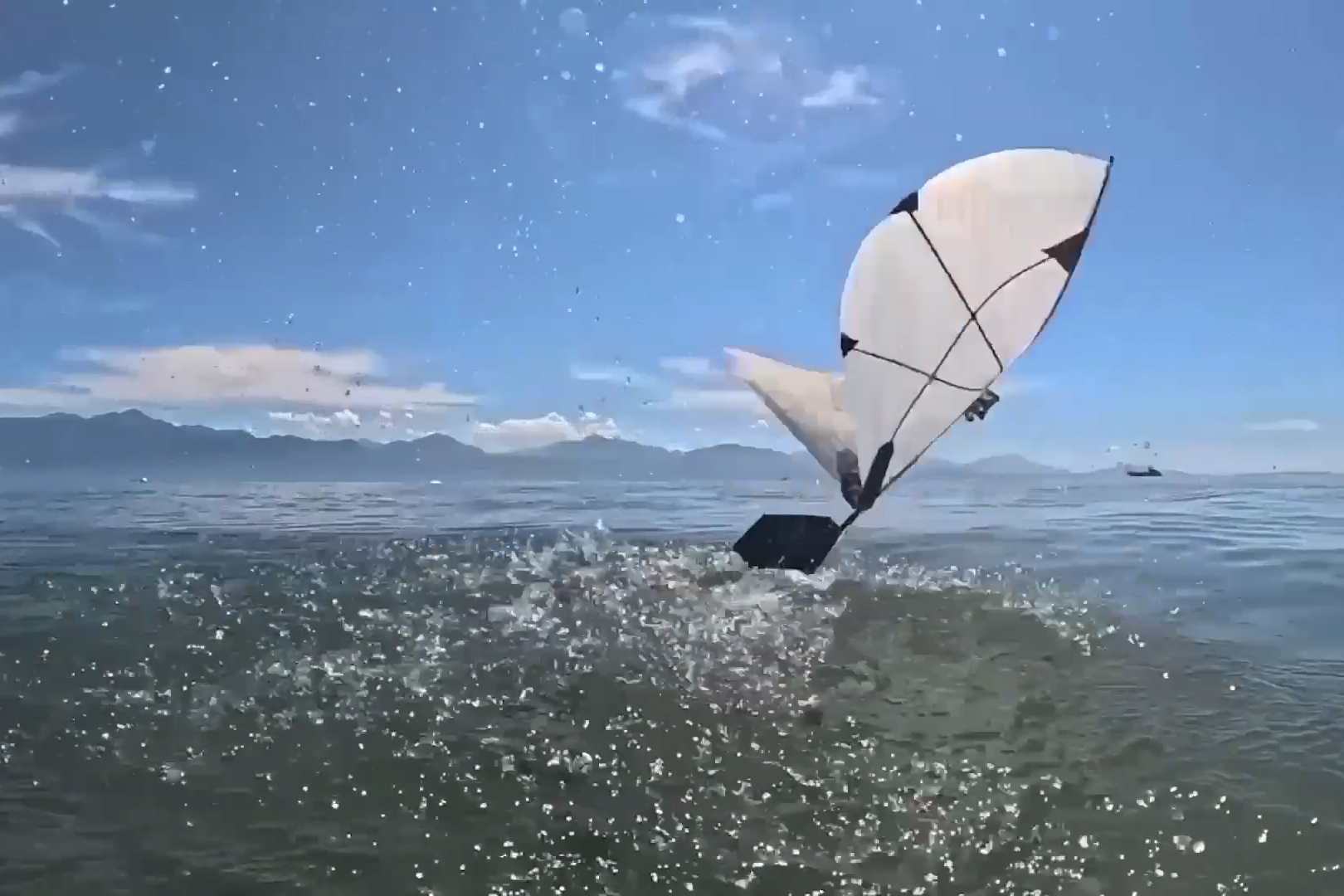
A team from MIT and EPFL in Lausanne has developed a robot that swims and flies using the same wings, mimicking birds like puffins and guillemots. It's a flapping-wing amphibious vehicle designed for low-cost ocean exploration. This robot, which weighs less than 300 grams, can swim underwater, surface, and fly using a single wing system. Achieving this required overcoming several challenges, most notably the fact that the robot must move in two very different environments: air and water.
Un equipo del MIT y la EPFL de Lausanne ha desarrollado un robot que nada y vuela batiendo las mismas alas, imitando a aves como los frailecillos o los araos. Es un vehículo aéreo-acuático de alas batientes, diseñado para la exploración oceánica de bajo coste. Este robot, que pesa menos de 300 gramos, es capaz de nadar bajo el agua, salir a la superficie y volar usando un único sistema de alas. Para conseguirlo, se han tenido que resolver varios desafíos, sobre todo el hecho de que el robot ha de moverse en dos medios muy distintos como son el aire y el agua.
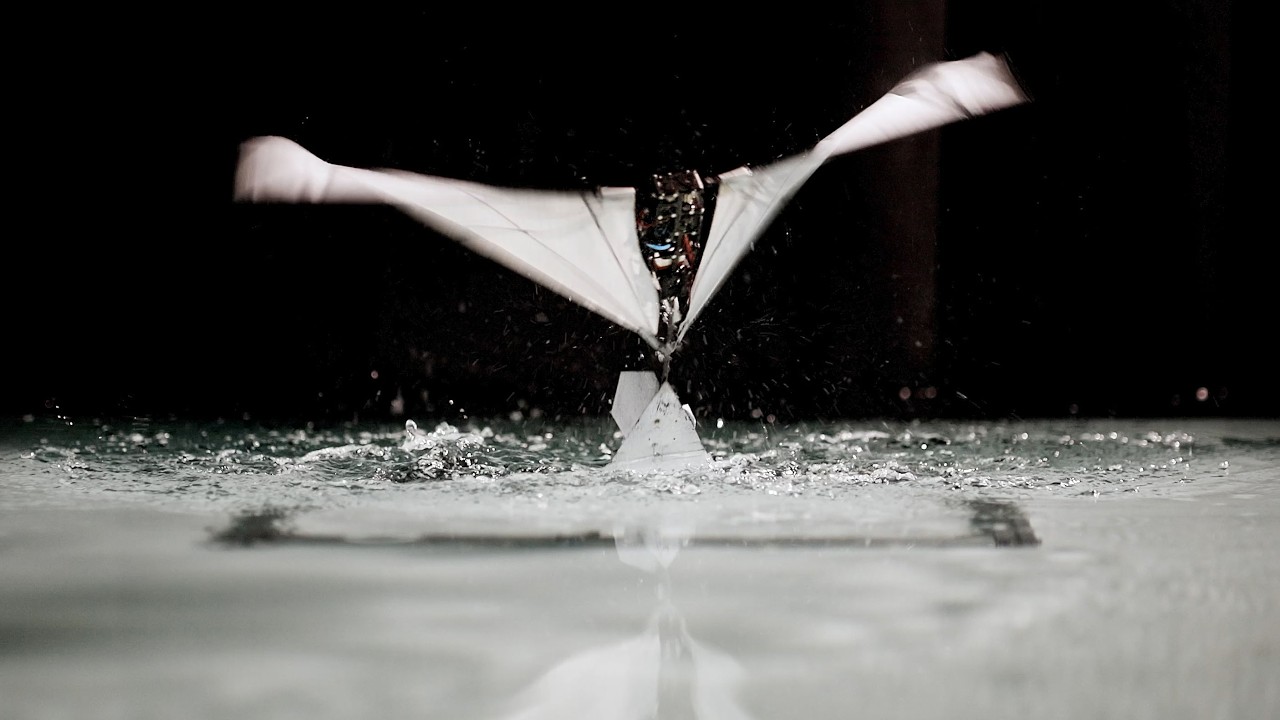
Water is about 1,000 times denser than air. To achieve this, they focused on the flexibility of the wings. They must be rigid enough to fly, yet flexible enough to bend up to 90 degrees underwater, reducing drag. Wings with an 80-centimeter wingspan yielded the best results. The biggest challenge is breaking through the surface, which they accomplish by tilting at a 70-degree angle and flapping their wings forcefully, generating the necessary thrust in less than a second. Unlike most birds, they do this without legs.
El agua es unas 1.000 veces más densa que el aire. Para lograrlo, se centraron en la flexibilidad de las alas. Deben ser lo bastante rígidas para volar, pero flexibles para doblarse hasta 90 grados bajo el agua, reduciendo la resistencia. Las alas de 80 centímetros de envergadura dieron el mejor resultado. El gran desafío es atravesar la superficie y lo consigue inclinándose a un ángulo de 70 grados y batiendo las alas con fuerza, generando el empuje necesario en menos de un segundo. A diferencia de la mayoría de aves, lo hace sin necesidad de patas.

Source
The robot can flap its wings about five times per second, allowing it to reach speeds of nearly 1 m/s while swimming and 6 m/s in flight—speeds comparable to those of the birds that inspired its design. Instead of a watertight hull, the internal components were individually sealed, allowing water to enter the fuselage. This facilitates maintaining neutral buoyancy, thus saving energy. The main objective is to provide a more agile and cost-effective ocean exploration tool.
El robot puede batir sus alas unas 5 veces por segundo, lo que le permite alcanzar casi 1 m/s nadando y 6 m/s durante el vuelo, que son velocidades comparables a las de las aves que le sirven de inspiración. En lugar de tener un casco estanco, se impermeabilizaron los componentes internos por separado, permitiendo que el agua entre en el fuselaje. Esto facilita mantener una flotabilidad neutra, ahorrando energía. El objetivo principal es ofrecer una herramienta de exploración oceánica más ágil y barata.
The idea is that oceanographers and marine biologists can launch it from the shore or a ship so it can fly to an area of interest, such as an iceberg, a port, or a group of whales; dive to collect water samples, take measurements, or record marine life; and then surface and fly back to deliver the data, ready for a new mission. Unlike large research vessels, this robot could access dangerous or difficult-to-reach areas quickly and repeatedly, at a fraction of the cost.
La idea es que los oceanógrafos y biólogos marinos puedan lanzarlo desde la costa o desde un barco para que vuele hasta algún área de interés, como puede ser un iceberg, un puerto o un grupo de ballenas, se sumerja para tomar muestras de agua, realizar mediciones o grabar la vida marina y salga a la superficie y vuele de vuelta para entregar los datos, listo para una nueva misión. A diferencia de los grandes buques de investigación, este robot podría acceder a zonas peligrosas o de difícil acceso de forma rápida y repetida, a una fracción del coste.
Source
In addition to all these features, it has great scientific value: it can also be used to study the biomechanics of diving birds and better understand how they adapt to these two environments, which could explain, for example, why they reduce their wing area when submerged. The team is already working on improving the wings to give them greater turning capacity and testing the robot in windy and choppy conditions. With an estimated material cost of around $300 and its open-source designs, it could be an accessible tool for citizen science.
Además de todas estas prestaciones, tiene un gran valor científico: ya que también sirve para estudiar la biomecánica de las aves buceadoras y entender mejor cómo se adaptan a estos dos entornos, algo que podría explicar, por ejemplo, por qué reducen el área de sus alas al sumergirse. El equipo ya trabaja en mejorar las alas para darles más capacidad de giro y probar el robot en condiciones de viento y oleaje. Con un coste de materiales estimado en unos 300 dólares y sus diseños de código abierto, podría ser una herramienta accesible para la ciencia ciudadana.
Currently, there is no official confirmed date for when it will be fully operational. However, researchers are already actively working on the next phases of development, and the technology has generated interest across Europe. The MIT and EPFL team hasn't stopped at the initial prototype. According to available information, they are now focused on two key areas to make it a practical tool. It is hoped that, if the wind and wave tests are successful, we can expect to see more advanced versions with more concrete applications in the coming years.
De momento, no hay una fecha oficial confirmada para que esté completamente operativo. Sin embargo, los investigadores ya están trabajando activamente en las siguientes fases de desarrollo y la tecnología ha despertado interés a nivel europeo. El equipo del MIT y la EPFL no se ha detenido en el prototipo inicial. Según la información disponible, ahora están enfocados en dos áreas clave para convertirlo en una herramienta práctica. Es de esperar que, si las pruebas con viento y oleaje son exitosas, podamos ver versiones más avanzadas y con aplicaciones más concretas en los próximos años.
More information/Más información
https://news.mit.edu/2026/new-flapping-robot-swims-and-flies-like-diving-bird-0709
Este avance podría poner al dron en otro ámbito de acción militar. Al final todos los avances tecnológicos van a para allí en busca de información y poder.
Gracias por compartir, saludos y bendiciones..!
0.00 SBD,
0.85 STEEM,
0.85 SP
It demonstrates how biomimicry is helping to advance engineering. Creating a nimble robot that can switch between flying and swimming is rather remarkable. The research possibilities that it has that makes it cheap to implement in oceans is very exciting. Thanks for this clear overview. I am looking forward to the development of this tech.
@mauromar, hay momentos en los que uno necesita leer algo que le llegue, y esto hizo justo eso.
Es interesante cómo abordaste el tema desde ese ángulo. La mayoría se queda en la superficie y acá hay bastante profundidad.
Me gustó la sinceridad con la que escribiste. No hay nada más poderoso que alguien que habla desde lo que vivió.