SLC-S33/W4 | Beyond the Map: A Place That Changed Me
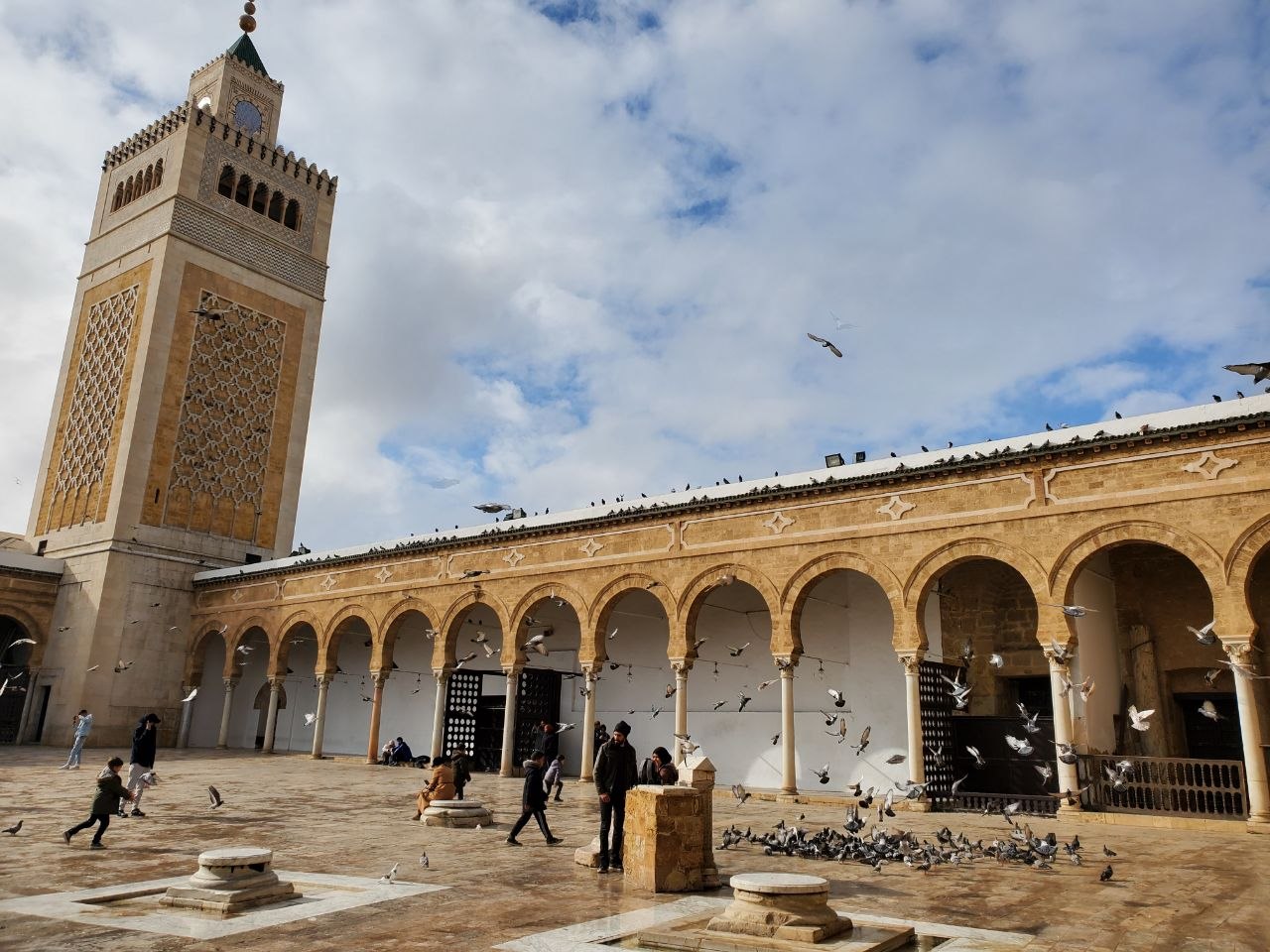
A panoramic view of the courtyard and minaret of Zitouna Mosque: a living heritage site where history, faith, and everyday life come together.
As-Salamu Alaikum, dear Steemians,
Some places attract us with their beauty, while others quietly reorganize something within us. For me, Zitouna Mosque belongs to the second category.
When I visited it on Friday, March 20, 2026, I was going through a period in which I felt stressed, constantly in a hurry, and somewhat lost. I was physically present in my daily activities, but my mind remained occupied by many concerns. I did not yet know that this visit especially a lesson delivered by the imam about solidarity among Muslims—would change how I viewed my difficulties and my relationships with others.
All the photographs in this article were taken with my own camera during this visit.
Where is Zitouna Mosque, and how can visitors reach it?
Zitouna Mosque, also known as the Great Mosque of Tunis, is located in the heart of the Medina at 30 Rue Jamaa Ez Zitouna, Tunis, Tunisia. Its coordinates are 36.79731, 10.17122.
Visitors can take a taxi or public transport to Bab Bhar, also known as the Porte de France. From Victory Square, the journey continues on foot through the streets and souks of the Medina. The signs and the mosque’s minaret gradually help visitors find their way. The walk usually takes between ten and fifteen minutes, depending on the crowds and the chosen route.
The Medina is best explored on foot. Its narrow streets, craft shops, scents of spices, and the constant movement of residents already form part of the experience before one even reaches the mosque.
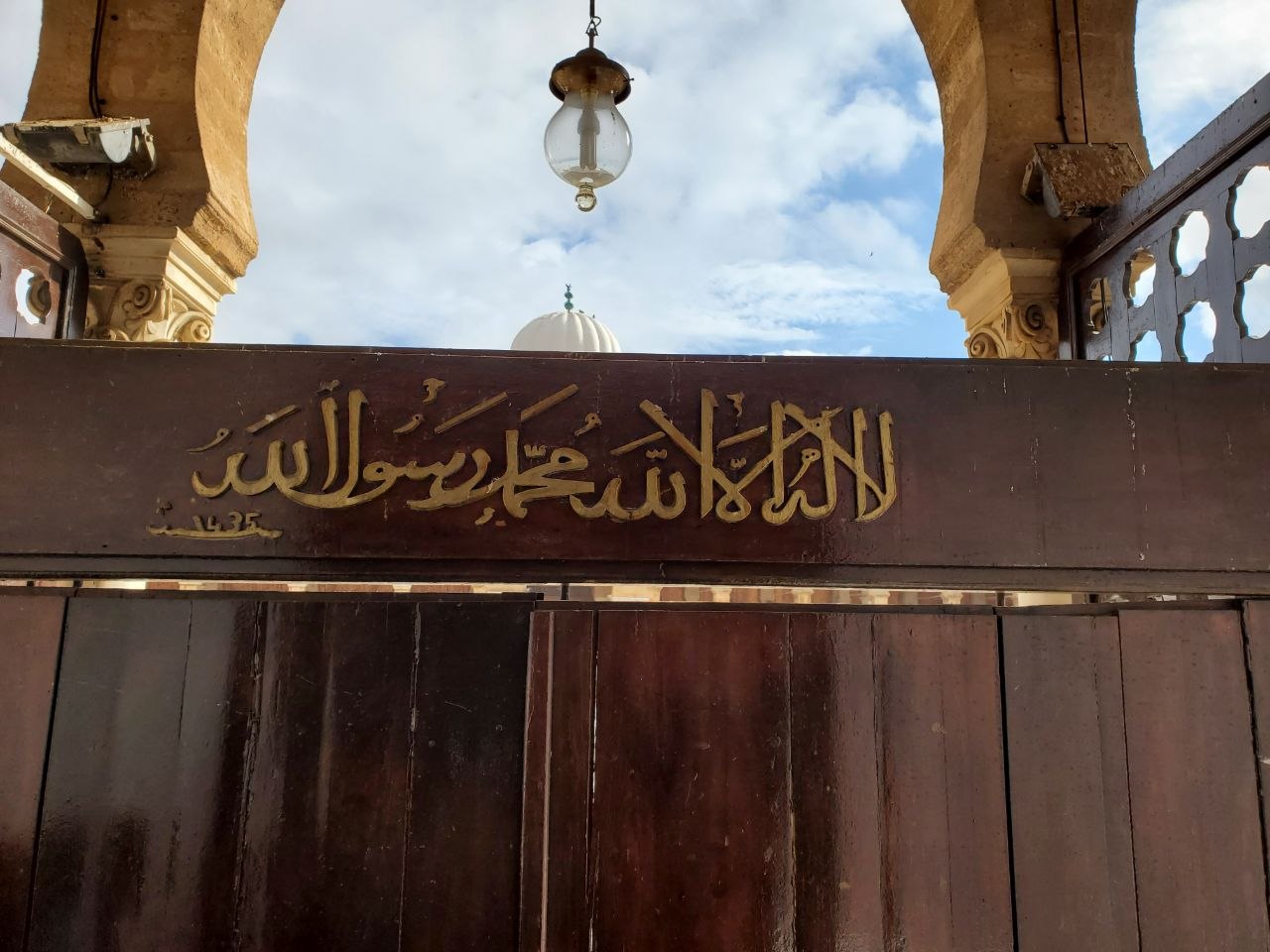 | 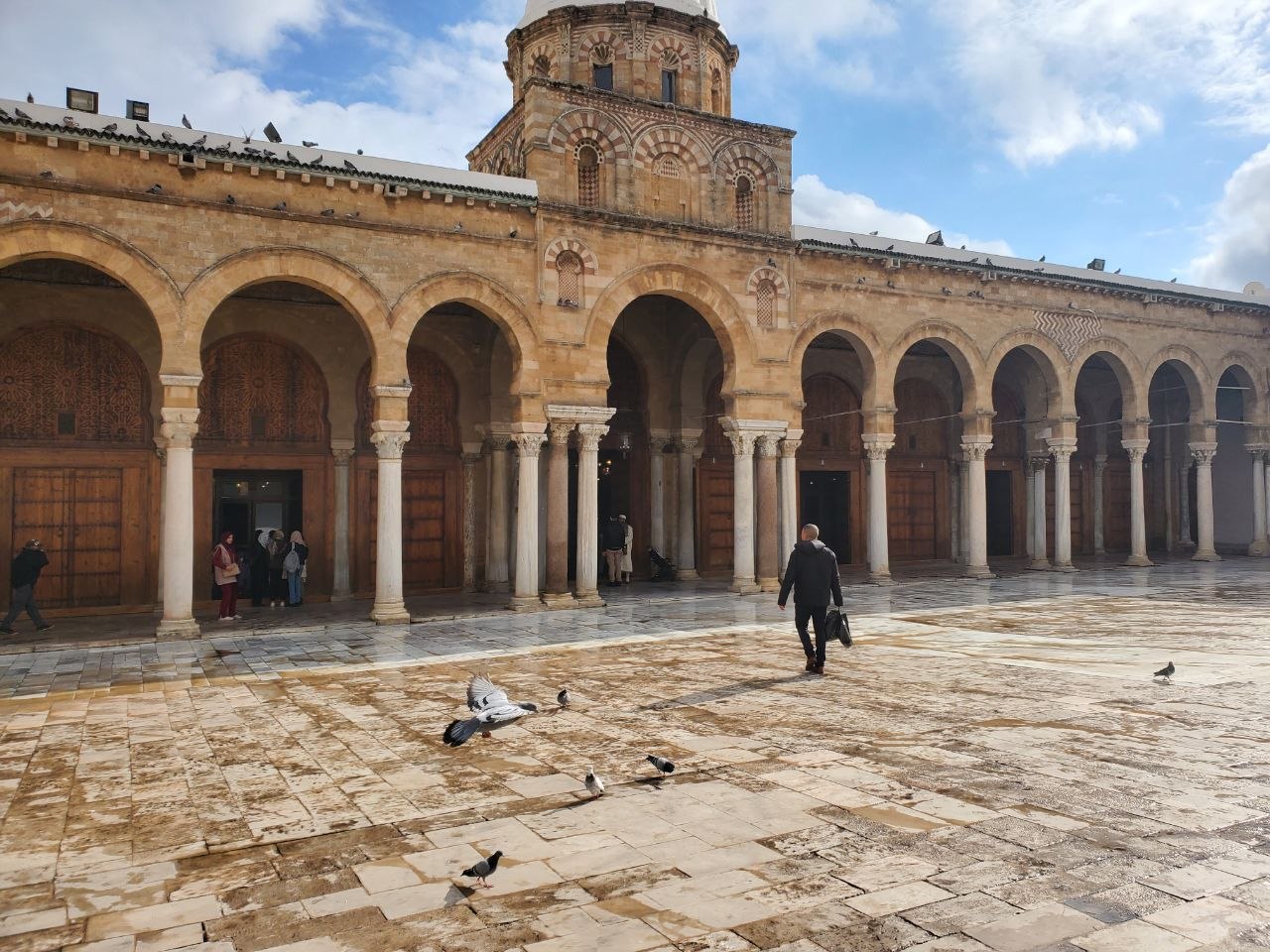 |
|---|---|
| At the mosque’s gate, the religious inscription immediately reminds me that I am not entering an ordinary monument but a place dedicated to faith and worship. | The large wooden doors, stone arches, and columns form one of the entrances leading into the prayer hall. |
As soon as I passed through the gate, the noise of the surrounding souks gradually gave way to a calmer atmosphere. The courtyard, still wet, reflected a soft light. Pigeons moved between visitors while the surrounding arcades appeared like a regular succession of open doors.
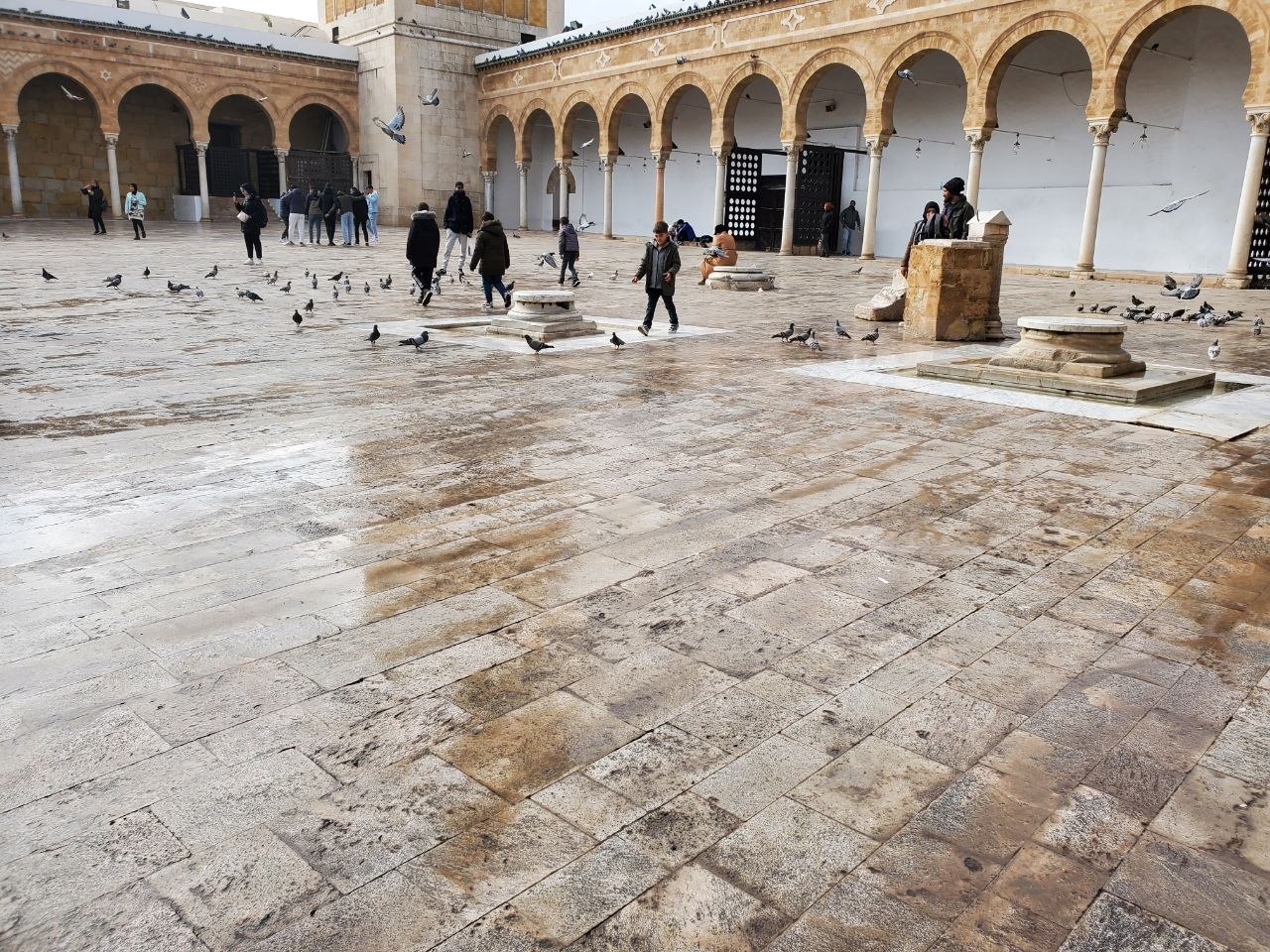
The spacious paved courtyard, surrounded by arcades, forms a transition between the lively Medina and the peaceful atmosphere of the prayer hall.
The experience that made this visit meaningful
Before arriving at Zitouna Mosque, I felt continually under pressure. I wanted to accomplish too many things quickly, and I rarely allowed my mind enough time to become calm. This constant rush sometimes made me feel as if I were moving forward without knowing exactly where I was going.
During my visit, I attended a lesson in which the imam spoke about solidarity among Muslims. He explained that faith is not expressed only through prayer and words. It must also appear in our conduct, our ability to listen, our willingness to help, and the attention we give to people who are experiencing difficulties.
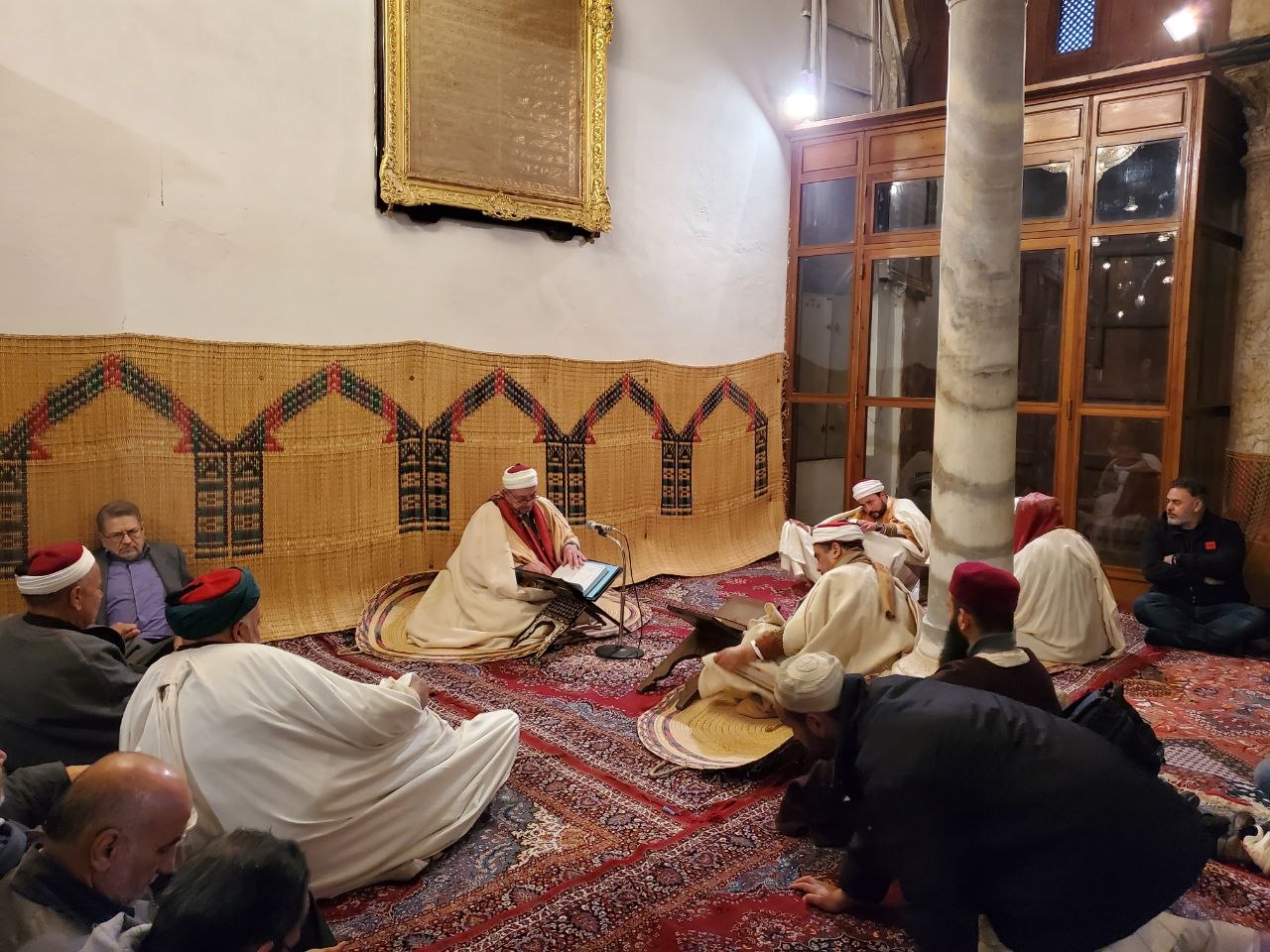
The imam’ s lesson about solidarity among Muslims became the defining moment of my visit.
His words reached me at a moment when I particularly needed them. Because I had become absorbed in my stress, I had grown accustomed to viewing my problems as a burden that I had to carry alone. The lesson reminded me that nobody should isolate themselves completely and that solidarity works in both directions: we should offer help to others, but we should also be willing to accept help when we need it.
I also understood that assistance is not limited to money. A sincere conversation, a few minutes of attentive listening, a visit, a piece of advice, or a silent presence can sometimes comfort a person more than a material gift.
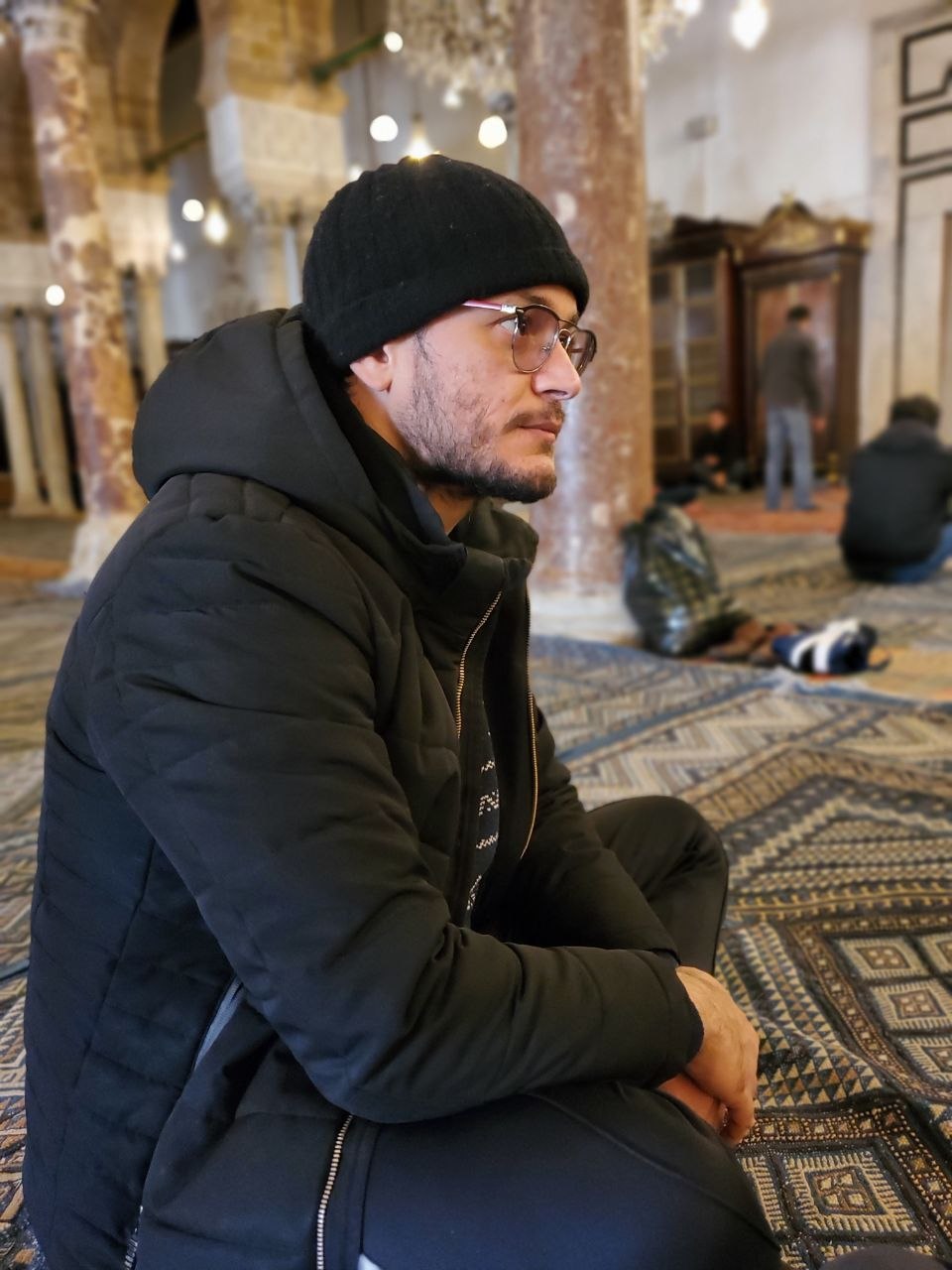
Sitting inside the prayer hall, I took time to reflect on the lesson and on how I had been dealing with my worries.
After the prayer, I felt calmer. My difficulties had not disappeared as if by magic, but the way I looked at them had changed. I no longer had the same feeling of being alone in facing them. Since this visit, I have tried to slow down before reacting, listen more carefully to the people around me, and offer assistance whenever an opportunity arises.
Zitouna Mosque has therefore become a reminder for me: in a life dominated by speed and personal concerns, we must always preserve some time and attention for others. Solidarity can make a community stronger, but it can also help a stressed or confused person regain a sense of direction.
A mosque at the heart of Tunisian history
Zitouna Mosque has more than religious importance. It occupies a central place in the history, architecture, and identity of Tunis.
According to Tunisia’s National Heritage Institute, the foundation of the sanctuary dates to 78 AH, or 698 CE, under the Umayyad governor Hassan Ibn Noomane. Major construction work was undertaken in 732. However, most of the present monument is associated with the reconstruction and expansion carried out under the Aghlabid emir Abu Ibrahim Ahmad between 856 and 864.
The dome above the mihrab belongs to this period, while the courtyard dome known as Qubbat El-Bahou dates to 991. The minaret visible today was built much later, in 1896.
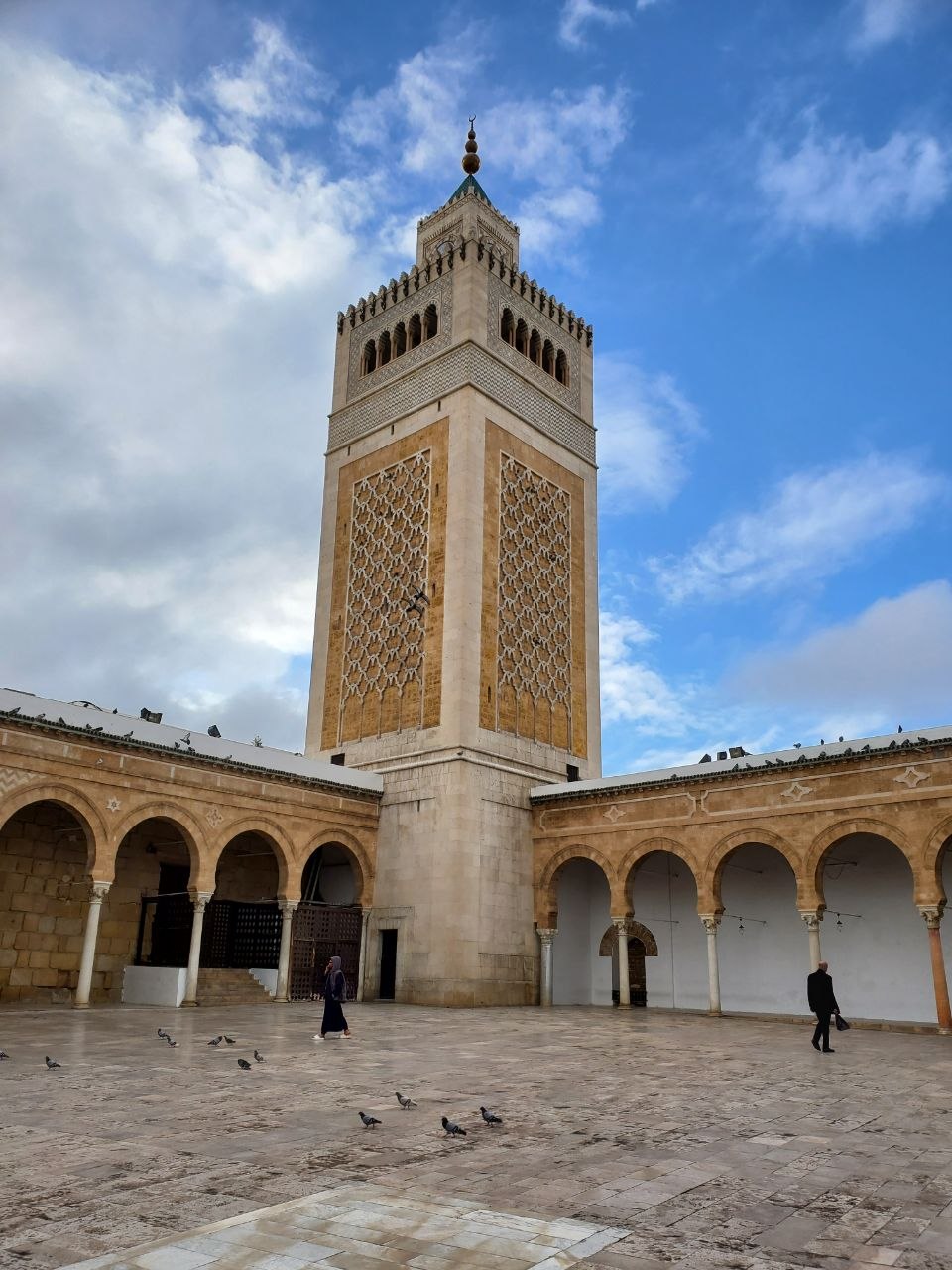
The square minaret, completed in its present form in 1896, dominates the courtyard and remains one of the principal landmarks of the Medina.
The mosque stands at the centre of the Medina of Tunis, which was inscribed on the UNESCO World Heritage List in 1979. UNESCO states that the Medina contains approximately 700 historical monuments, among which Zitouna Mosque occupies a particularly important position.
Over the centuries, the mosque also became a centre of religious and intellectual education. This scholarly tradition remains associated with the name of Ezzitouna University. At the same time, the mosque continues to function as a place of prayer, learning, and community gathering.
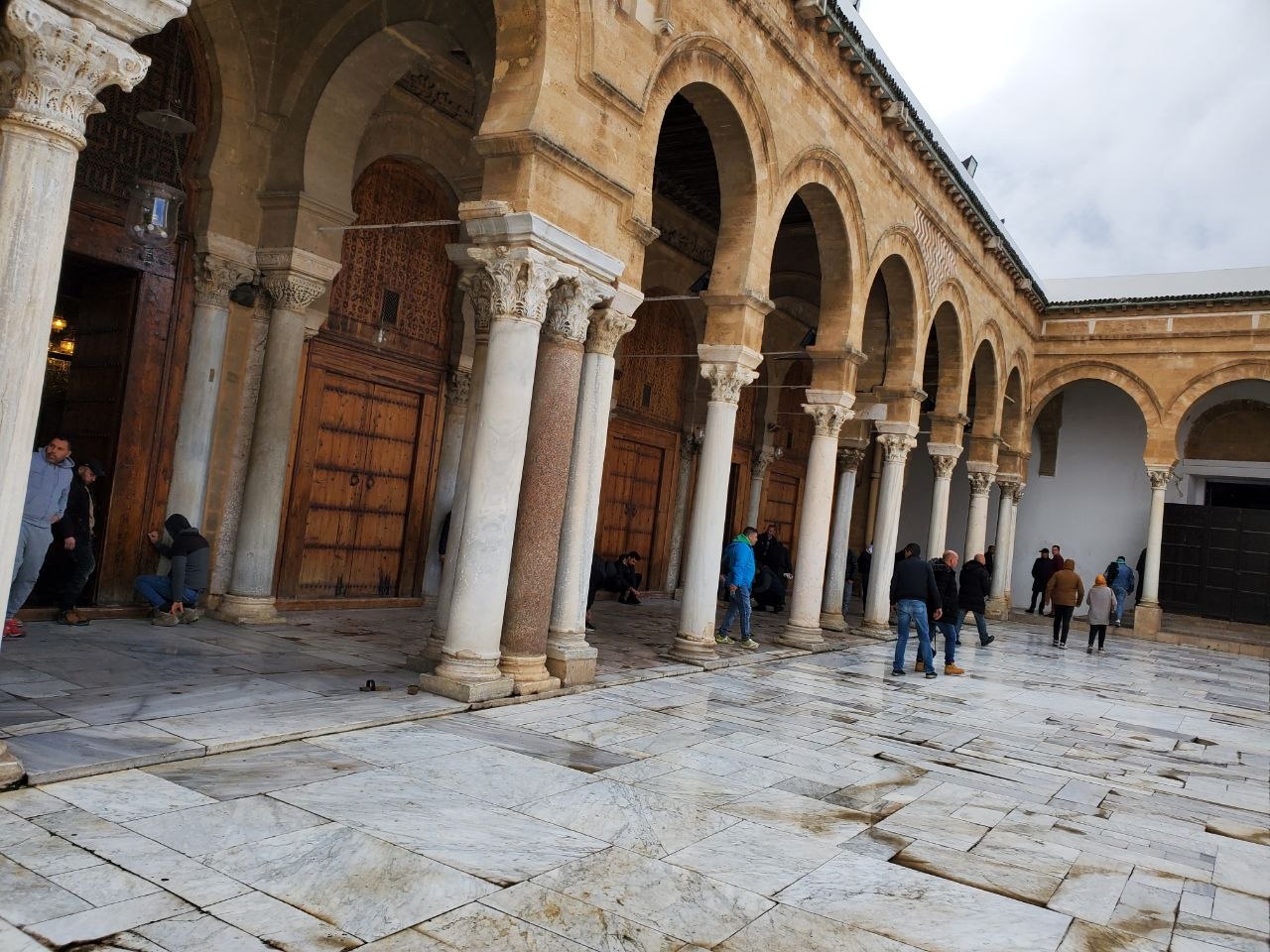
The long rows of arcades and carved capitals reveal the different architectural influences brought together within the monument.
This combination of identities impressed me deeply. Zitouna Mosque is not a monument frozen in the past. Worshippers still pray there, teachers continue to share knowledge, and visitors discover an essential part of Tunisian history within its walls.
What can visitors see, learn, and experience?
The first feature to attract attention is the paved courtyard surrounded by galleries. Visitors can observe the arches, wooden doors, columns, and the silhouette of the minaret. The movement of pigeons and the reflections of light on the stone bring a particular sense of life to this ancient space.
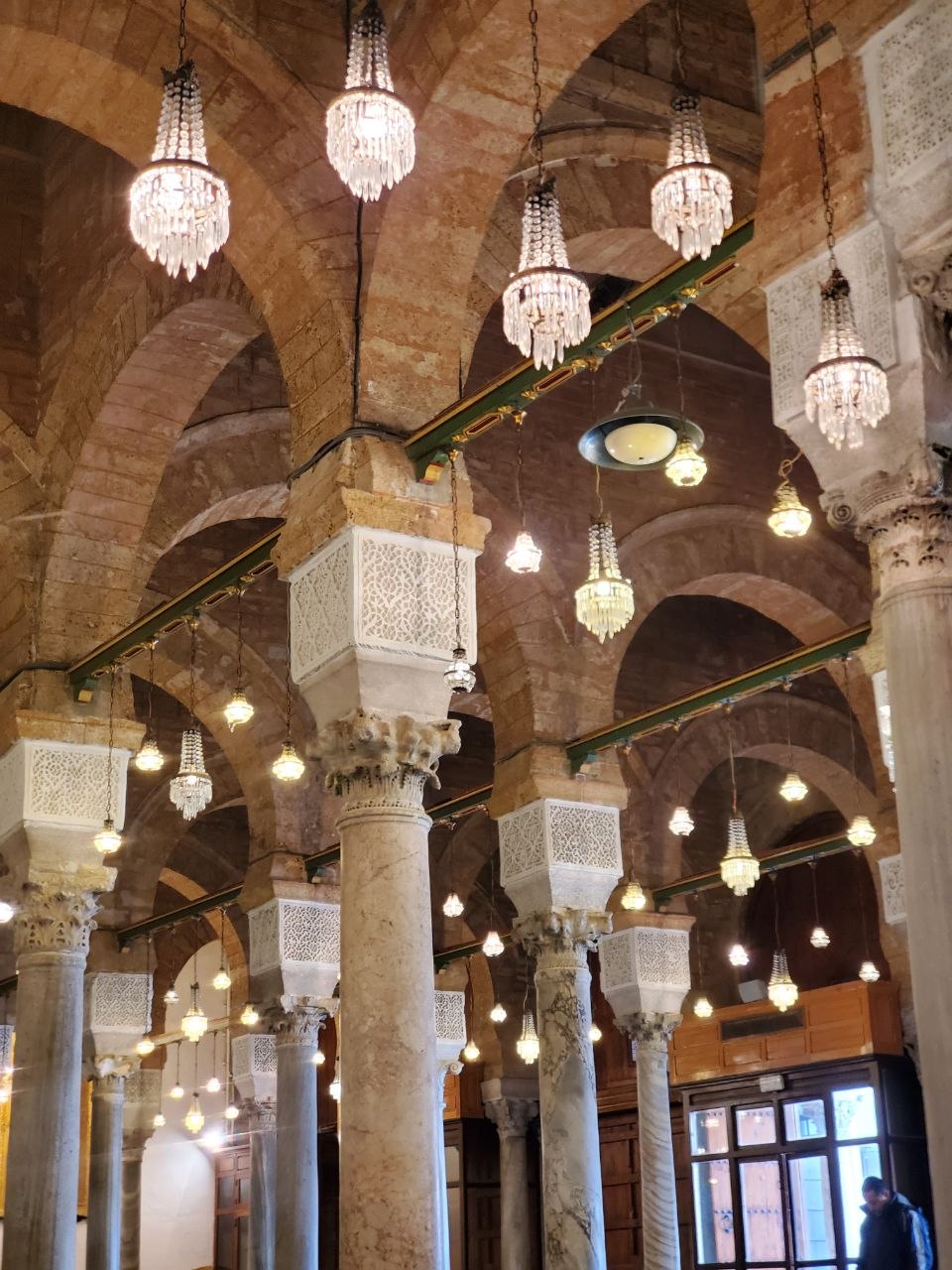
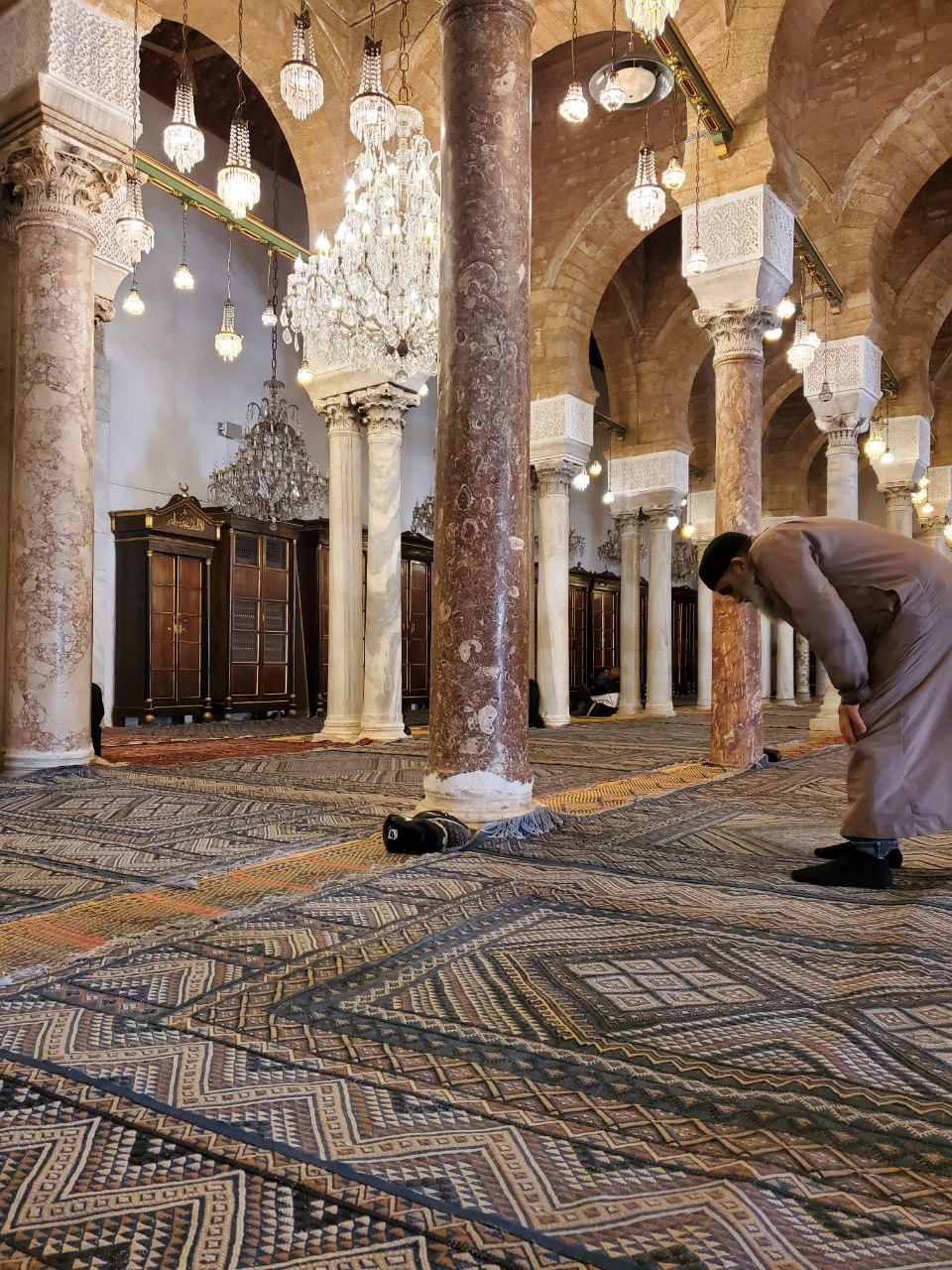
Inside, the atmosphere changes. Columns organize the prayer hall, while the arches and numerous hanging lights create an almost endless perspective. The lighting is not merely decorative, it contributes to the feeling of peace and contemplation.
 |  |
|---|---|
| The hanging lights follow the lines of the arches and spread a soothing glow throughout the prayer hall. | The quiet devotion of a worshipper reminds visitors that, despite its historical fame, Zitouna remains first and foremost a living place of prayer. |
A visit also provides an opportunity to understand the traditional organization of a large Maghrebi mosque: an open courtyard, surrounding galleries, a prayer hall supported by columns, a mihrab indicating the direction of Mecca, and a minaret visible from several streets.
However, the most important experience is not necessarily architectural. By observing the prayers and lessons, visitors understand that the value of heritage also depends on the people who continue to keep it alive.
My recommendations for visitors
I recommend allowing enough time to explore the Medina without rushing. Visitors should wear modest and respectful clothing suitable for a religious site. They should speak quietly, remove their shoes whenever required, and avoid disturbing people who are praying or studying.
It is also important to request permission before taking a recognizable photograph of a worshipper. Access conditions may vary according to prayer times, religious celebrations, and the different areas of the mosque, so visitors should verify the arrangements on site.
Architecture enthusiasts should pay particular attention to the capitals, carved doors, variations between the columns, and the lines created by the arcades. I also recommend spending some time in the neighbouring souks, especially Souk El Attarine, to understand how the mosque fits into the economic and social life of the Medina.
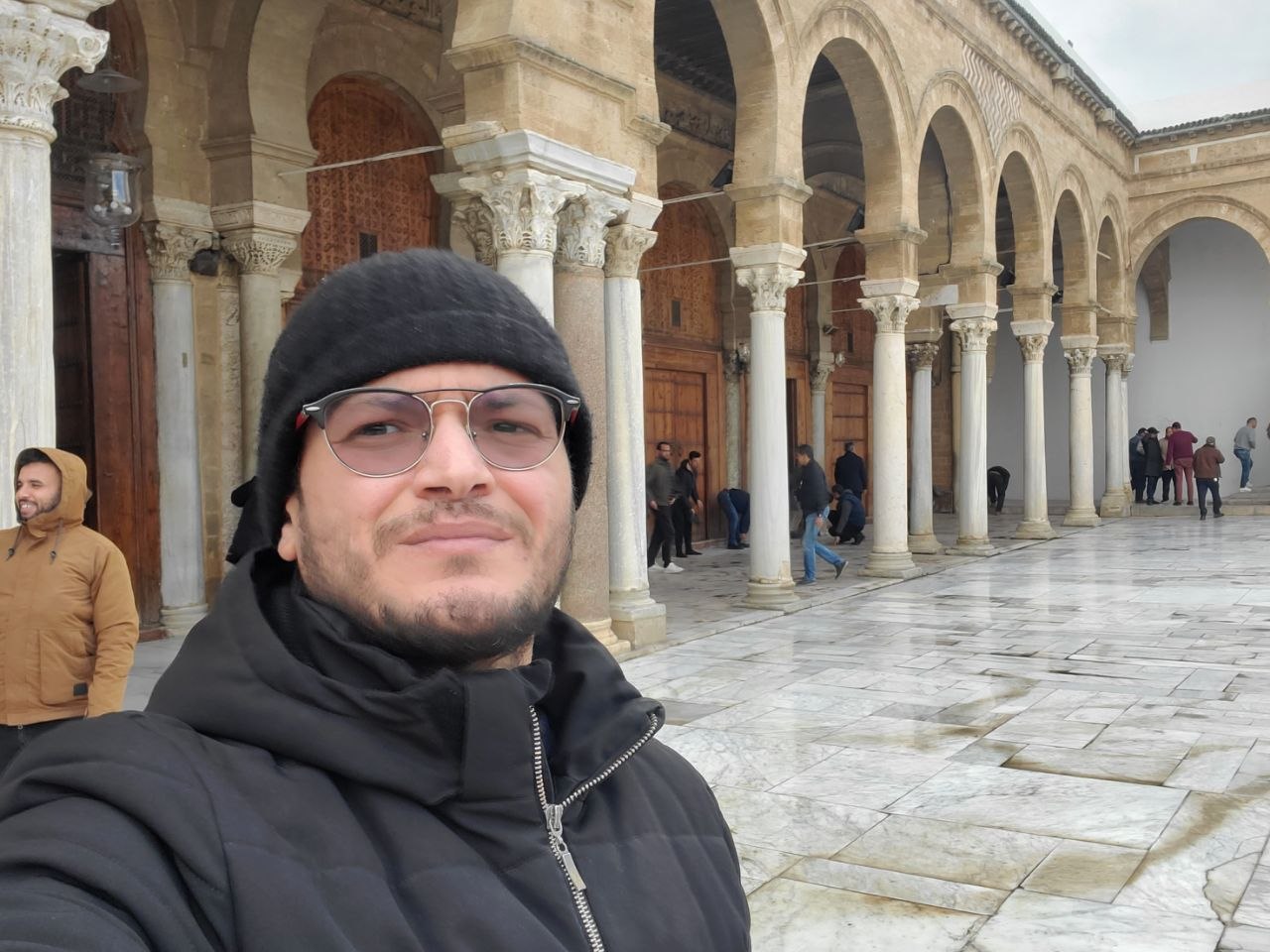
After the prayer and the lesson, I left the mosque feeling calmer and with a renewed understanding of solidarity and my responsibility toward others.
My original video
The following original video, approximately 62 seconds long, presents Zitouna Mosque during my visit:
Practical information
| Information | Details |
|---|---|
| Place | Zitouna Mosque |
| Type of place | Mosque and historical landmark |
| Address | 30 Rue Jamaa Ez Zitouna, Medina of Tunis |
| City | Tunis |
| Country | Tunisia |
| Date of my visit | Friday, March 20, 2026 |
| Coordinates | 36.79731, 10.17122 |
| Google Maps | https://www.google.com/maps?q=36.79731,10.17122 |
| Steem Atlas | [//]:# (!steematlas 36.79731 lat 10.17122 long Zitouna Mosque, Tunis d3scr) |
Conclusion
I entered Zitouna Mosque feeling stressed, rushed, and somewhat lost. I left with a simple but essential realization: we are not meant to live completely enclosed within our own concerns.
The lesson about solidarity taught me that taking care of one’s faith also means taking care of one’s relationships with others. Since that visit, Zitouna Mosque has represented much more than a historical monument to me. It has become a reminder to slow down, listen attentively, and never underestimate the value of helping another person.
I invite my friends @adeljose, @kibreay001, and @josepha to participate in this competition and introduce us to a place that has left a lasting impression on their lives.
Thank you for taking the time to read my story.
Best regards,
Historical sources consulted
Posted via SteemHome
Upvoted! Thank you for supporting witness @jswit.