Can Humans Really Live on Mars? Exploring Our Next Home in Space
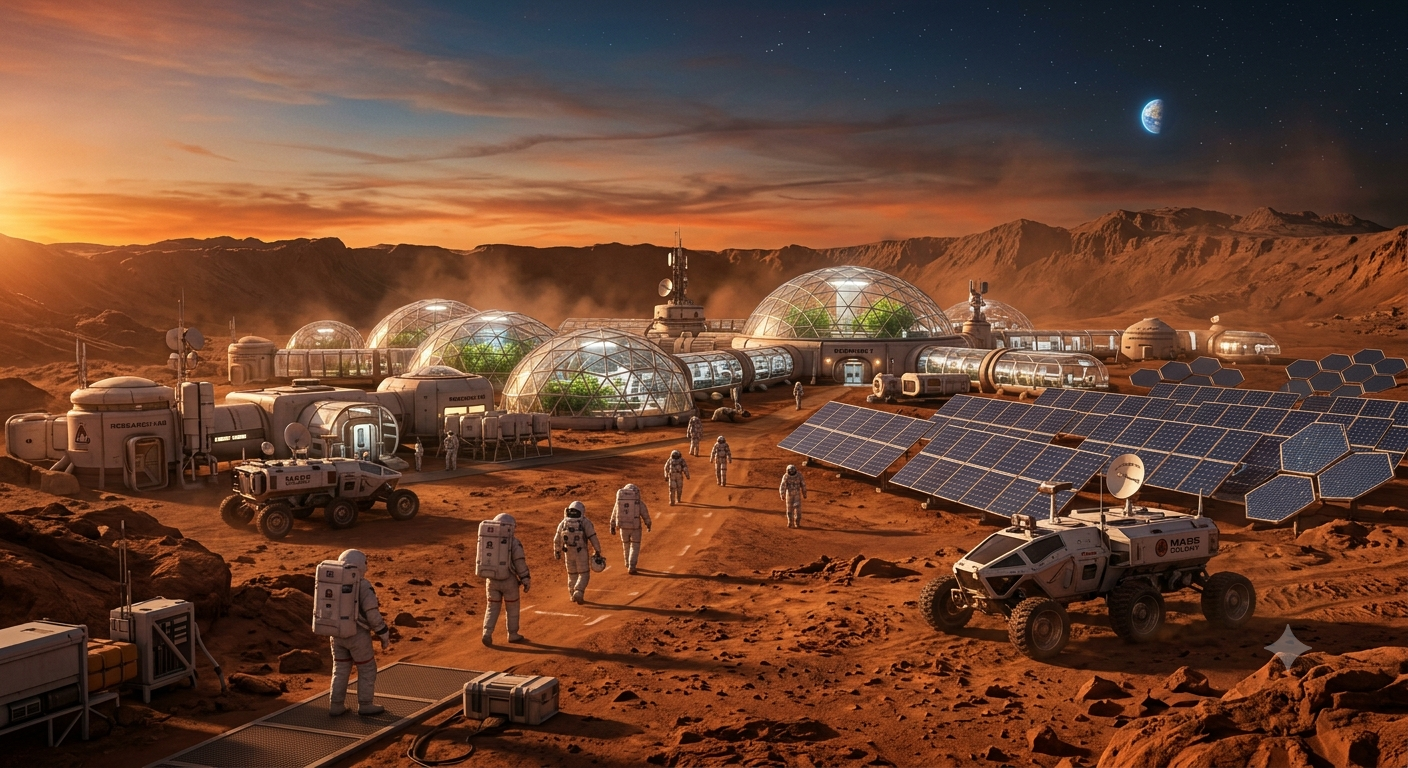
For thousands of years, humans have looked up at the night sky and wondered what lies beyond Earth. Among all the planets in our solar system, Mars has captured our imagination more than any other. Today, thanks to rapid advances in space technology, the idea of humans living on Mars is no longer just science fiction—it is becoming a serious scientific goal.
Mars is often called the Red Planet because of the iron oxide, or rust, that covers much of its surface. Although it shares some similarities with Earth, such as seasons and a day that is only about 40 minutes longer than ours, Mars is an extremely harsh world.
One of the biggest challenges is the atmosphere. It is over 95% carbon dioxide, making it impossible for humans to breathe without life-support systems. The air pressure is also very low, meaning that astronauts would need pressurized habitats and spacesuits to survive.
Another major challenge is temperature. On average, Mars is much colder than Earth, with temperatures often dropping below -60°C (-76°F). Dust storms can last for weeks, covering large areas of the planet and reducing sunlight for solar-powered equipment.
Despite these difficulties, Mars also offers exciting opportunities. Scientists have discovered evidence of frozen water beneath its surface and at its poles. This ice could one day provide drinking water, oxygen, and even hydrogen fuel for future explorers.
Space agencies and private companies are already developing technologies that could make a Mars mission possible. Reusable rockets, advanced spacecraft, and new habitat designs are bringing humanity closer to taking its first steps on another planet.
Living on Mars would require innovation in every aspect of life. Food would likely be grown inside protected greenhouses using hydroponic farming. Energy could come from solar panels and possibly small nuclear reactors. Robots would perform dangerous tasks before humans arrive, preparing habitats and infrastructure.
Beyond the technology, a mission to Mars represents something even greater. It reflects humanity's curiosity, determination, and willingness to explore the unknown. Every great journey in history began with people who believed that new frontiers were worth exploring.
Whether humans establish permanent settlements on Mars within the next few decades remains uncertain. However, the research and discoveries made along the way will continue to improve life on Earth through advances in engineering, medicine, robotics, and environmental science.
The dream of living on another planet reminds us that the future is built by those who dare to imagine what seems impossible today.
Would you volunteer for a one-way mission to Mars if you had the opportunity? Share your thoughts in the comments—I would love to hear your opinion!
