5 Practical Tips to Learn How to Code From Quincy Larson Founder of FreeCodeCamp
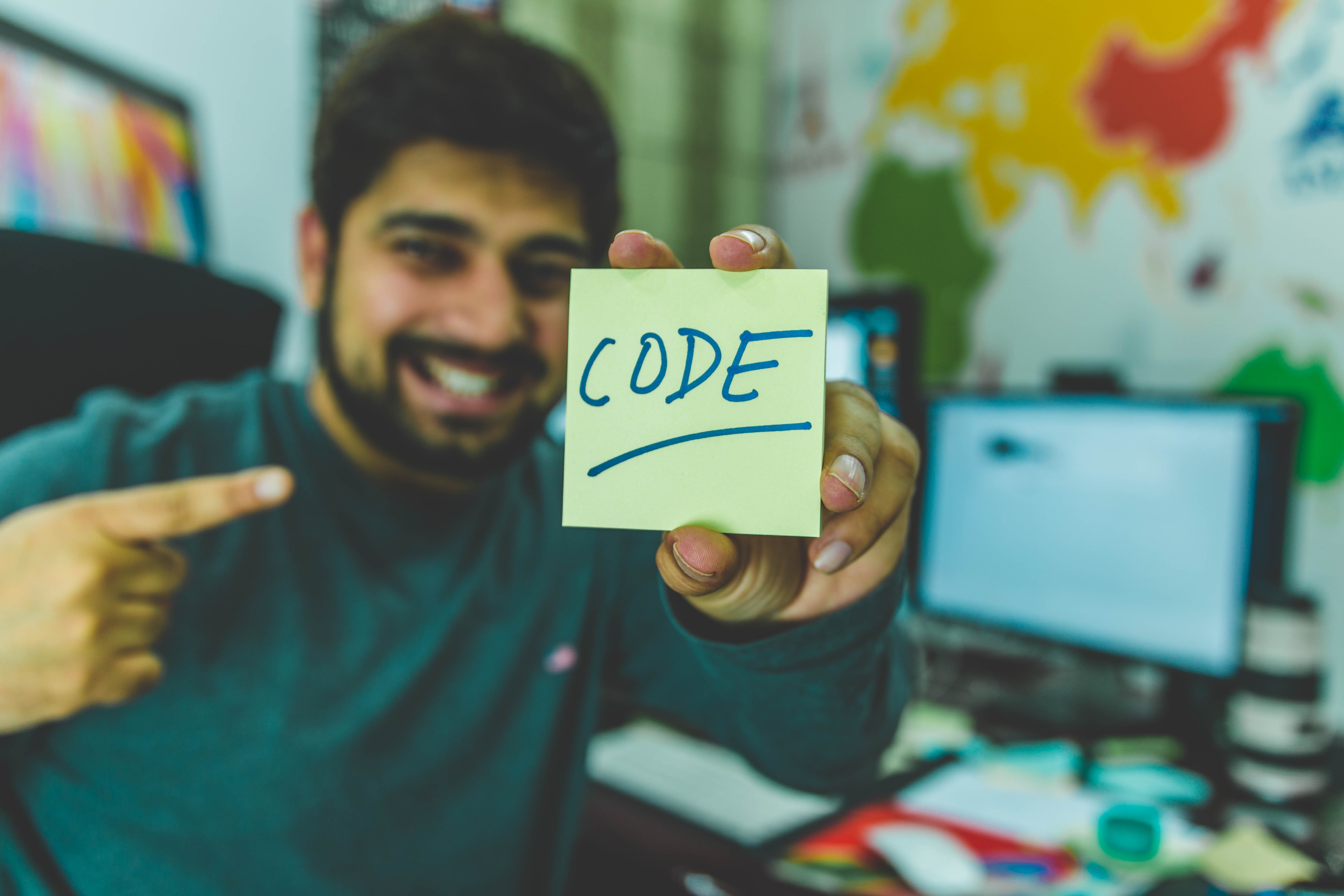
So you want to learn how to code?
If like me, you've tried multiple time to learn how to code unsuccessfully, then spending the time to read the words on this page and taking them to heart would be a good idea.
I first tried to learn how to code in the beginning of 2017 with CodeSchool.com, I followed the tutorials, completed some class, got the basic HTML/CSS certification and tried my hands on the Javascript only to not follow through with it.
The Problem With Places Like CodeSchool, CodeAcademy and Others
Don't get me wrong, these services are great and very well built. The problem is that there might be a little too much handholding. If you are like me, you can complete a module without really being sure of what you've just learned because you have no context in which to put what you've learned.
What's great about freecodecamp.org is that the curriculum is built in very logical steps, IT'S FREE and in order to complete your certification, you must code projects that will require you to put together everything you've learned.
5 Practical Tips to Learn How to Code From Quincy Larson Founder of FreeCodeCamp
1. CODE EVERYDAY
That's a biggy and it seems obvious. This is however why I believe most people never actually learn to code. Learning how to code is like learning how to speak a new language. Every day that you do not code, you lose some of the grammar and syntax that you've learned previously.
It's better to do 30min every day than a 4hours twice a week.
2. HANGOUT WITH CODERS
Motivation and friendship will keep you in the game long enough to feel competent. You can join a meetup group in your local city and start talking about some of the stuff that you are learning.
3. TOOLS DONT MATTER
The easiest way to procrastinate is to get obsessed with tools. Coding, even if it's with the basic Window notepad, is better than spending hours comparing the benefits of Atom Vs Sublime Text.
4. LEARN HOW TO BUILD, DONT WORRY ABOUT WHAT TO BUILD
Just build stuff! Start small and build on top of them. Need a list of ideas? Here it is
5. CONTRIBUTE TO OPEN SOURCE
This is self-evident. When people get recruited for a job, one of the first things interviewers look at is your GitHub repo. Having a busy github and people liking what you contribute is a great way to showcase your passion and skills.
Conclusion
I've been on a 3 week streak today where I've coded every single day...this is not enough to make me a coder but the knowledge does compound overtime. Hopefully, by the end of the year, I should be solid enough to do very basic stuff using the steem blockchain.
What have you been up to? Are you getting ready to start coding?
I wished that I could code but I am too old for such endeavor. It is a very good idea to hangout with coders because skills will get honed to get a better result once we do it in front of the computer. It is like if you want to learn a new language, better live with the people who use that language.
I can’t do it!
The actual programming of the website isn't the most difficult part. Programming is simply breaking down a problem into smaller parts until it hardly seems like a problem at all. A big website might take a long time to make, but it isn't necessarily super difficult. The awesome thing about FreeCodeCamp is how they were able to design a wonderfut curriculum and build up an awesome community. FreeCodeCamp has gotten thousands of people acquainted with programming, many of them probably people who thought they could never do such a thing. I think that's the amazing thing about FreeCodeCamp.
I think the key is consistency and being about to learn and apply it as a way to remember
There are many things to learn in the post!!
To listen to the audio version of this article click on the play image.

Brought to you by @tts. If you find it useful please consider upvoting this reply.
The problem i have with teaching coding is that...
not everyone has a brain like mine.
I learned coding by reading the instruction manual for a TI calculator.
Its all very logical. Once you know the opcodes, you just put them together like LEGOs.
But, the average person doesn't think like me. They think code is magical. They do not get that every computer decision is such a tiny piece. If some number is 0 do this, else do that. There is only 0 and 1, you have to reduce every decision down to two possibilities.
That is the problem in teaching computer logic.
I'm starting to learn to code for the blockchain since that's the future. In the past I learnt more than 5 languages (engineering degree), so I already know how to code. There is a paradigm shift with the blockchain though, so that's what I'm learning.
These are practical tips.
I got a nice blockchain reading list on my wiki if you are interested.
learning to code is difficult when you did not understand a module and go elsewhere to find information and explain terms that you do not understand.
There is so much information that it is difficult to follow a single source, but it is not impossible with practice I learned to code in Java.
Building my WordPress website from the ground up was a great way for me to learn new coding skills. Also, since WordPress is open source, you can dive into the core code to see how everything works.
I took a couple of coding modules at university but I think coding is something that you can teach yourself effectively and there are loads of free resources available online.
Also, for anyone looking to learn the fundementals, JW Weatherman (an avid Bitcoin tweeter) has been working on an online coding game at mathbot.com. Check it out. 👍
Resteemed