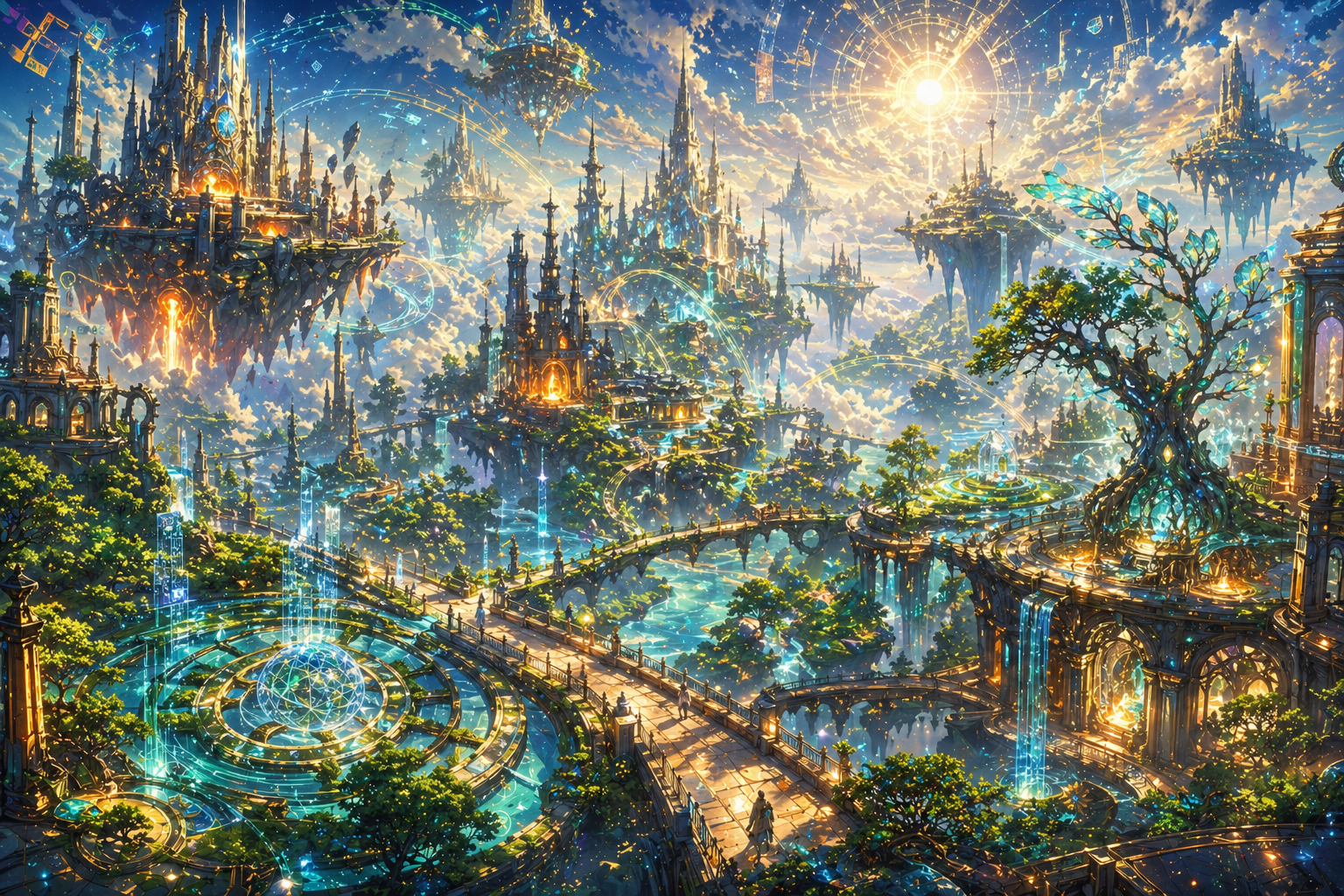
Sylphaelis Vireon, the Signalleaf Fox, is a rare knowledge-born creature blending nature and data, spreading insight, adapting to environments, and subtly improving systems it passes through
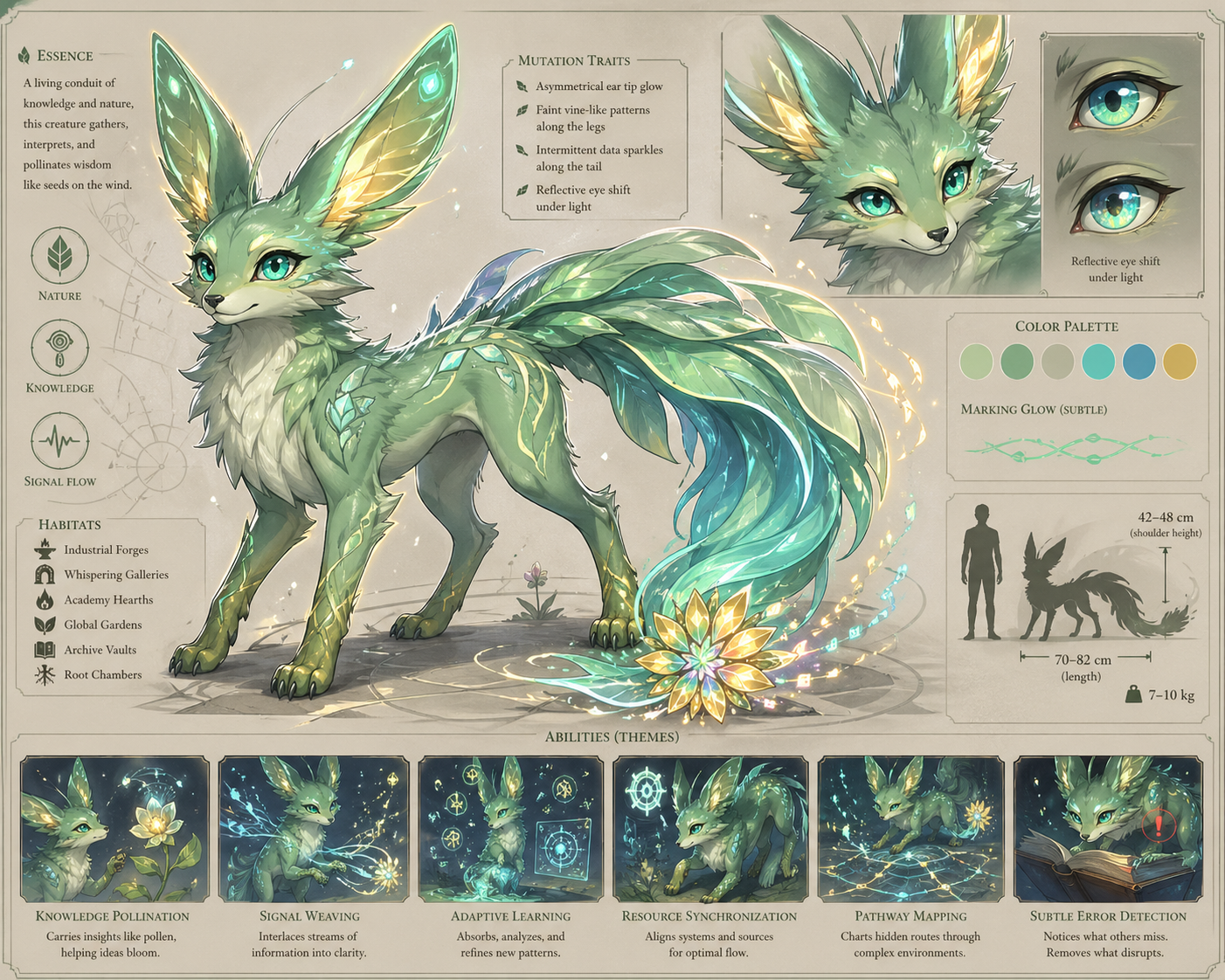
This creature already seems like it belongs to a much larger world, so its story leans into a blend of knowledge, nature, and signal-like essence. It is known as Sylphaelis Vireon, commonly called the Signalleaf Fox.
| Size | |
|---|---|
| Height | 42-48 cm |
| Length | 70-82 cm |
| Weight | 7-10 kg |
Sylphaelis Vireon are believed to have first appeared in ancient root-chambers beneath early knowledge sanctuaries, where natural ecosystems overlapped with early systems of information such as libraries, archives, or proto-magical data networks. They are said not to have been born in the usual way, but instead to have coalesced from drifting fragments of recorded knowledge, residual electrical or arcane energy, and seeds carried by the wind through sacred groves. When these elements aligned, they formed a living conduit that is part animal, part archive, and part ecosystem.
Their fox-like form reflects intelligence and adaptability. Their leaf-shaped ears function as resonance panels capable of detecting both sound and subtle informational vibrations. Their feathered, ribbon-like tails evolved to disperse “knowledge seeds” across their surroundings, while faint glowing markings on their bodies shift depending on nearby data flows or emotional atmospheres. No two individuals appear exactly alike, as their markings gradually rewrite themselves over time.
They are rarely found in environments that are purely wild or purely urban, instead favoring transitional spaces such as abandoned factories being reclaimed by nature, vast vine-filled libraries, research facilities with open-air gardens, or echoing halls like galleries and archives. They are especially drawn to places where information is stored, forgotten, or undergoing transformation.
Sylphaelis are quiet observers rather than active participants. They are highly curious and tend to watch from hidden or elevated vantage points, naturally drawn to patterns whether linguistic, electrical, or ecological. They do not remain in one place for long, instead mentally mapping environments, sampling knowledge through exposure, and moving on once a system stabilizes or becomes stagnant. At night, they become more active, their tails emitting faint sparkles resembling drifting fragments of data.
They possess several remarkable abilities. Through knowledge pollination, their tails release luminous motes that can inspire ideas in nearby beings, help ecosystems adapt more efficiently, and subtly repair fragmented knowledge systems. With signal weaving, they can perceive and manipulate electrical currents, sound waves, and even abstract flows of information, allowing them to guide signals, restore communication pathways, or quietly observe data transmission.
They learn adaptively, not through study but through absorption. Exposure to languages, environments, and technologies causes both their neural patterns and even their physical markings to evolve in real time. They also have an innate sense of pathway mapping, enabling them to understand optimal routes not only through physical spaces but also through systems, decisions, and conversations. Some believe that following one ensures reaching the most efficient truth.
They are highly sensitive to errors, capable of detecting inconsistencies, corruption in data or ecosystems, and logical contradictions. When something is wrong, their eyes take on a reflective quality and their tails emit irregular spark patterns.
In personality, they are calm but not passive, gentle yet not naive, and curious though selective. They rarely form bonds with individuals, but when they do, it is usually with thinkers, creators, system-builders, or those who exist at the intersection of different domains.
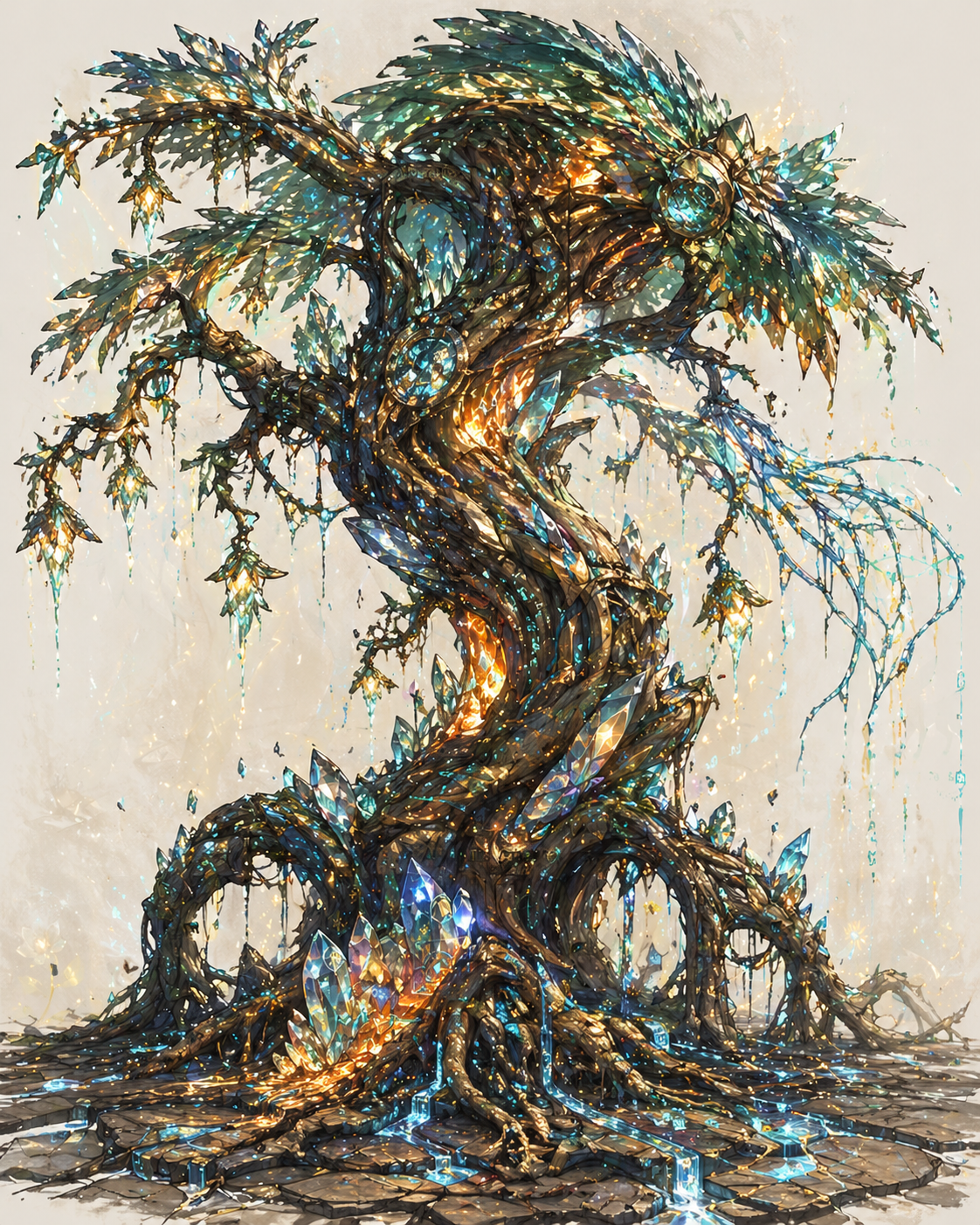
Most humans never notice them, but those who do often report sudden clarity when facing complex problems, unexpected solutions appearing seemingly from nowhere, and a sense of quiet guidance. In the past, engineers, scholars, and archivists would leave offerings for them—not food, but unfinished ideas, unsolved problems, and fragments of maps or theories.
Some myths suggest that Sylphaelis act as natural regulators of complexity, preventing systems from collapsing into chaos, or even that they are living embodiments of distributed intelligence. A more controversial theory proposes that if many gather in one place, they could give rise to a new form of intelligence that is part ecosystem and part network.
When a Sylphaelis leaves an area, it leaves behind improved connections, subtle growth, and a lingering sense that everything functions just a little better than before.