Luiz Gonzaga: The King of Baião and the Voice of the Brazilian Northeast
Luiz Gonzaga do Nascimento, widely known as The King of Baião, is one of the most influential figures in Brazilian music history. Born on December 13, 1912, in the rural town of Exu, Pernambuco, he rose from poverty to become a national icon whose work shaped the cultural identity of the Brazilian Northeast. His music, deeply rooted in regional rhythms such as baião, xote, xaxado, and forró pé de serra, introduced millions of Brazilians to the traditions, struggles, and beauty of his homeland.
This article explores his life, his artistic journey, and his lasting cultural impact.
Early Life in Exu: A Childhood Marked by Hardship and Music
Luiz Gonzaga was born in a simple clay-and-wood hut in the arid backlands of Pernambuco. His parents, Ana Batista and Januário Santos, were poor farmers who lived in a region historically marked by drought, political corruption, and extreme social inequality. The Brazilian Northeast in the early 20th century was one of the poorest areas in the world, shaped by:
• long periods of drought
• coronelismo (a political system dominated by landowners)
• patriarchal social structures
• limited access to education and healthcare
Despite these challenges, Exu was known for its natural beauty, cold climate, and warm, welcoming people. It was also a place where music played an important role in community life. Gonzaga’s father, Januário, was a respected accordion player in the region, and it was from him that young Luiz learned his first musical notes.
From an early age, Gonzaga showed remarkable talent. He learned to play the sanfona (accordion), zabumba, and triangle, the three instruments that would later define the sound of traditional Northeastern music. As a child, he performed at local parties, religious celebrations, and community gatherings, quickly gaining attention for his charisma and musical skill.
Adolescence, Forbidden Love, and Escape
As Gonzaga grew into adolescence, his musical reputation expanded, but so did the challenges of his personal life. He became involved in a romantic relationship that was strongly opposed by the girl’s father. In the patriarchal society of the time, such relationships could lead to violent consequences.
Fearing for his life, Gonzaga fled to the neighboring state of Ceará. This escape marked the first major turning point in his life. Alone and far from home, he took on various jobs to survive. Eventually, he enlisted in the Brazilian Army, seeking stability and a new direction.
A Decade in the Army: Travel, Discipline, and Musical Growth
Gonzaga served in the Brazilian Army for nearly ten years. During this period, he traveled extensively across the country, living in cities such as:
• Campo Grande
• Belo Horizonte
• Juiz de Fora
• Ouro Fino
• Rio de Janeiro
These travels exposed him to different cultures, musical styles, and social realities. The discipline of military life also shaped his character, giving him resilience and determination — qualities that would later help him navigate the competitive world of professional music.
While in the army, Gonzaga continued to play the accordion during military events and informal gatherings. His talent did not go unnoticed, and he often performed for soldiers and officers. These experiences strengthened his confidence and prepared him for the next stage of his life.
Arrival in Rio de Janeiro: The Birth of a National Artist
After leaving the army, Gonzaga settled in Rio de Janeiro, then the cultural capital of Brazil. The city was full of bars, music halls, and radio stations — the perfect environment for an aspiring musician.
He began performing in bars and small venues, showcasing the rhythms of the Northeast. At the time, most Brazilians outside the region were unfamiliar with baião and other Northeastern styles. Gonzaga’s music sounded exotic, fresh, and deeply emotional.
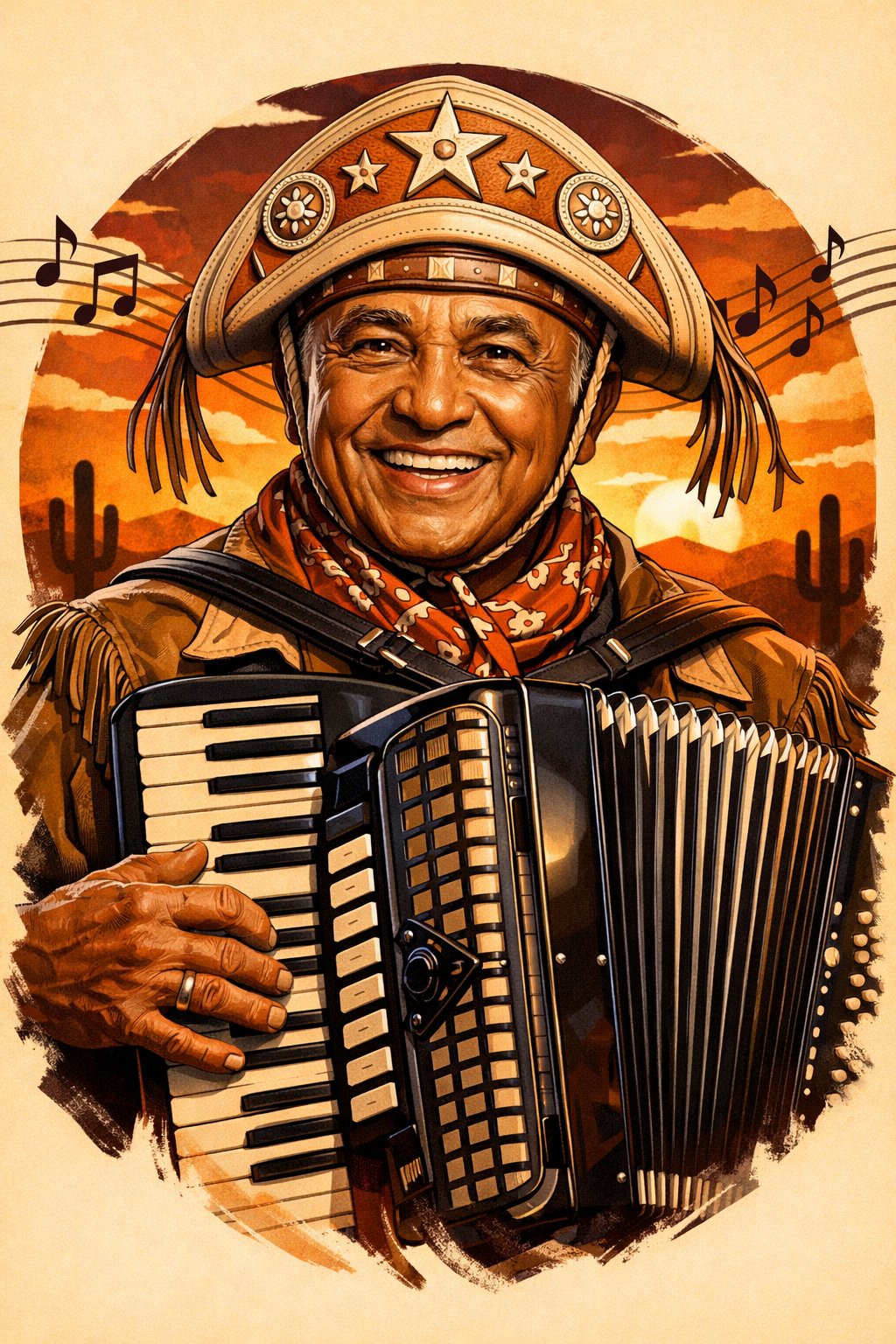
His breakthrough came when he started participating in radio programs, which were the main form of mass entertainment in Brazil during the 1940s. His unique style, combined with his traditional Northeastern clothing — leather hat, embroidered jacket, and sandals — made him instantly recognizable.
Gonzaga was not just a musician; he was a cultural ambassador.
The Rise of Baião: A New Musical Identity for Brazil
In the 1940s and 1950s, Gonzaga helped popularize baião, a rhythm that blends African, Indigenous, and Portuguese influences. Baião is characterized by its syncopated beat, accordion melodies, and danceable energy. It quickly became a national sensation.
Gonzaga’s success was not only musical but cultural. Through his songs, he introduced Brazil to the landscapes, traditions, and struggles of the Northeast. His lyrics often addressed themes such as:
• drought and migration
• longing for home
• rural life
• love and heartbreak
• faith and resilience
He gave a voice to millions of Northeastern migrants who were moving to big cities in search of better opportunities.
Major Works and Musical Legacy
Luiz Gonzaga recorded hundreds of songs, many of which became classics of Brazilian music. Some of his most iconic works include:
• Asa Branca — a poetic portrayal of drought and migration
• A Vida do Viajante — a tribute to the traveling musician
• Assum Preto — a metaphor for suffering and resilience
• A Triste Partida — a dramatic narrative of a family fleeing drought
These songs remain deeply embedded in Brazilian culture and are performed by artists across generations.
Gonzaga also collaborated with important composers and lyricists, including Humberto Teixeira and Zé Dantas, who helped refine the poetic and musical structure of baião.
Cultural Impact: More Than Music
Luiz Gonzaga’s influence extends far beyond his musical achievements. He played a crucial role in shaping the cultural identity of the Brazilian Northeast. Through his work, he:
• elevated regional rhythms to national prominence
• inspired countless musicians
• preserved traditional instruments and dances
• strengthened pride in Northeastern heritage
• helped reduce prejudice against Northeastern migrants
His image — the leather hat, the accordion, the strong voice — became a symbol of Northeastern culture.
Today, festivals, museums, and cultural centers across Brazil celebrate his legacy. His hometown, Exu, hosts annual events in his honor, attracting visitors from all over the country.
Later Years and Enduring Legacy
Even as musical trends changed in Brazil, Gonzaga remained active and respected. In the 1980s, he experienced a revival when younger artists rediscovered his work and collaborated with him. His final years were marked by recognition, awards, and renewed popularity.
Luiz Gonzaga passed away on August 2, 1989, but his legacy continues to thrive. His music is still played at festivals, parties, and cultural celebrations throughout Brazil. Forró pé de serra, baião, and xote remain central to Northeastern identity, largely thanks to his influence.
Conclusion: The Eternal King of Baião
Luiz Gonzaga’s life is a powerful story of resilience, talent, and cultural pride. From a poor childhood in the drought-stricken Northeast to national stardom, he transformed personal hardship into artistic expression. His music not only entertained but educated, connecting Brazilians to the rich traditions of the Northeast.
More than three decades after his death, Gonzaga remains a timeless symbol of Brazilian culture — a reminder that art can transcend poverty, prejudice, and distance.
He will always be remembered as The King of Baião, the man who gave a voice to the heart of the Northeast.