A crown fot for a queen: 1887
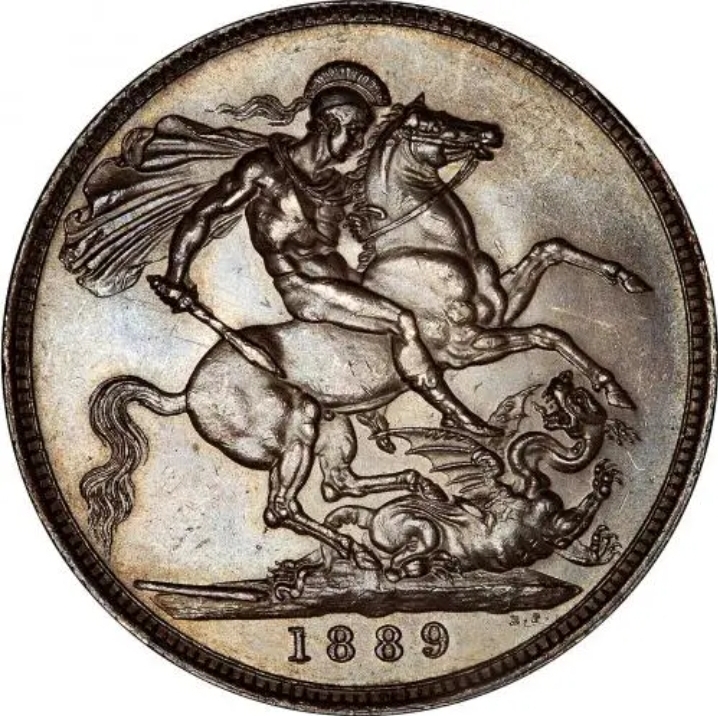
The 1889 Victoria Jubilee Head Crown is a centerpiece of late Victorian numismatics, representing a period of immense British imperial pride. Minted in .925 sterling silver, this large and heavy coin—weighing over 28 grams—was the highest denomination of silver currency in circulation at the time. Its size and weight gave it a "heft" that symbolized the stability of the British economy during the late 19th century. Because a crown was worth five shillings (a significant sum in 1889), these coins were often saved as keepsakes or used for formal gifts rather than daily small-change transactions.
The coin’s design is notable for featuring the "Jubilee Head" portrait of Queen Victoria, which was introduced in 1887 to commemorate her 50th year on the throne. Created by sculptor Joseph Edgar Boehm, the portrait shows an older Victoria wearing a small imperial crown and a long veil. While it was initially criticized by some for the "undersized" appearance of the crown on the Queen's head, it has since become a classic and highly sought-after image for collectors. The reverse of the coin features the iconic St. George and the Dragon by Benedetto Pistrucci, a masterpiece of neoclassical art that has appeared on British coinage for over two centuries.
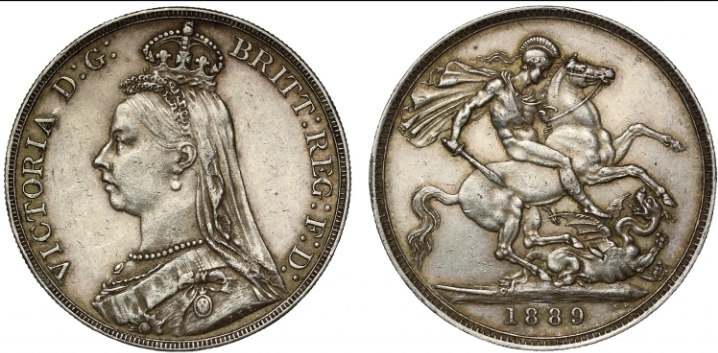
From a collector’s perspective, the 1889 mintage is particularly interesting because it falls in the middle of the Jubilee series. With roughly 1.8 million struck, it is available enough for beginners to find an affordable example, yet scarce enough in high "Mint State" grades to challenge serious investors. Collectors often scrutinize the reverse for a specific variety known as the "ground forms lines," where the terrain beneath the horse's hooves shows distinct horizontal lines. Finding this variety in excellent condition can significantly boost the coin's market value.
Today, the 1889 crown is valued not just for its silver content, but as a tangible piece of history. Whether it is a worn specimen that likely sat in a Victorian pocket or a lustrous, uncirculated coin that has been tucked away in a felt-lined cabinet for over 130 years, it remains one of the most popular "crown-sized" coins in the world. It serves as a reminder of the Royal Mint’s craftsmanship and the peak of the British Empire's global influence.