Tartarian Buildings and Architecture. 11
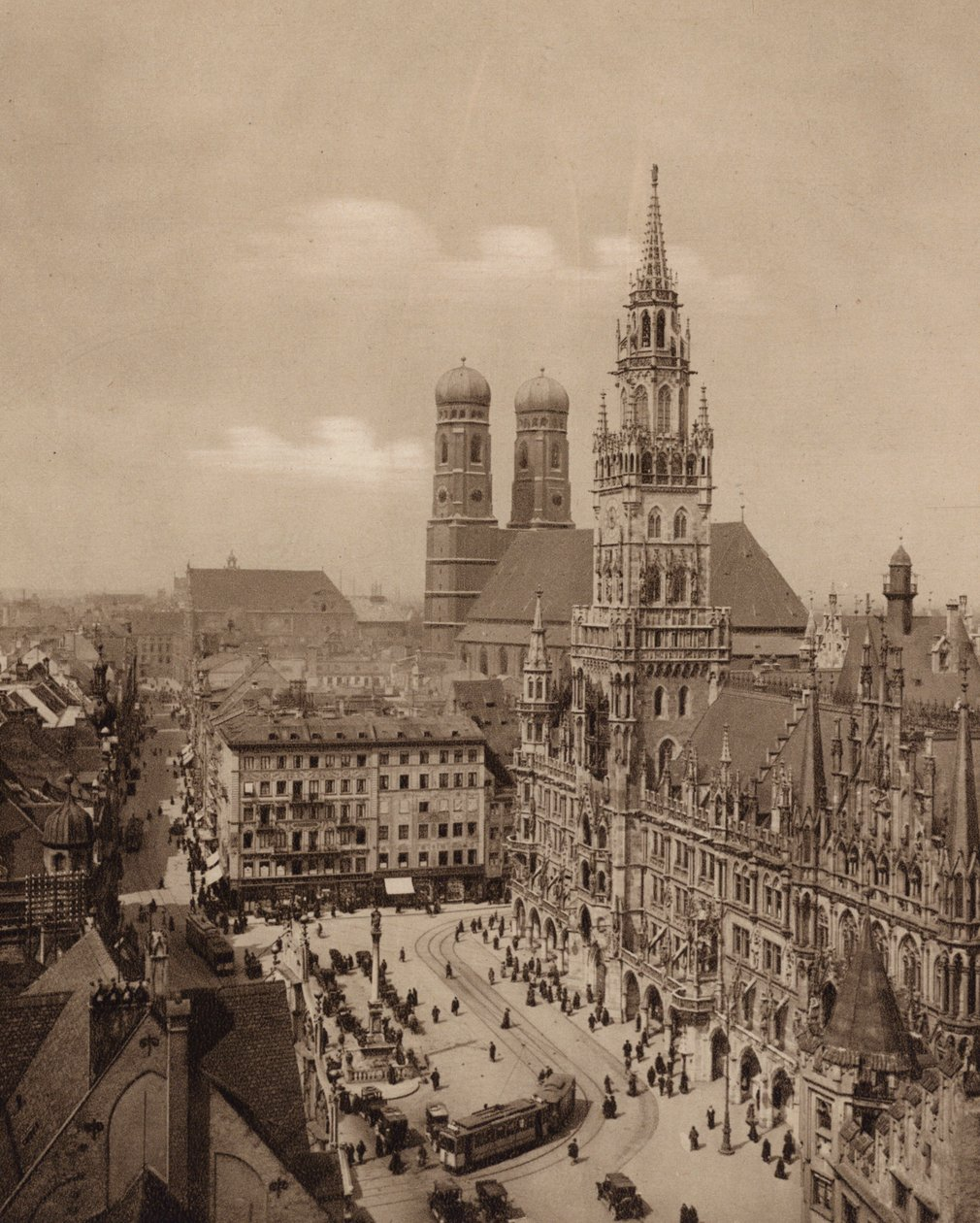
This historical photograph shows Marienplatz in Munich, Germany.
Location Details
The scene features several of Munich's most iconic landmarks:
• Neues Rathaus (New Town Hall): The ornate Neo-Gothic building on the right, completed between 1867 and 1908.
• Frauenkirche (Cathedral of Our Dear Lady): The large brick church in the background with its two distinctive onion-domed towers.
• Mariensäule (Marian Column): The tall column visible in the center of the square.
Estimated Date
The photograph most likely dates from the early 1900s, specifically around 1908–1912.
• Architectural Clues: The New Town Hall appears in its completed form, which occurred in 1908.
• Transportation: The presence of electric trams and early motorized vehicles on the square is characteristic of this pre-WWI period.
Similar postcards of this exact view are often dated to this timeframe.
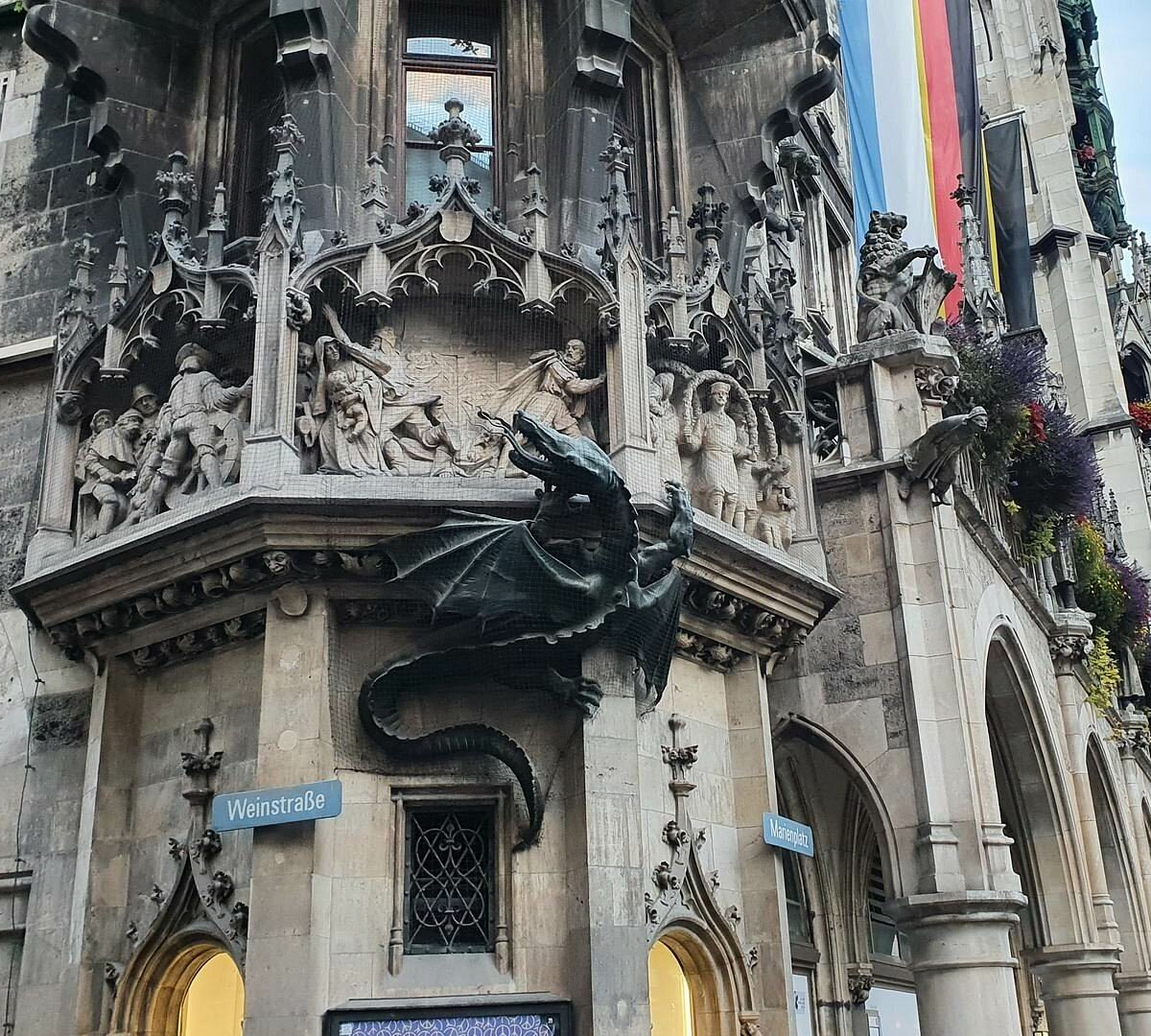
This sculpture is known as the Wurmeck (Dragon’s Corner), located on the southwest corner of the Neues Rathaus (New Town Hall) in Munich, Germany.
Historical Significance and Legend
The bronze dragon, or "Lindwurm," commemorates a local medieval legend tied to the Black Death plague.
• The Legend: According to folklore, a winged serpent emerged from the ground in central Munich, spreading the plague with its poisonous breath and causing widespread death.
• The Heroic Defeat: The terror reportedly ended when a brave gunner killed the dragon with a well-aimed cannon shot at this exact location.
• Symbolism: Today, the dragon serves as a guardian of the city, symbolizing strength and protection.
Architectural Details
• Creation: The bronze sculpture was completed in 1906 and is the work of German sculptors Anton Kaindl and Hygin Kiene.
• Stone Reliefs: Directly above the dragon are stone reliefs that depict scenes from the legend:
◦ On the left, brave men prepare for the battle.
◦ In the center, the dragon drives away women and children.
◦ On the right, barrel makers (coopers) perform the Schäfflertanz (Coopers' Dance), a celebration said to have started in 1517 to mark the end of the plague.
This corner is a popular, often-overlooked detail of the New Town Hall’s elaborate Neo-Gothic facade.