Tartarian Buildings and Architecture. 26
Construction Timeline
The construction of Villa La Rotonda was a multi-generational project that took nearly 40 years to fully complete, far longer than a typical modern home.
• Started: 1567 (commissioned by Paolo Almerico)
• Interruption: Work was ongoing when the architect, Andrea Palladio, died in 1580. The villa was inhabitable but the roof and decoration were unfinished.
  Magazyn WhiteMAD
• Completion: The project was taken over by Palladio's student, Vincenzo Scamozzi, and finally completed around 1605 for the new owners, the Capra brothers.
How They Built It (Methods & Materials)
Despite looking like a solid marble monument, the villa is actually a masterpiece of cost-effective engineering designed to save money and transport effort.
• The "Marble" Illusion: The entire structure is built from cheap, locally sourced brick covered in stucco (plaster). The stucco was smoothed and painted to mimic the look of expensive white stone. Only the most detailed parts—like the column bases and capitals—are made of real carved stone.
• No Foundations: The villa does not have deep foundations sunk into the earth. Instead, it is self-supporting, resting on a grid of brick arches and cross-vaults on the ground floor that distribute the weight.
  Villa La Rotonda di Andrea Palladio +1
• The Columns: Even the massive columns are not solid stone. They were built using specially shaped bricks to form the round shaft, then coated in stucco to appear seamless.
  Reddit
• The Dome: The dome you see today is lower than Palladio's original design. Scamozzi lowered it and added an oculus (eye) at the top, inspired by the Pantheon, though it was later capped with a lantern.
Logistics & Labour
Building a hilltop villa in the 16th century required precise coordination of different trades.
• Site Management: Palladio was known for excellent site organization. By using brick instead of heavy quarried stone for the main walls, he drastically reduced the logistical nightmare of transporting heavy materials up the hill.
Reddit
• Specialized Artisans: The labor force was divided into two tiers:
◦ Rough Labour: Masons who laid the thousands of bricks for the walls and vaults.
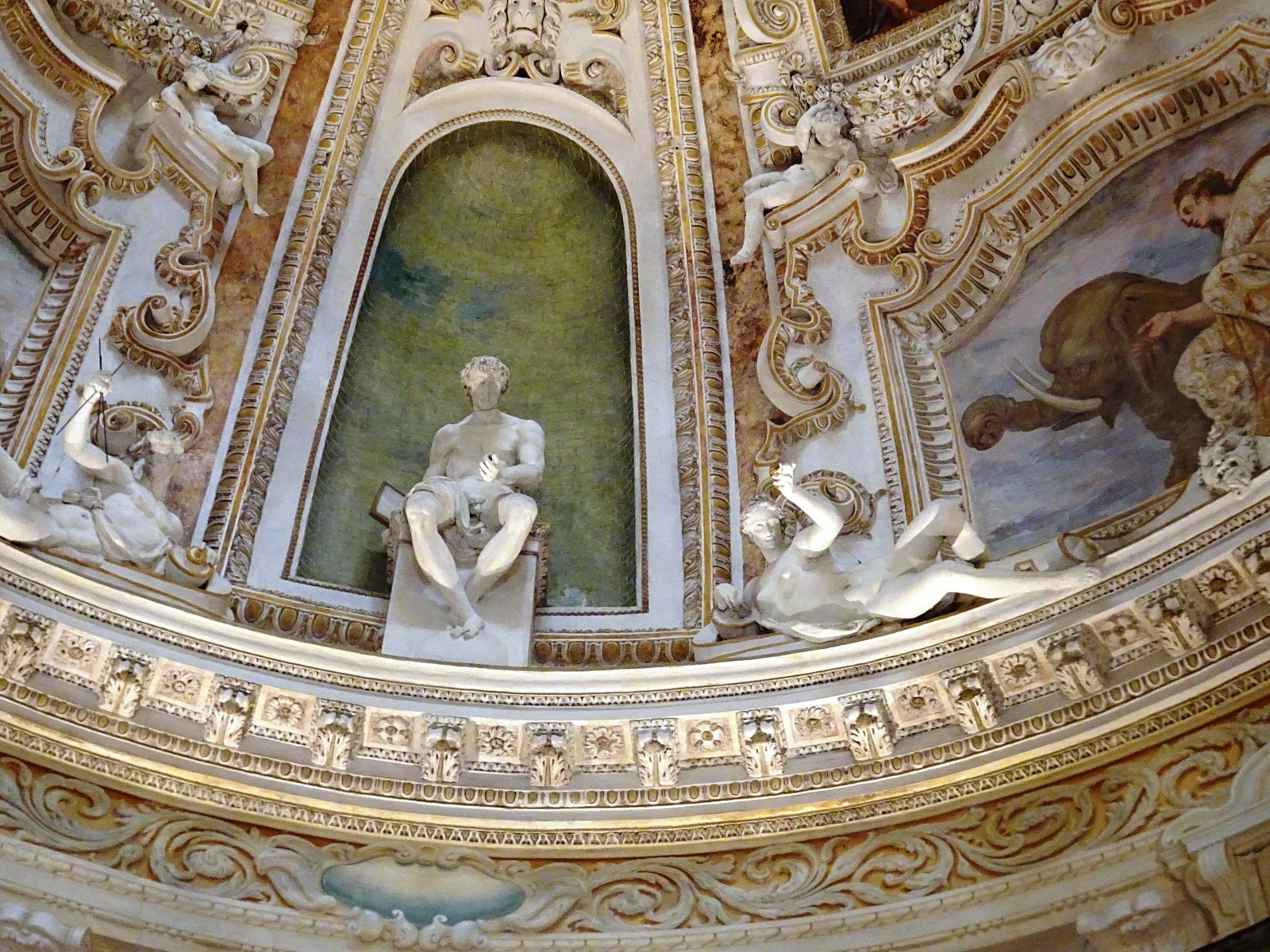
◦ Fine Artists: Skilled stucco workers for the smooth finishes and specialized painters (like Alessandro Maganza) who spent years applying the trompe-l'œil frescoes that decorate the interior.
• Orientation: The building was rotated 45 degrees from the cardinal points. This was a calculated logistical choice to ensure every room received some sunlight during the day, preventing any side of the house from becoming too cold or damp.