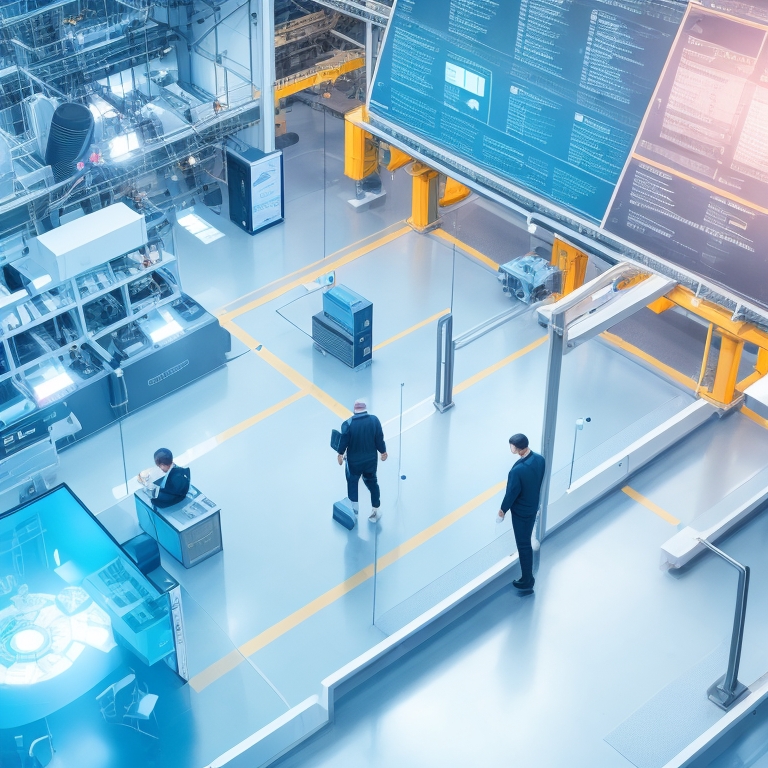
Artificial Intelligence, Internet of Things, and the Impact on Facilities’ Environments
Artificial Intelligence (AI) and the Internet of Things (IoT) are two of the most disruptive technologies of our time. When combined, they have the potential to revolutionize the way we manage and operate facilities.
AI is the ability of machines to learn and make decisions without human intervention. IoT is the network of physical objects that are embedded with sensors and software, allowing them to collect and exchange data.
When AI and IoT are used together, they can create a feedback loop that allows facilities managers to continuously optimize their operations. For example, AI can be used to analyze data from IoT sensors to identify patterns and trends that could indicate a problem. Once a problem is identified, AI can be used to develop a solution and automatically implement it.
This type of proactive approach to facilities management can lead to significant improvements in efficiency, productivity, and sustainability.
Here are some of the specific ways that AI and IoT are being used to improve facilities management:
Energy management: AI can be used to optimize energy consumption by monitoring and controlling HVAC systems, lighting, and other energy-intensive equipment. For example, AI can be used to automatically adjust the temperature in a building based on occupancy levels and weather conditions.
Asset management: AI can be used to track the condition of assets, such as equipment and machinery, and identify potential problems before they cause downtime. For example, AI can be used to analyze vibration data from motors to predict when they are likely to fail.
Security: AI can be used to improve security by monitoring video feeds and detecting suspicious activity. For example, AI can be used to identify people who are trespassing or who are carrying unauthorized objects into a building.
Maintenance: AI can be used to schedule and prioritize maintenance tasks, based on the condition of assets and historical data. For example, AI can be used to automatically generate a maintenance schedule for a fleet of vehicles.
Sustainability: AI can be used to reduce the environmental impact of a facility by optimizing energy consumption, water usage, and waste disposal. For example, AI can be used to control the lighting in a building so that it is only turned on when people are present.
These are just a few of the ways that AI and IoT are being used to improve facilities management. As these technologies continue to evolve, we can expect to see even more innovative and impactful applications in the years to come.
Here are some of the challenges and opportunities associated with the use of AI and IoT in facilities management:
Challenges:Cost: The upfront cost of implementing AI and IoT solutions can be high.Data security: The large amount of data that is generated by IoT devices can be a security risk.Lack of standards: There are currently no universally accepted standards for the interoperability of AI and IoT devices.
Opportunities:Increased efficiency: AI and IoT can help facilities managers to improve efficiency by automating tasks and identifying problems early on.Improved decision-making: AI can help facilities managers to make better decisions by providing them with insights into data that would otherwise be hidden.Increased sustainability: AI and IoT can help facilities managers to reduce their environmental impact by optimizing energy consumption and waste disposal.
Overall, the use of AI and IoT in facilities management has the potential to bring significant benefits, such as improved efficiency, productivity, sustainability, and security. However, there are also some challenges that need to be addressed, such as the cost of implementation and data security. As these technologies continue to evolve, we can expect to see even more innovative and impactful applications in the years to come.