Artificial Sun: The Technology That Could Power the World Forever
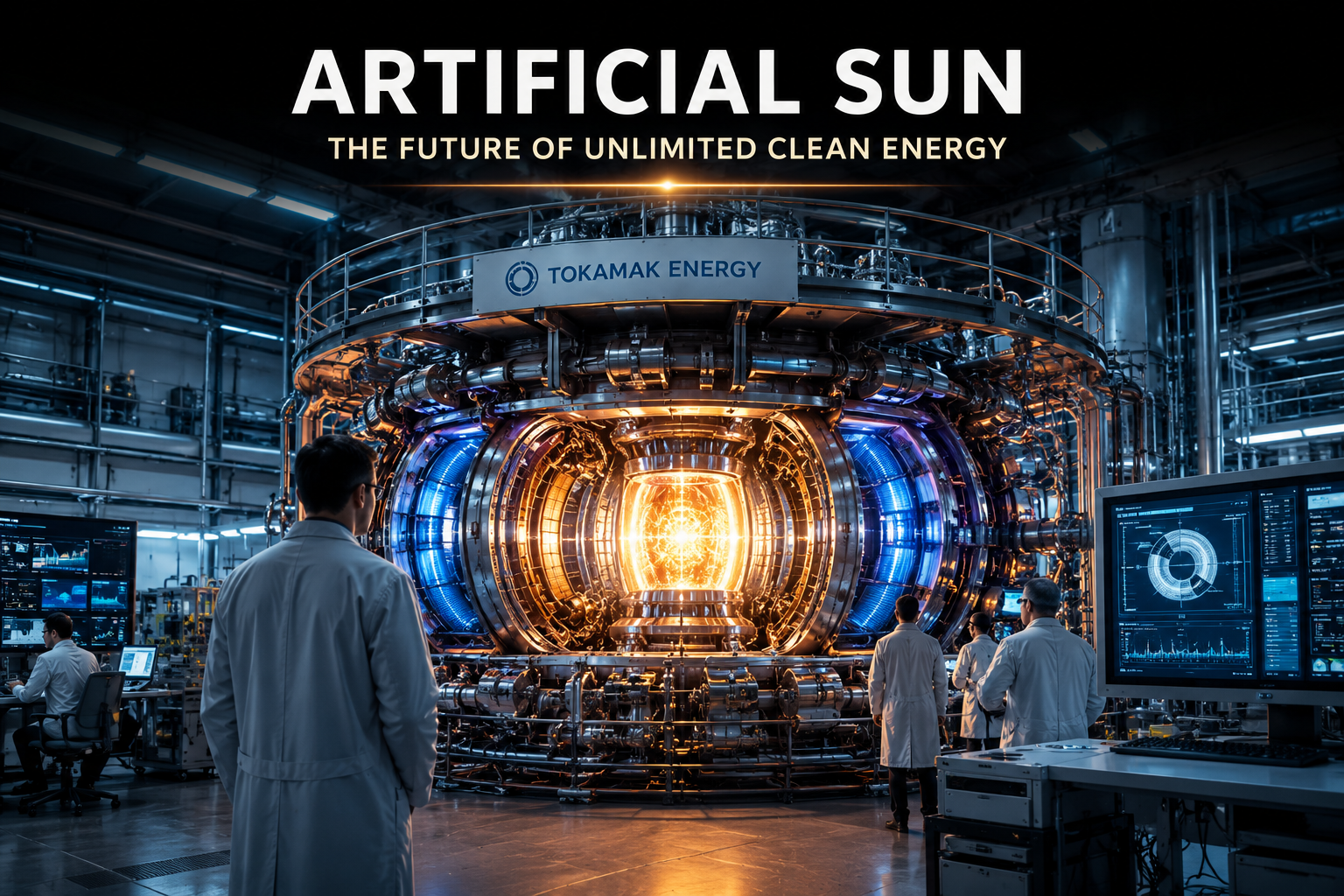
For thousands of years, the Sun has been the greatest source of energy for life on Earth. But what if humans could create a small version of the Sun here on our planet? It may sound like science fiction, yet scientists are working on exactly that. This incredible technology is called an Artificial Sun, and it is based on nuclear fusion—the same process that powers the real Sun. Unlike fossil fuels, fusion does not produce large amounts of greenhouse gases and has the potential to generate an almost unlimited supply of clean energy. Around the world, countries are investing billions of dollars into fusion research because they believe it could solve one of humanity's biggest challenges: producing enough electricity without harming the environment. Projects in Europe, China, the United States, and other countries are already making progress, although creating a stable artificial sun remains one of the most difficult scientific challenges ever attempted.
The basic idea behind an artificial sun is surprisingly simple, even though the technology is extremely complex. Scientists heat hydrogen fuel to temperatures hotter than the center of the real Sun, creating a superheated state of matter called plasma. Powerful magnetic fields then hold this plasma in place inside a special machine called a tokamak, preventing it from touching the walls. When the conditions are right, hydrogen atoms combine together in a process known as fusion, releasing an enormous amount of energy. If researchers succeed in controlling this reaction for long periods, the world could gain a nearly endless source of electricity with very little fuel. Unlike coal or oil, fusion produces no smoke and far less long-lived radioactive waste than traditional nuclear power. However, maintaining such extreme temperatures and keeping the reaction stable for long enough remains one of the biggest engineering challenges of the modern age.
Many experts believe that nuclear fusion could completely transform the future of energy. It could reduce dependence on fossil fuels, lower carbon emissions, and provide electricity to millions of people around the world. At the same time, it could support future technologies such as electric transportation, advanced factories, and even long-distance space missions. Although commercial fusion power plants are not yet available, every new scientific breakthrough brings this dream closer to reality. Personally, I find this technology one of the most inspiring examples of human innovation. Instead of taking energy from nature, scientists are trying to recreate the same process that has powered the Sun for billions of years. If they succeed, future generations may remember this as one of the greatest scientific achievements in history. What do you think? Could an artificial sun become the solution to the world's future energy needs, or do you think other renewable technologies will play a bigger role? Share your opinion in the comments.