How XR Is Helping Industries Strengthen Workforce Training
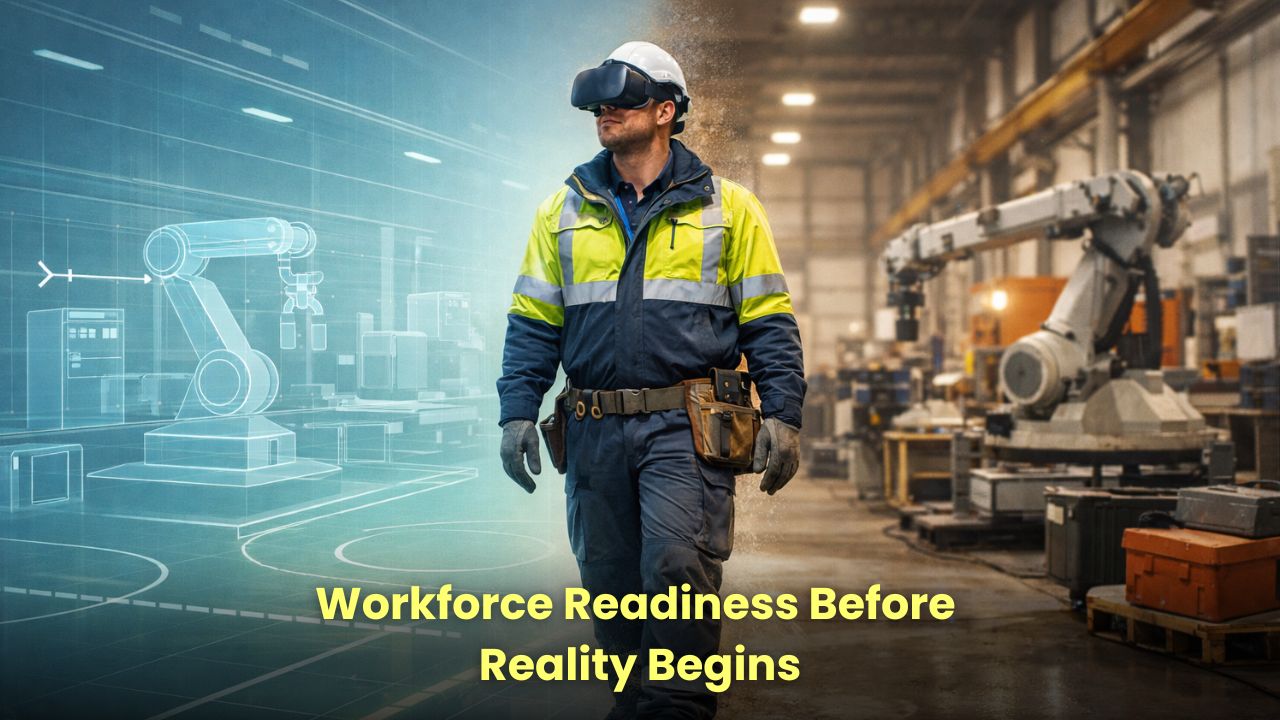
Workforce training across industries is becoming more challenging. Equipment is more advanced, safety requirements are stricter, and organizations are expected to prepare workers faster without increasing operational risk. Traditional training methods, such as manuals, classroom sessions, and on-the-job observation, still play a role, but they often struggle to fully prepare workers for real conditions.
This is where Extended Reality (XR) is increasingly being used as a supportive training layer. XR, which includes Virtual Reality (VR), Augmented Reality (AR), and Mixed Reality (MR), helps workers build practical understanding before they interact with live environments. Platforms such as RadiumXR focus on applying XR in industrial training contexts where readiness and safety are critical.
The Training Gap in Industrial Workforces
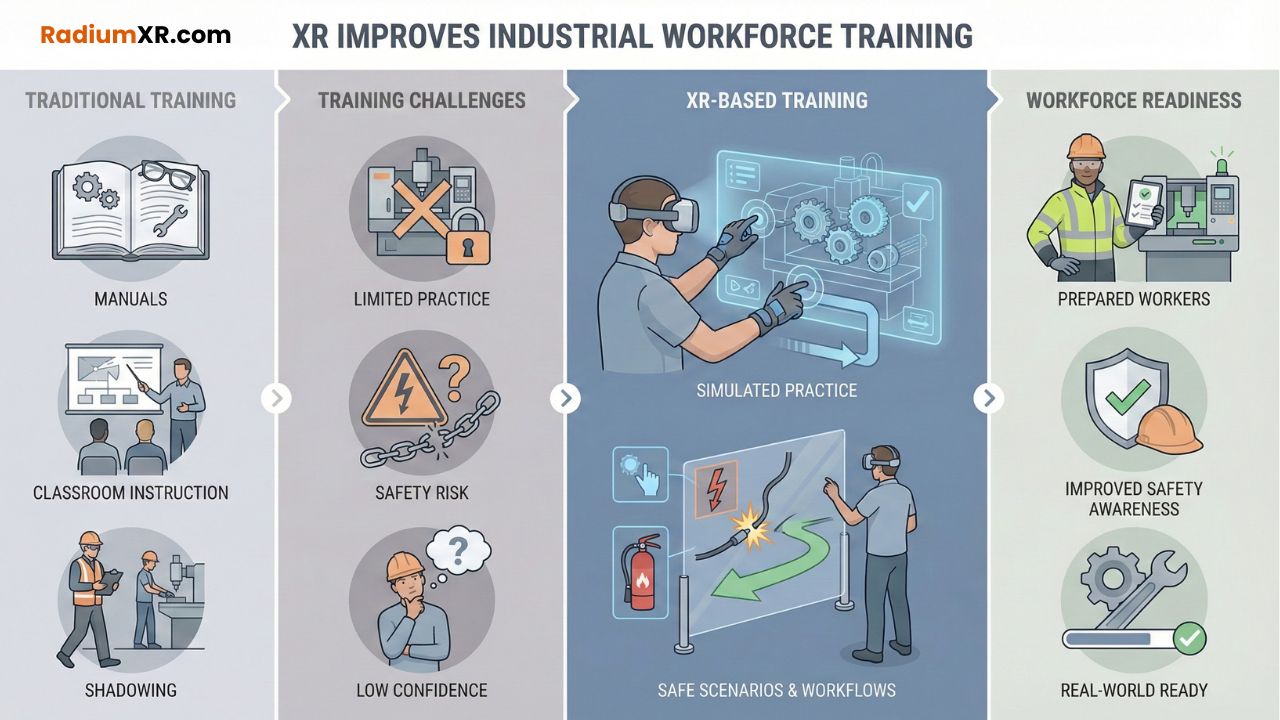
In many industries, workers are expected to perform correctly the first time they encounter a real task. However, opportunities for repeated practice are limited due to:
Safety risks during live training
High costs associated with equipment downtime
Limited availability of instructors or machines
Pressure to onboard workers quickly
As a result, some training remains theoretical. Workers may understand procedures but lack confidence when facing real situations.
How XR Supports Workforce Training
XR-based training environments allow workers to experience tasks, workflows, and safety scenarios in controlled settings. Instead of only reading instructions or watching demonstrations, trainees can actively engage with simulated environments that reflect real working conditions.
In workforce training contexts, XR helps by:
Allowing repeated practice without risk to people or equipment
Helping workers understand cause-and-effect relationships
Reinforcing correct procedures through experience
Supporting learning at an individual pace
These environments do not replace traditional training but enhance it by preparing workers more thoroughly before live exposure. This approach is increasingly visible across industrial XR training initiatives such as manufacturing-focused XR training programs.
Improving Safety Awareness Through Experience
Safety training is one of the strongest use cases for XR in workforce development. Many hazardous scenarios cannot be recreated safely in real life. XR allows workers to experience emergency situations, unsafe behaviors, and risk conditions without real-world consequences.
By experiencing outcomes visually and interactively, workers are better able to internalize safety rules rather than memorizing them. This method supports stronger awareness and more confident decision-making when workers enter real environments, particularly in construction and mining training environments.
Consistency Across Teams and Locations
Organizations operating across multiple sites often face inconsistent training outcomes. Different instructors, shifts, or facilities can lead to variations in how procedures are taught.
XR-based workforce training helps standardize learning by delivering the same scenarios, instructions, and workflows across locations. This consistency supports quality, safety, and operational reliability, especially in large industrial organizations operating across regions.
Supporting Long-Term Workforce Development
Workforce training is not limited to onboarding. Industries also need to support reskilling, refresher training, and preparation for new technologies. XR training environments can be updated and reused over time, making them suitable for long-term workforce development strategies.
As equipment, processes, and regulations evolve, training content can adapt without the need to redesign physical training setups. This approach aligns well with automotive and oil & gas workforce preparation needs.
Where XR Is Being Applied in Workforce Training
XR-supported workforce training is being explored across many sectors, including:
Manufacturing and assembly operations
Construction and infrastructure projects
Mining and heavy industry
Oil and gas facilities
Utilities and energy operations
Automotive and aerospace manufacturing
Across these industries, the focus remains the same: preparing workers before live exposure and strengthening confidence through experience.
Workforce Training Is Evolving
XR is not about replacing instructors or traditional learning. Its value lies in supporting workforce training where experience matters most. By allowing workers to practice, make mistakes, and learn safely, XR helps bridge the gap between knowledge and execution.
As industries continue to evolve, workforce training approaches that emphasize preparation, safety, and consistency are becoming increasingly important.