The Future of Meat Traceability: Why SaaS Platforms Are Essential for Modern Meat Processing
Introduction
The global meat industry is rapidly evolving as food safety regulations, consumer expectations, and supply chains become more complex. Traditional paper-based systems can no longer provide the speed, accuracy, and transparency required for modern meat processing. A Meat Traceability Platform enables businesses to digitally track every stage of the supply chain from livestock farms and processing facilities to packaging, distribution, retail, and consumers using technologies such as RFID, QR codes, cloud computing, IoT, and real-time analytics. By delivering complete farm-to-fork visibility, these platforms simplify compliance with regulations such as FSMA 204 and HACCP, improve operational efficiency, accelerate product recalls, strengthen food safety, and build greater consumer trust, making digital meat traceability essential for the future of the industry.
Understanding Modern Meat Traceability
Modern Meat Traceability is a digital system that records every stage of a meat product's journey from livestock farms to the consumer. Unlike paper-based records, it provides real-time visibility into production, processing, packaging, storage, and distribution through a centralized cloud platform. This enables meat businesses to improve food safety, operational efficiency, regulatory compliance, and supply chain transparency.
What Is Meat Traceability?
Meat traceability is the process of tracking and verifying every step of the meat supply chain. Each animal or product receives a unique digital identity that stores key information such as farm of origin, animal health records, processing dates, batch numbers, quality inspections, storage conditions, and distribution history. This complete record allows businesses to trace products quickly and accurately whenever needed.
Why Traceability Matters in Today's Meat Industry
As food safety regulations become stricter and consumers demand greater transparency, meat traceability has become essential. Digital traceability helps businesses identify affected batches during recalls, reduce manual errors, improve inventory and quality management, simplify compliance with regulations such as FSMA 204, and provide consumers with trusted farm-to-fork product information through QR codes. The result is faster decision-making, stronger consumer confidence, and a safer, more efficient meat supply chain.
What Is a Meat Traceability SaaS Platform?
A Meat Traceability SaaS Platform is a cloud-based software solution designed to digitize and automate every aspect of meat traceability throughout the supply chain. Rather than installing software on local servers, organizations access the platform securely through a web browser or mobile application while the provider manages infrastructure, software updates, backups, security, and maintenance. This Software as a Service (SaaS) model significantly reduces IT costs while providing businesses with a scalable and continuously updated platform. Every event, including livestock identification, transportation, processing, packaging, inspections, warehouse movements, and customer deliveries, is automatically recorded within a centralized database. Because all authorized users work from the same real-time information, collaboration between farms, processing facilities, warehouses, and corporate offices becomes significantly more efficient. SaaS platforms also integrate with existing ERP systems, warehouse management systems, laboratory software, RFID readers, barcode scanners, IoT sensors, and mobile devices, creating a connected digital ecosystem that supports end-to-end Farm-to-Fork Traceability.
How a SaaS Platform Digitizes the Entire Meat Supply Chain
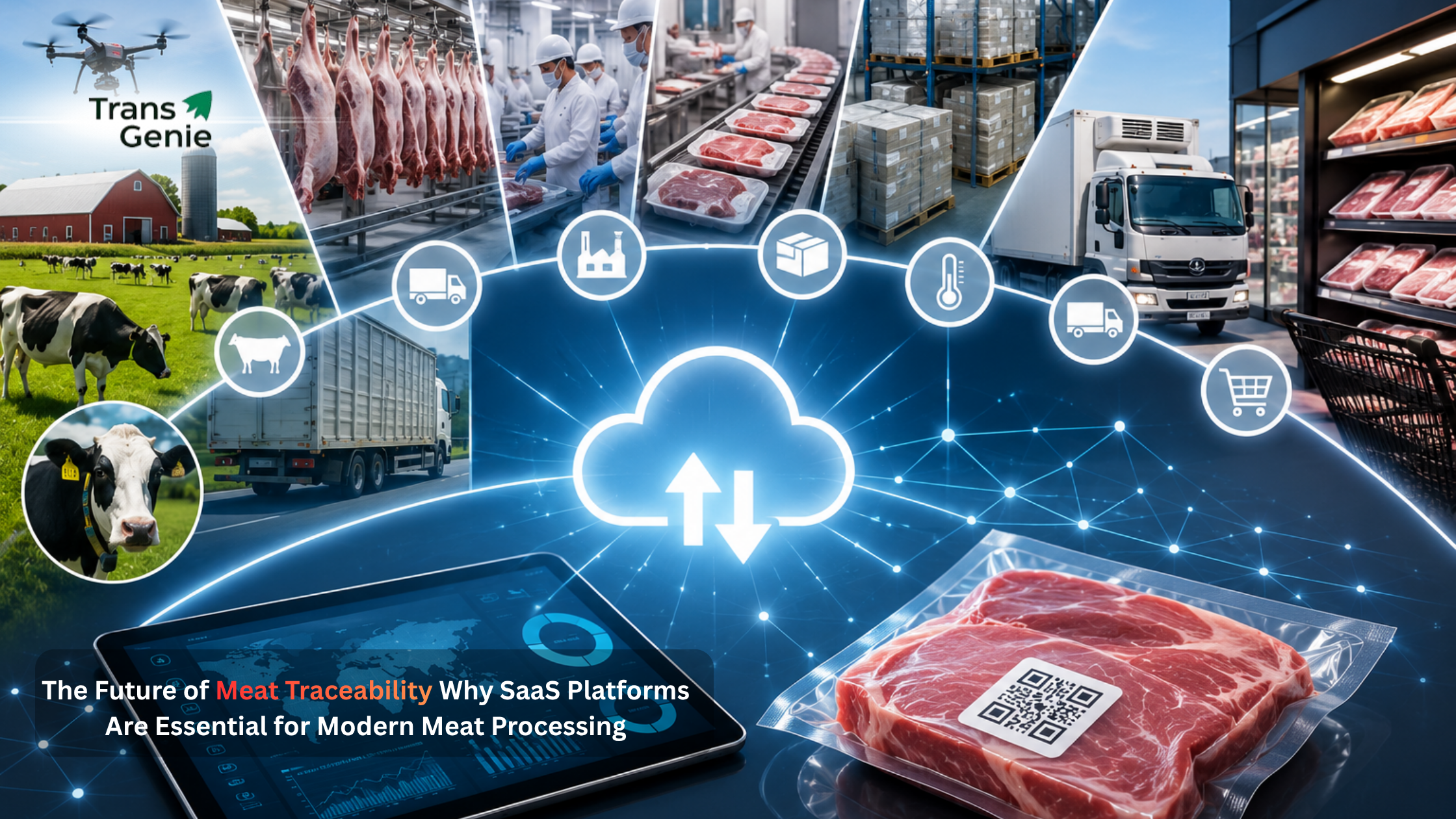
A modern Meat Traceability SaaS Platform creates complete digital visibility across every stage of meat production. The process begins on livestock farms where animals receive unique RFID ear tags, QR codes, or electronic identification numbers linked to information such as breed, origin, vaccination history, feed records, and veterinary treatments. During transportation, shipment details, driver information, environmental conditions, GPS routes, and delivery confirmations are recorded. Slaughterhouses capture processing timestamps, inspection results, carcass identification, and quality assessments while maintaining links to original farm records. As meat moves through cutting, grinding, packaging, labeling, cold storage, warehouse operations, and distribution, every production event becomes part of a permanent digital genealogy. IoT sensors continuously monitor refrigeration temperatures throughout the cold chain, while warehouse systems track inventory movement using FIFO and FEFO inventory methods. QR codes printed on packaging allow retailers and consumers to instantly access information about product origin, production dates, certifications, sustainability practices, and processing history. This digital ecosystem delivers complete Digital Meat Traceability, enabling businesses to monitor product movement in real time while significantly improving food safety and operational efficiency.
Key Features of a Modern Meat Traceability SaaS Platform
Today's leading SaaS platforms provide much more than simple product tracking. They integrate quality management, compliance, analytics, inventory control, and supply chain intelligence into one centralized solution.
End-to-End Batch and Lot Traceability
Every product can be traced backward to its source and forward to its final destination.
Businesses can instantly determine:
- Which farm supplied the livestock
- Which production line processed the product
-,Which warehouse stored it - Which customers received it
This complete genealogy significantly improves recall readiness.
RFID, Barcode, and QR Code Integration
Automatic identification technologies eliminate manual record keeping.
Supported technologies include:
- RFID tags
- QR codes
- Linear barcodes
- Electronic Identification (EID)
- Mobile scanning
- Industrial scanners
These technologies improve accuracy while reducing labor requirements.
Digital Audit Trails
Every activity performed within the platform is securely recorded.
Audit trails include:
- User actions
- Time stamps
- Record updates
- Approval workflows
- Inspection history
- Compliance documentation
Digital records simplify both internal and regulatory audits.
Real-Time Dashboards and Analytics
Executives gain complete operational visibility through interactive dashboards displaying:
- Production performance
- Inventory status
- Compliance metrics
- Quality trends
- Supplier performance
- Warehouse activity
- Shipment progress
- Recall readiness
Real-time insights support faster and more informed decision-making.
Automated Compliance Reporting
Rather than manually preparing regulatory reports, SaaS platforms automatically organize traceability information into standardized reports.
Businesses can generate documentation for:
- FSMA 204
- HACCP
- USDA inspections
- FDA requirements
- ISO 22000
- BRCGS
- Customer audits
Automation reduces administrative effort while improving reporting accuracy.
Inventory Management
Integrated inventory management provides complete visibility into stock across all facilities.
Capabilities include:
- Live inventory updates
- Multi-location inventory
- Batch-level tracking
- Expiration monitoring
- Stock transfers
- Purchase tracking
This helps reduce overstocking, shortages, and product waste.
Supplier Management
Strong supplier relationships improve product quality and regulatory compliance.
The platform maintains centralized records for:
- Supplier approvals
- Certifications
- Performance history
- Audit results
- Product specifications
- Delivery performance
Supplier scorecards support continuous improvement initiatives.
Quality Assurance
Quality teams can manage inspections throughout production.
Typical records include:
- Incoming material inspections
- Laboratory testing
- Microbiological analysis
- Product quality checks
- Corrective actions
- Non-conformance reports
Centralized quality records improve accountability and accelerate investigations.
Recall Management
One of the greatest strengths of digital traceability is rapid recall execution.
If contamination occurs, businesses can identify:
- Affected production batches
- Manufacturing dates
- Distribution routes
- Warehouse inventory
- Retail locations
- Customer shipments
This dramatically reduces recall response times while minimizing business disruption.
Mobile Accessibility
Cloud-based applications allow authorized employees to access traceability information from smartphones and tablets.
Field workers can:
- Scan QR codes
- Update production records
- Complete inspections
- Capture photographs
- Submit reports
- Verify inventory
Mobile access improves efficiency across farms, warehouses, and production facilities.
Multi-Site Management
Large meat processors often operate multiple facilities.
A SaaS platform centralizes operations across:
- Farms
- Slaughterhouses
- Processing plants
- Distribution centers
- Warehouses
- Corporate offices
Management gains enterprise-wide visibility while maintaining standardized processes.
API and ERP Integration
Modern traceability software integrates seamlessly with existing enterprise systems.
Common integrations include:
- ERP platforms
- Warehouse Management Systems (WMS)
- Manufacturing Execution Systems (MES)
- Accounting software
- Laboratory Information Management Systems (LIMS)
- IoT devices
- RFID readers
- Weighing systems
Integration eliminates duplicate data entry and improves operational efficiency.
Why SaaS Platforms Are the Future of Meat Processing
Cloud-based SaaS platforms represent the future of meat processing because they provide scalability, flexibility, and real-time operational intelligence that traditional software cannot match. Organizations operating multiple facilities gain centralized visibility into production activities across farms, slaughterhouses, warehouses, and distribution centers through a single secure platform. Automatic software updates ensure businesses always benefit from the latest regulatory requirements, security improvements, and software enhancements without costly upgrades. Subscription pricing reduces infrastructure investment while eliminating the need for dedicated servers and extensive IT support. Built-in cybersecurity features including encryption, multi-factor authentication, automated backups, disaster recovery, and role-based access controls help protect sensitive operational information. Remote accessibility enables managers, quality teams, and executives to securely monitor operations from any location, improving decision-making and collaboration. As businesses expand into new markets or introduce additional production facilities, SaaS platforms scale quickly without requiring significant infrastructure investments, making them ideal for long-term business growth.
Food Safety and Regulatory Compliance
Food safety remains one of the most important priorities for meat businesses worldwide. Modern Food Traceability Software simplifies compliance by automatically recording Key Data Elements associated with Critical Tracking Events required under FSMA 204 Compliance while supporting HACCP, USDA, FDA, ISO 22000, BRCGS, and international export standards. Every production event is securely stored in the cloud, allowing businesses to generate audit-ready reports within minutes rather than spending days searching through paper files. Automated recordkeeping significantly reduces administrative workloads while improving documentation accuracy. Real-time monitoring of production conditions, sanitation activities, inspections, laboratory results, and temperature controls strengthens preventive food safety programs while helping organizations quickly demonstrate regulatory compliance during inspections and customer audits.
Faster Product Recalls Through Digital Traceability
Rapid product recalls are essential for protecting consumers and minimizing financial losses during food safety incidents. Traditional paper-based investigations often require days to identify affected products, increasing recall costs and business disruption. A modern Meat Traceability platform allows organizations to instantly identify affected batches, production dates, suppliers, processing facilities, warehouses, distribution routes, retailers, and customers through digital product genealogy. Instead of recalling all products manufactured during a specific period, businesses can isolate only the affected batches, reducing waste and minimizing recall expenses. Faster recall execution protects consumers, strengthens regulatory compliance, and preserves brand reputation while improving overall operational resilience.
Enhancing Consumer Trust Through Transparency
Consumers increasingly expect complete transparency regarding the food they purchase. They want to know where animals were raised, how products were processed, whether sustainability practices were followed, and whether certifications can be verified. QR code-enabled Meat Traceability Software allows customers to scan product packaging and instantly access information including farm origin, production timeline, processing facility, quality certifications, sustainability initiatives, country of origin, and transportation history. Providing trusted product information strengthens consumer confidence, builds brand loyalty, supports ethical sourcing initiatives, and differentiates businesses in competitive markets where transparency has become a significant purchasing factor.
Business Benefits of Implementing a Meat Traceability SaaS Platform
Beyond compliance, digital traceability delivers measurable operational improvements.
Improved Operational Efficiency
Automation eliminates repetitive manual processes, reducing paperwork and allowing employees to focus on higher-value tasks.
Reduced Manual Errors
Barcode scanning, RFID, and automated data capture significantly improve record accuracy.
Increased Productivity
Centralized information enables faster production planning, inventory management, and quality inspections.
Better Inventory Accuracy
Real-time inventory visibility helps businesses:
- Reduce shortages
- Minimize overstocking
- Improve warehouse efficiency
- Reduce expired inventory
Reduced Food Waste
Accurate batch tracking allows businesses to rotate inventory effectively using FIFO and FEFO practices while minimizing unnecessary product disposal.
Improved Supply Chain Visibility
Decision-makers gain complete oversight across farms, processing facilities, warehouses, transportation, and retail channels.
Better Analytics
Interactive dashboards provide valuable insights into:
- Production efficiency
- Supplier performance
- Product quality
- Inventory turnover
- Compliance status
- Recall readiness
These insights support continuous improvement and long-term growth.
Technologies Powering the Future of Meat Traceability
The future of Digital Meat Traceability is driven by emerging technologies that continue to improve automation, intelligence, and operational visibility. Cloud computing provides secure centralized access to traceability information across multiple facilities. Artificial Intelligence analyzes production data to predict quality issues, optimize inventory, and improve operational planning. IoT sensors continuously monitor refrigeration temperatures, transportation conditions, and equipment performance while automatically generating alerts when thresholds are exceeded. RFID technology automates livestock identification and warehouse tracking while QR codes connect consumers directly to product history. Blockchain technology offers additional transparency for organizations requiring tamper-resistant record sharing among multiple supply chain partners. Predictive analytics helps businesses forecast equipment maintenance, production demand, and supply chain risks, enabling more proactive decision-making as the meat industry continues to evolve.
Future Trends in Meat Traceability
The next generation of meat traceability will combine automation, intelligence, and sustainability.
Key trends include:
- AI-powered quality prediction
- Automated compliance reporting
- Real-time supply chain intelligence
- Smart packaging
- Consumer-facing transparency applications
- Carbon footprint tracking
- Sustainability reporting
- Predictive maintenance
- Digital food passports
- End-to-end supply chain visibility
As regulations and consumer expectations continue to evolve, cloud-based SaaS platforms will become the digital foundation of modern meat processing operations.
Conclusion
The future of Meat Traceability lies in connected, cloud-based digital platforms that provide complete farm-to-fork visibility across the entire meat supply chain. As food safety regulations become more demanding and consumer expectations for transparency continue to grow, traditional paper-based recordkeeping can no longer support the speed, accuracy, and accountability required by modern meat processing operations. A Meat Traceability SaaS Platform empowers businesses to improve food safety, streamline FSMA 204 Compliance, accelerate product recalls, optimize inventory, strengthen quality assurance, and deliver trusted product information through QR codes and real-time digital records. By combining cloud computing, RFID, IoT, Artificial Intelligence, and advanced analytics into a single integrated platform, meat processors can transform disconnected operations into a connected ecosystem that supports operational excellence, regulatory compliance, and long-term business growth. Organizations that invest in modern Meat Traceability Software today will be better positioned to meet future industry challenges, enhance consumer trust, and build resilient, transparent, and efficient meat supply chains.