The Future of Seafood Traceability: Driving Transparency, Sustainability, and Regulatory Compliance
The Future of Seafood Traceability: Driving Transparency, Sustainability, and Regulatory Compliance
Introduction
The global seafood industry is becoming more complex as products move through fishing vessels, aquaculture farms, processors, distributors, retailers, and consumers. Managing food safety, product quality, sustainability, and regulatory compliance across this journey requires accurate and accessible traceability records. At the same time, consumers and retailers expect greater transparency about seafood origins and sourcing practices. Regulations such as FSMA 204, the FDA Food Traceability Rule, and EU traceability requirements are encouraging businesses to replace paper-based systems with digital solutions. Seafood Traceability Software enables organizations to track products from vessel to consumer, improve visibility, simplify compliance, and build stronger customer trust.
What Is Seafood Traceability?
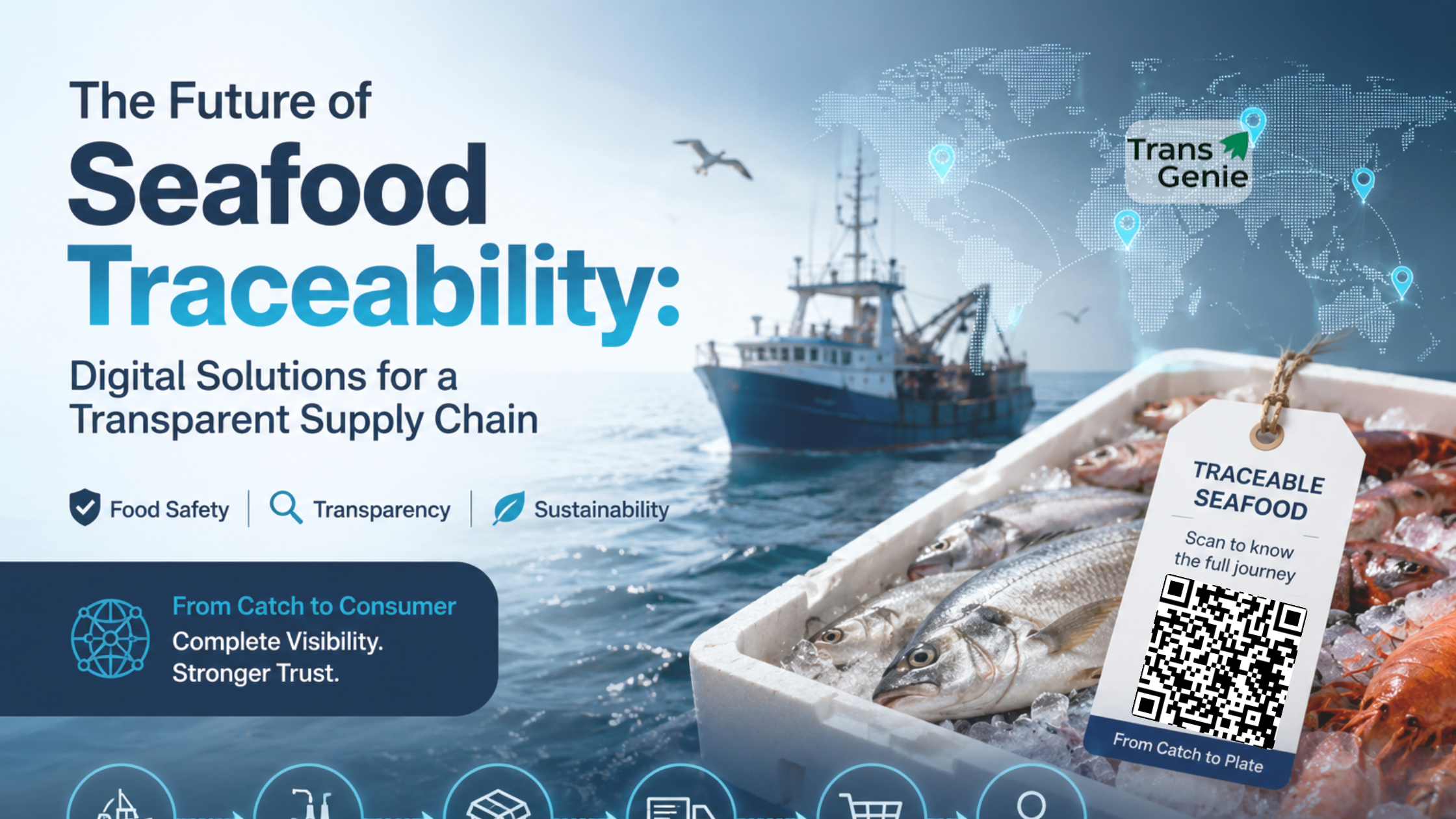
Seafood traceability is the process of tracking seafood products throughout the entire supply chain from harvesting or farming to processing, packaging, transportation, distribution, retail, and the final consumer. Every product is assigned a unique lot number, batch code, QR code, or RFID tag that records important information such as harvest location, processing history, storage conditions, supplier details, and shipment records.
Why Seafood Traceability Matters
Digital traceability delivers benefits that extend beyond compliance.
- Food Safety: Quickly identify contaminated products and reduce recall risks.
- Consumer Trust: Provide transparent product origin information.
- Product Authenticity: Prevent seafood fraud and species substitution.
- Sustainability: Verify responsible fishing and sourcing practices.
- Operational Efficiency: Replace manual paperwork with automated digital records.
Why the Seafood Industry Needs Modern Traceability
Managing Complex Supply Chains
Today's seafood supply chains involve multiple suppliers, processors, warehouses, transportation providers, exporters, and retailers. Managing this information with spreadsheets or paper records increases the risk of errors and delays. Digital traceability software connects every participant through a centralized platform, providing accurate, real-time visibility across the supply chain.
Meeting Consumer Expectations
Consumers increasingly want to know where seafood comes from and whether it was sustainably sourced. QR codes allow customers to instantly access harvest information, certifications, processing details, and product history, improving transparency and strengthening brand trust.
Staying Compliant with Regulations
Seafood businesses must comply with regulations including:
- FSMA 204
- FDA Food Traceability Rule
- EU Food Traceability Regulations
- HACCP requirements
- Import and export documentation
Digital traceability automates recordkeeping, making audits and inspections faster and more efficient.
Challenges of Traditional Seafood Traceability
Why Manual Systems Fall Short
Many seafood businesses still rely on paper records and spreadsheets. These methods are difficult to manage as operations grow and regulations become more demanding.
Manual Recordkeeping
Paper documentation increases the risk of missing records, duplicate entries, and human error while slowing daily operations.
Limited Supply Chain Visibility
Disconnected systems make it difficult to monitor inventory, production, shipments, and supplier performance in real time.
Slow Product Recalls
Without digital records, identifying affected batches during recalls can take hours or days, increasing financial losses and food safety risks.
Seafood Fraud
Traditional systems struggle to prevent species substitution, counterfeit documentation, and illegal fishing activities, making businesses more vulnerable to compliance issues.
The Future of Seafood Traceability
Emerging Technologies Driving Innovation
Digital technologies are transforming seafood traceability from simple recordkeeping into an intelligent business management system.
AI-Powered Traceability
Artificial intelligence helps businesses automate data collection, identify quality risks, predict spoilage, monitor supplier performance, and improve decision-making through real-time analytics.
Cloud-Based Platforms
Cloud technology centralizes traceability information across multiple facilities, enabling secure access, real-time updates, and easier collaboration between suppliers, processors, and distributors.
IoT and Smart Cold Chain Monitoring
IoT sensors continuously monitor temperature, humidity, and transportation conditions. Automated alerts help prevent spoilage and protect seafood quality throughout the supply chain.
QR Codes and Digital Product Passports
QR codes allow employees, retailers, and consumers to instantly access product information including origin, harvest method, certifications, and processing history, increasing transparency and consumer confidence.
Blockchain Technology
Blockchain creates secure and tamper-resistant records that improve collaboration between supply chain partners while strengthening product authenticity and regulatory compliance.
Mobile Data Collection
Mobile applications enable employees to capture catch records, processing updates, warehouse activities, and shipment information directly from smartphones or tablets, reducing paperwork and improving accuracy.
Driving Transparency Across the Supply Chain
Achieving End-to-End Visibility
Modern seafood traceability software connects every stage of the supply chain into one digital record.
Vessel-to-Processor Tracking
Harvest information, fishing locations, and vessel details are digitally linked to processing operations.
Processing and Packaging
Each production step is connected to its original batch, ensuring complete product history.
Distribution and Logistics
Real-time shipment tracking improves inventory visibility and delivery accuracy.
Retail Transparency
Consumers can scan QR codes to verify product origin, sustainability information, and seafood journey.
Supporting Sustainability Through Digital Traceability
Building Responsible Seafood Supply Chains
Traceability software helps businesses demonstrate environmental responsibility while supporting sustainable seafood programs.
Responsible Fishing
Track harvest locations and fishing methods to support responsible sourcing.
Preventing IUU Fishing
Maintain verified records that reduce the risk of Illegal, Unreported, and Unregulated (IUU) seafood entering the supply chain.
Sustainability Certifications
Simplify compliance with certification programs by maintaining complete digital documentation.
Reducing Waste
Real-time inventory visibility helps businesses improve stock rotation, reduce spoilage, and minimize food waste.
Meeting Regulatory Compliance
Simplifying Food Safety Requirements
Digital seafood traceability software helps businesses comply with evolving food safety regulations.
FSMA 204 Compliance
Automatically capture Critical Tracking Events (CTEs) and Key Data Elements (KDEs) while maintaining electronic records for inspections.
Global Regulatory Support
Support FDA regulations, EU traceability requirements, HACCP programs, and international export standards from one centralized platform.
Recall Readiness
Rapidly identify affected batches, generate recall reports, and notify customers, minimizing business disruption and protecting consumers.
Essential Features of Seafood Traceability Software
Core Capabilities
Modern seafood traceability solutions typically include:
- Digital Lot & Batch Tracking
- Vessel-to-Plate Traceability
- QR Code and Barcode Integration
- RFID Support
- Real-Time Inventory Management
- Cold Chain Monitoring
- Supplier Management
- Automated Compliance Reporting
- Recall Management
- ERP & Warehouse Integration
- Cloud-Based Data Storage
- AI Analytics and Dashboards
These features work together to improve visibility, operational efficiency, and regulatory compliance.
Business Benefits of Seafood Traceability Software
Delivering Long-Term Value
Implementing seafood traceability software provides measurable business advantages.
Improved Food Safety
Digital records improve monitoring and reduce food safety risks.
Faster Recalls
Quickly isolate affected products instead of recalling unnecessary inventory.
Increased Consumer Trust
Transparent product information strengthens customer confidence and brand reputation.
Reduced Seafood Fraud
Verified digital records protect against product substitution and inaccurate labeling.
Greater Operational Efficiency
Automation reduces paperwork, minimizes manual errors, and improves productivity.
Better Inventory Control
Monitor inventory in real time to reduce waste and optimize stock levels.
Easier Regulatory Compliance
Generate compliance reports automatically and prepare for inspections with confidence.
Expanded Global Market Access
Meet retailer and export requirements with reliable digital traceability records.
How TransGenie Seafood Traceability Software Helps
TransGenie Seafood Traceability Software enables seafood businesses to digitize every stage of their operations with one integrated platform.
Key capabilities include:
- End-to-End Vessel-to-Plate Traceability
- Digital Lot and Batch Tracking
- QR Code Product Identification
- Real-Time Inventory Visibility
- Automated FSMA 204 Documentation
- Recall-Ready Records
- Multi-Location Cloud Management
- ERP Integration
- AI-Powered Analytics and Reporting
These capabilities help seafood processors, exporters, distributors, wholesalers, and retailers improve efficiency while meeting food safety and compliance requirements.
Best Practices for Successful Implementation
To maximize the benefits of seafood traceability software, businesses should:
- Digitize all traceability records.
- Standardize lot and batch numbering.
- Integrate traceability with ERP and inventory systems.
- Automate compliance reporting.
- Monitor inventory and cold chain conditions in real time.
- Train employees on digital workflows.
- Conduct routine traceability audits.
- Perform regular mock recalls to test system readiness.
Conclusion
As seafood supply chains continue to evolve, digital traceability has become essential for improving transparency, sustainability, food safety, and regulatory compliance. Modern Seafood Traceability Software enables businesses to gain complete visibility from vessel to consumer while reducing manual processes, improving recall readiness, and strengthening customer trust.
With technologies such as AI, cloud computing, IoT, QR codes, and real-time analytics, seafood businesses can transform traceability into a competitive advantage. TransGenie Seafood Traceability Software provides an end-to-end digital solution that helps organizations streamline operations, simplify compliance, support sustainability initiatives, and build a safer, more transparent seafood supply chain for the future.