Why Digital Egg Traceability Is the Future of the Poultry Industry
Introduction
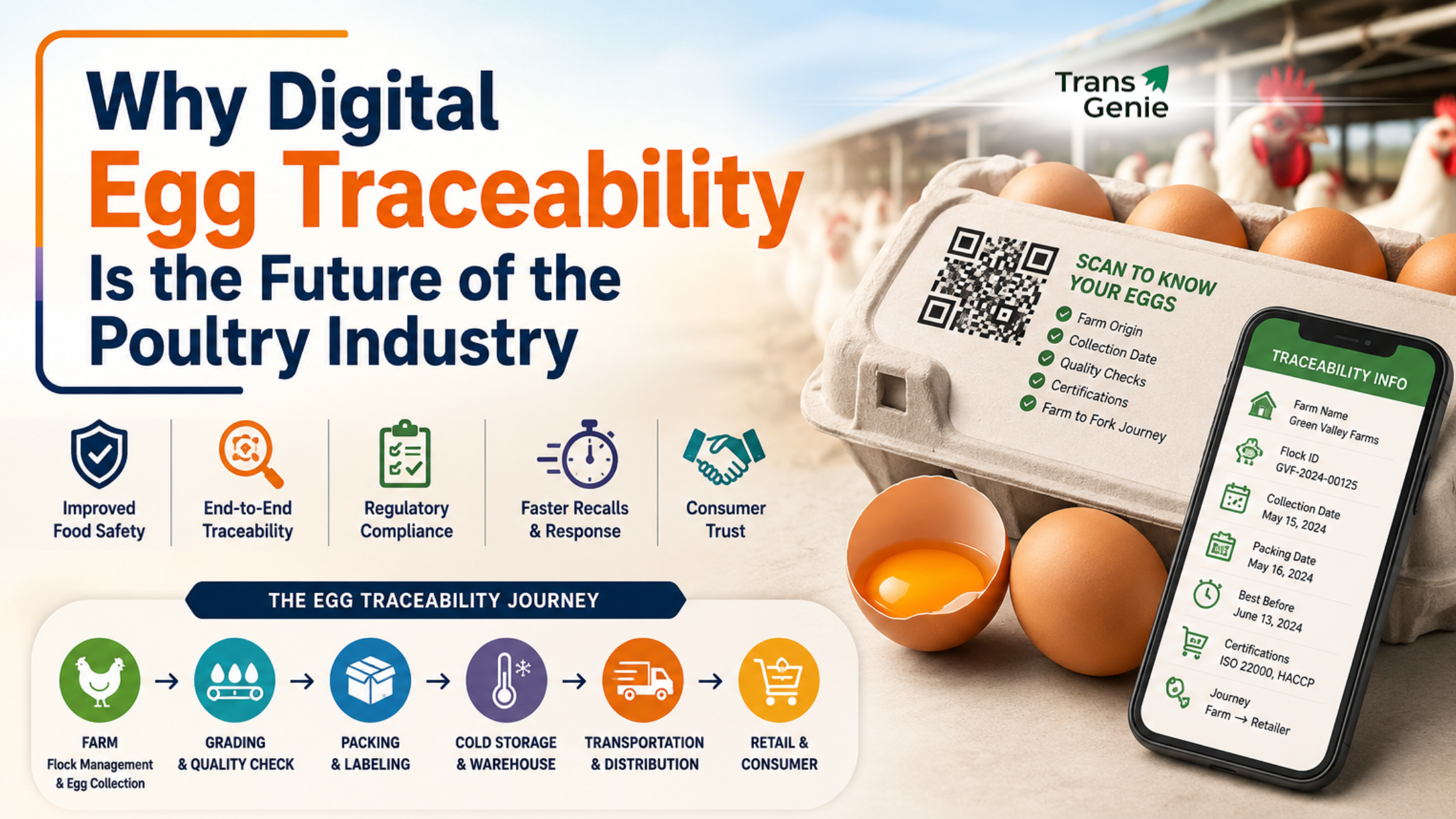
The poultry industry is rapidly adopting Digital Egg Traceability to meet growing demands for food safety, regulatory compliance, and supply chain transparency. Traditional paper-based systems are no longer sufficient to manage today's complex egg production process. By leveraging cloud technology, QR codes, RFID, IoT, and real-time analytics, digital traceability platforms enable complete farm-to-fork visibility, improve operational efficiency, accelerate product recalls, simplify FSMA 204 compliance, and strengthen consumer trust, making them essential for the future of modern poultry operations.
Understanding Digital Egg Traceability
Digital Egg Traceability is the process of recording, tracking, and monitoring every stage of an egg's journey using cloud-based technology and digital data management. Rather than relying on manual paperwork, businesses capture information electronically from the moment eggs are produced until they reach retailers or consumers. Every production event including flock information, egg collection, grading, packing, storage, transportation, and delivery is securely stored within a centralized platform. This creates a complete digital history for every batch of eggs, allowing producers to quickly locate products, verify quality, respond to food safety incidents, and demonstrate compliance during audits. By replacing fragmented recordkeeping with a connected digital system, poultry businesses gain greater visibility across their operations while improving efficiency and decision-making.
What Is Digital Egg Traceability?
Digital Egg Traceability is the process of tracking every stage of egg production and distribution using a centralized digital platform. Each batch of eggs is assigned a unique identity containing key information such as farm origin, flock details, collection date, grading, packing, storage, and shipment records. This enables businesses to quickly access product history, improve food safety, and respond rapidly to recalls.
Why Traceability Matters in Modern Egg Production
Digital traceability helps poultry businesses improve food safety, operational efficiency, and supply chain transparency. It enables quick identification of affected batches during recalls, simplifies regulatory compliance, reduces manual errors, and improves inventory management. By providing accurate farm-to-fork information through digital records and QR codes, egg producers can also strengthen consumer trust and demonstrate their commitment to quality and sustainability.
Challenges Facing Traditional Egg Traceability Systems
Despite technological advancements, many poultry businesses still rely on paper-based documentation, spreadsheets, and disconnected software applications to manage production records. While these systems may have worked in the past, they struggle to meet today's food safety standards and growing demand for supply chain transparency. As production volumes increase and regulations become more stringent, manual processes create unnecessary risks and operational inefficiencies.
Paper-Based Documentation
- Manual Record Keeping
- Limited Supply Chain Visibility
- Slow Product Recalls
- Compliance Challenges
- Data Silos Across Operations
- Increasing Consumer Transparency Expectations
What Is an Egg Traceability Platform?
An Egg Traceability Platform is a cloud-based solution that digitally tracks every stage of egg production, from flock management and egg collection to grading, packing, storage, distribution, and retail. By centralizing all production data in one secure platform, it replaces manual records with real-time, accurate information, improving efficiency and supply chain visibility.
Understanding Digital Traceability Platforms
Digital traceability platforms automate data collection using mobile devices, QR codes, barcodes, and RFID technology. This reduces paperwork, minimizes errors, and provides real-time insights into production, inventory, quality, and shipments.
Cloud-Based Egg Traceability Explained
Cloud technology enables farms, packing facilities, warehouses, and distributors to access the same real-time data from anywhere. It improves collaboration, simplifies reporting, and ensures secure data storage with automatic updates and backups.
How Digital Platforms Improve Egg Production
By automating routine processes and providing real-time visibility, digital platforms help poultry businesses improve flock management, monitor inventory, maintain quality standards, optimize cold chain operations, and respond quickly to operational issues.
Benefits Over Traditional Tracking Systems
Compared to paper-based methods, digital egg traceability offers faster product recalls, improved food safety, automated compliance reporting, better inventory management, centralized audit trails, and seamless integration with ERP systems and other business applications, helping poultry businesses operate more efficiently and transparently.
How Digital Egg Traceability Works Across the Supply Chain
A modern Digital Egg Traceability Platform connects every stage of the egg supply chain into one centralized cloud-based system. Instead of managing separate records across farms, grading stations, warehouses, and distribution centers, all stakeholders access the same real-time information. Every production event is digitally recorded, creating a complete history of each egg batch from the poultry farm to the consumer.
Poultry Farm Management
The traceability journey begins at the poultry farm, where information about layer flocks is digitally captured. Farmers record flock identification, breed, age, feed schedules, vaccination history, veterinary treatments, mortality rates, and daily egg production using mobile devices or farm management systems. This information is automatically synchronized to the cloud, creating the foundation for complete traceability throughout the supply chain.
Layer Flock Identification
Each flock receives a unique digital identity that links all production activities throughout its lifecycle. This identification enables producers to quickly determine which flock produced specific batches of eggs while maintaining complete production history for food safety investigations and quality management.
Egg Collection Tracking
Every egg collection event is digitally recorded with important production details such as collection date, time, production house, collection team, flock identification, and production quantity. Automated recordkeeping reduces manual paperwork while ensuring production information remains accurate and easily accessible.
Grading and Quality Inspection
After collection, eggs are transported to grading facilities where automated systems classify them based on size, weight, shell quality, cleanliness, and internal quality. Inspection results are digitally stored and linked to each production batch, allowing businesses to monitor product quality while meeting regulatory requirements.
Packing and Labeling
Once graded, eggs move through packing operations where packaging information, production dates, expiry dates, packing locations, and product codes are recorded automatically. QR codes and barcodes printed on packaging connect physical products with their complete digital history.
Batch and Lot Management
Every production batch receives a unique identification number that allows businesses to trace products both backward to the originating poultry farm and forward to distributors, retailers, and consumers. Batch-level traceability is essential for food safety investigations and efficient product recalls.
Cold Storage Monitoring
Maintaining proper storage temperatures is critical for preserving egg quality and food safety. IoT-enabled temperature sensors continuously monitor cold rooms, warehouses, and transportation vehicles. If temperatures exceed acceptable limits, automated alerts notify staff immediately, helping prevent product spoilage and reducing waste.
Distribution and Logistics
During transportation, the platform records shipment details, vehicle information, delivery schedules, driver information, and delivery confirmations. GPS integration provides real-time shipment visibility while ensuring eggs are delivered safely and efficiently.
Retail Tracking
Retailers can scan QR codes or barcodes to verify product authenticity, monitor inventory, manage stock rotation, and identify affected products during recalls. Real-time inventory visibility improves stock management while reducing product waste.
Consumer QR Code Transparency
Consumers increasingly want to know where their food comes from and how it was produced. By scanning a QR code printed on the egg carton, customers can instantly access information including:
- Farm of origin
- Collection date
- Packing facility
- Product certifications
- Quality standards
- Production timeline
- Sustainability initiatives
- Farm-to-fork journey
Providing this level of transparency strengthens consumer trust and enhances brand credibility.
Key Features of Egg Traceability Software
Modern Egg Traceability Software offers a comprehensive set of tools that help poultry businesses improve operational efficiency, maintain regulatory compliance, and enhance food safety throughout production.
End-to-End Egg Traceability
The platform records every production event from egg collection to retail delivery, creating complete product genealogy and enabling instant traceability across the entire supply chain.
Batch and Lot Tracking
Each production batch receives a unique identification number that links together farm records, grading results, packing information, warehouse inventory, and distribution history. This enables businesses to quickly identify affected products whenever necessary.
QR Code and Barcode Integration
QR codes and barcodes automate product identification throughout production and logistics. Employees can scan products using handheld devices or mobile applications, significantly reducing manual data entry while improving accuracy.
RFID Identification
RFID technology automates inventory tracking, warehouse operations, and shipment verification. Unlike traditional barcode systems, RFID enables multiple products to be identified simultaneously, increasing operational efficiency.
Real-Time Dashboards
Interactive dashboards provide live visibility into production performance, inventory levels, flock productivity, shipment status, compliance metrics, quality inspections, and recall readiness. Management teams can make faster decisions using real-time operational data.
Digital Audit Trails
Every activity performed within the system is securely recorded with user identification, timestamps, and change history. Digital audit trails simplify inspections while supporting regulatory compliance and internal investigations.
Inventory Management
Integrated inventory management tracks product quantities, warehouse locations, expiration dates, stock movement, and inventory availability across multiple facilities. This improves stock accuracy while reducing overproduction and waste.
Quality Assurance
Quality teams can record grading results, laboratory testing, sanitation inspections, corrective actions, microbiological analysis, and product quality checks within one centralized platform. This improves quality management while supporting continuous improvement initiatives.
Recall Management
When contamination or quality issues occur, businesses can identify affected batches immediately. Digital traceability significantly reduces recall response times while minimizing unnecessary product withdrawals.
Mobile Data Collection
Employees can collect production information directly from poultry houses, grading facilities, warehouses, and transportation vehicles using smartphones and tablets. Mobile accessibility improves productivity while reducing paperwork.
Multi-Farm Management
Organizations operating multiple poultry farms or production facilities can manage all locations through a single centralized platform while maintaining standardized production processes and reporting.
ERP and API Integration
Modern traceability platforms integrate seamlessly with ERP software, warehouse management systems, accounting platforms, laboratory information management systems, weighing equipment, IoT sensors, and business intelligence tools. These integrations eliminate duplicate data entry while improving overall operational efficiency.
Why Digital Egg Traceability Is the Future of the Poultry Industry
Digital transformation is reshaping poultry production, and traceability has become a key driver of efficiency, compliance, and competitiveness. Cloud-based traceability platforms provide capabilities that traditional recordkeeping systems cannot match.
Real-Time Supply Chain Visibility
Businesses gain complete visibility into every stage of egg production, processing, warehousing, transportation, and retail distribution through one connected digital platform.
Faster Decision-Making
Live dashboards provide managers with immediate access to production data, quality metrics, inventory levels, and shipment status, allowing faster responses to operational challenges.
Improved Food Safety
Continuous monitoring of production activities, storage conditions, and transportation environments helps maintain product quality while reducing food safety risks.
Better Compliance Management
Automated documentation simplifies compliance with food safety regulations, retailer requirements, and international standards by maintaining complete digital records that are ready for inspection at any time.
Reduced Manual Work
Automation replaces paper records and repetitive administrative tasks, allowing employees to focus on production, quality improvement, and customer service.
Increased Operational Efficiency
Centralized data management improves coordination across farms, grading facilities, warehouses, and distribution centers, reducing delays and improving productivity.
Scalable Cloud Technology
As poultry businesses expand, cloud-based platforms can easily support additional farms, production lines, warehouses, and users without requiring major infrastructure investments.
Enhanced Consumer Confidence
Providing consumers with transparent product information through QR codes strengthens trust, supports brand loyalty, and demonstrates a commitment to food safety and responsible production.
Food Safety and Regulatory Compliance
Food safety remains one of the highest priorities in egg production. A modern Digital Egg Traceability Platform helps businesses comply with increasingly strict regulations while maintaining accurate, searchable production records.
Meeting FSMA 204 Requirements
FSMA 204 requires businesses to maintain detailed traceability records for foods included on the Food Traceability List. Digital traceability platforms automatically capture Key Data Elements (KDEs) and Critical Tracking Events (CTEs), making compliance easier while improving recall readiness.
HACCP Compliance
Digital recordkeeping supports Hazard Analysis and Critical Control Points (HACCP) programs by documenting critical control points, sanitation procedures, temperature monitoring, inspections, corrective actions, and verification activities.
FDA Readiness
Centralized production records allow businesses to quickly generate documentation requested during FDA inspections, reducing administrative effort and improving audit efficiency.
International Food Safety Standards
Digital Egg Traceability also supports compliance with globally recognized standards such as:
- ISO 22000
- BRCGS
- Global Food Safety Initiative (GFSI)
- Retailer quality assurance programs
- Export certification requirements
Maintaining standardized digital records simplifies international trade while improving supply chain confidence.
Simplified Audits
Instead of searching through paper files, quality teams can instantly retrieve production records, inspection reports, laboratory results, supplier documentation, and shipment history from one centralized platform.
Digital Record Management
Secure cloud storage ensures that production records remain protected, searchable, and accessible whenever needed. Automated backups and role-based access controls further strengthen data security while supporting long-term regulatory compliance.
Faster Egg Recalls with Digital Traceability
Food recalls are among the most challenging situations for egg producers, distributors, and retailers. A delayed response can increase public health risks, disrupt operations, and damage brand reputation. Traditional recall processes often rely on manually reviewing paper records, spreadsheets, and shipping documents, making it difficult to identify affected products quickly. Digital Egg Traceability transforms recall management by providing instant access to complete product genealogy.
Why Recall Speed Matters
When contamination or food safety concerns arise, businesses must quickly determine which products are affected and where they have been distributed. Faster recalls help protect consumers, reduce product waste, and minimize financial losses while maintaining regulatory compliance.
Instant Batch Identification
Every egg batch is assigned a unique digital identity that links together farm information, grading results, packaging records, warehouse inventory, and distribution history. Businesses can identify affected batches within minutes instead of spending hours searching through paperwork.
Farm-to-Retail Product Genealogy
Digital traceability creates a complete history of every product, allowing organizations to trace eggs backward to the originating poultry farm and forward to every warehouse, distributor, retailer, or food service customer. This visibility enables precise recalls instead of broad product withdrawals.
Distribution Tracking
Real-time shipment tracking allows businesses to locate products currently in warehouses, transit, or retail locations. Distribution records also help notify customers and supply chain partners immediately when a recall occurs.
Reducing Financial Losses
Targeted recalls reduce unnecessary product disposal, lower logistics costs, minimize business interruption, and help organizations recover more quickly from food safety incidents.
Protecting Brand Reputation
Consumers are more likely to trust companies that respond quickly and transparently during recalls. Digital traceability demonstrates a strong commitment to food safety and responsible supply chain management.
Enhancing Consumer Trust Through Transparency
Today's consumers want more than high-quality products they want to understand where their food comes from and how it was produced. Transparency has become an important factor influencing purchasing decisions.
QR Code Product Information
QR codes printed on egg cartons provide consumers with instant access to product information using a smartphone. This digital experience improves engagement while increasing confidence in product authenticity.
Farm-to-Fork Visibility
Consumers can view information about the poultry farm, egg collection date, grading facility, packing location, distribution process, and production timeline, creating complete farm-to-fork transparency.
Farm Origin Verification
Digital traceability verifies the source of eggs, helping retailers and consumers confirm product authenticity and reduce the risk of food fraud.
Animal Welfare and Sustainability
Many consumers prefer products from farms that follow responsible animal welfare, environmental, and sustainability practices. Digital traceability enables producers to share certifications and sustainability initiatives directly with customers.
Building Brand Loyalty
Providing transparent product information strengthens customer relationships, improves brand credibility, and encourages repeat purchases in an increasingly competitive marketplace.
Business Benefits of Implementing Digital Egg Traceability
Improved Operational Efficiency
- Better Inventory Accuracy
- Reduced Food Waste
- Increased Productivity
- Lower Compliance Costs
- Stronger Supply Chain Visibility
- Data-Driven Decision Making
- Improved Customer Satisfaction
Technologies Driving Digital Egg Traceability
Several advanced technologies are enabling the next generation of digital traceability solutions.
Cloud Computing
Cloud platforms centralize production data, allowing authorized users to securely access real-time information from any location.
Artificial Intelligence (AI)
AI analyzes production data to identify trends, predict quality issues, optimize inventory, and improve operational decision-making.
Internet of Things (IoT)
IoT sensors continuously monitor environmental conditions such as storage temperature, humidity, and transportation performance, automatically generating alerts when conditions exceed acceptable limits.
RFID Technology
RFID enables rapid identification of products, equipment, and inventory while improving warehouse efficiency and reducing manual scanning.
QR Codes
QR codes connect physical products with digital traceability records, giving businesses and consumers instant access to detailed production information.
Predictive Analytics
Historical production and supply chain data can be analyzed to forecast demand, identify operational risks, improve maintenance scheduling, and optimize inventory planning.
Smart Sensors
Smart monitoring devices provide continuous visibility into cold storage, transportation, and production environments, helping maintain product quality and food safety.
Blockchain (Optional)
For organizations requiring highly secure and tamper-resistant record sharing across multiple stakeholders, blockchain can complement existing traceability systems by improving transparency and data integrity.
Future Trends in Digital Egg Traceability
The poultry industry continues to adopt emerging technologies that improve efficiency, sustainability, and transparency.
AI-Powered Quality Monitoring
Artificial Intelligence will increasingly monitor production data to identify quality issues before they become larger operational problems.
Automated Compliance Reporting
Regulatory reports will be generated automatically, reducing administrative effort while improving documentation accuracy.
Smart Packaging
Next-generation packaging will provide consumers with richer product information through interactive QR codes and connected technologies.
Digital Product Passports
Digital passports will provide complete lifecycle information for egg products, supporting traceability, sustainability, and international trade.
Predictive Supply Chain Analytics
Advanced analytics will help businesses anticipate disruptions, optimize inventory, improve production planning, and strengthen operational resilience.
Sustainability Tracking
Digital traceability platforms will increasingly measure environmental performance, resource consumption, and responsible farming practices.
Carbon Footprint Monitoring
Businesses will gain greater visibility into emissions generated throughout production, transportation, and distribution, supporting sustainability initiatives and ESG reporting.
Consumer Transparency Applications
Mobile applications will provide consumers with detailed product information, certifications, sustainability data, and personalized product experiences through digital traceability.
Conclusion
Digital Egg Traceability is transforming the poultry industry by creating safer, smarter, and more transparent supply chains. As food safety regulations become stricter and consumers demand greater visibility into how their food is produced, traditional paper-based systems can no longer meet modern business requirements. Cloud-based Egg Traceability Platforms provide complete farm-to-fork visibility by digitally connecting poultry farms, grading facilities, packing operations, warehouses, distributors, retailers, and consumers within a single centralized platform. By leveraging technologies such as QR codes, RFID, IoT, Artificial Intelligence, and cloud computing, poultry businesses can improve food safety, streamline FSMA 204 compliance, accelerate recalls, optimize inventory, strengthen operational efficiency, and build lasting consumer trust. Organizations that invest in digital traceability today will be better positioned to adapt to evolving regulations, improve business performance, and lead the future of sustainable and transparent egg production.