Georgia: A Journey of Faces, Contrasts, and Surprises – EP. #7
This is the English version of the post Georgia: Un Viaggio di Volti, Contrasti e Sorprese - EP. #7, originally published in Italian in the ITALY community.
My family and I have just returned from a trip to Georgia, which led us to discover large cities, well‑known international destinations, and small towns not yet touched by mass tourism. We met wonderful people who will stay in our hearts forever, but also some who were decidedly more irritable and unpleasant. We experienced fun moments and others that were much less so. This is the unfiltered story of what happened, and I hope you enjoy it.
Previous chapters
Chapter 1 - Alcoholic Transfer
Chapter 2 - Heading toward the ‘most precious water in the world
Chapter 3 - There’s more than just water
Chapter 4 - The Disney Castle
Chapter 5 - A thousand years of history
Chapter 6 - On the Road to the Black Sea
Chapter 7 - Batumi Beyond the Beach
To talk about Batumi, you really need to split the experience into two parts: the one related to the sea, and the one concerning the rest of the city. First, a few facts: we’re talking about the second‑largest city in Georgia by size and population — after the capital Tbilisi and ahead of Kutaisi, the capital of Imereti.
About 250,000 people live in Batumi, a number that is estimated to double easily during the summer. The Georgian administration’s vision is clear: to transform the city into a small Dubai, an oasis of international entertainment but at prices far more affordable than those of the Emirate.
Planes from all over the world land at the airport located at the far end of the seaside promenade — though not yet from Europe. Anyone wanting to vacation here has no choice but to fly to Tbilisi or Kutaisi, and then transfer to the Black Sea by marshrutka.
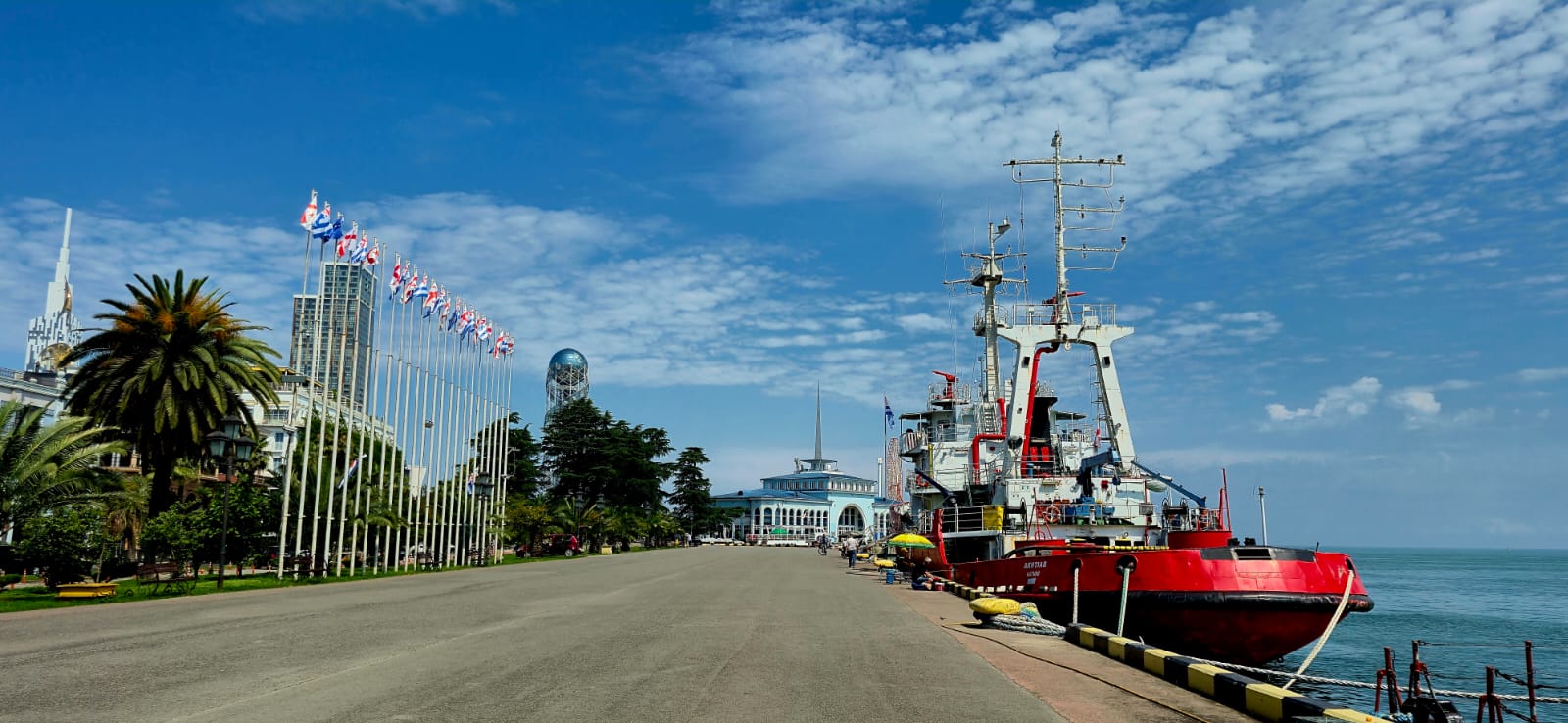
The port area
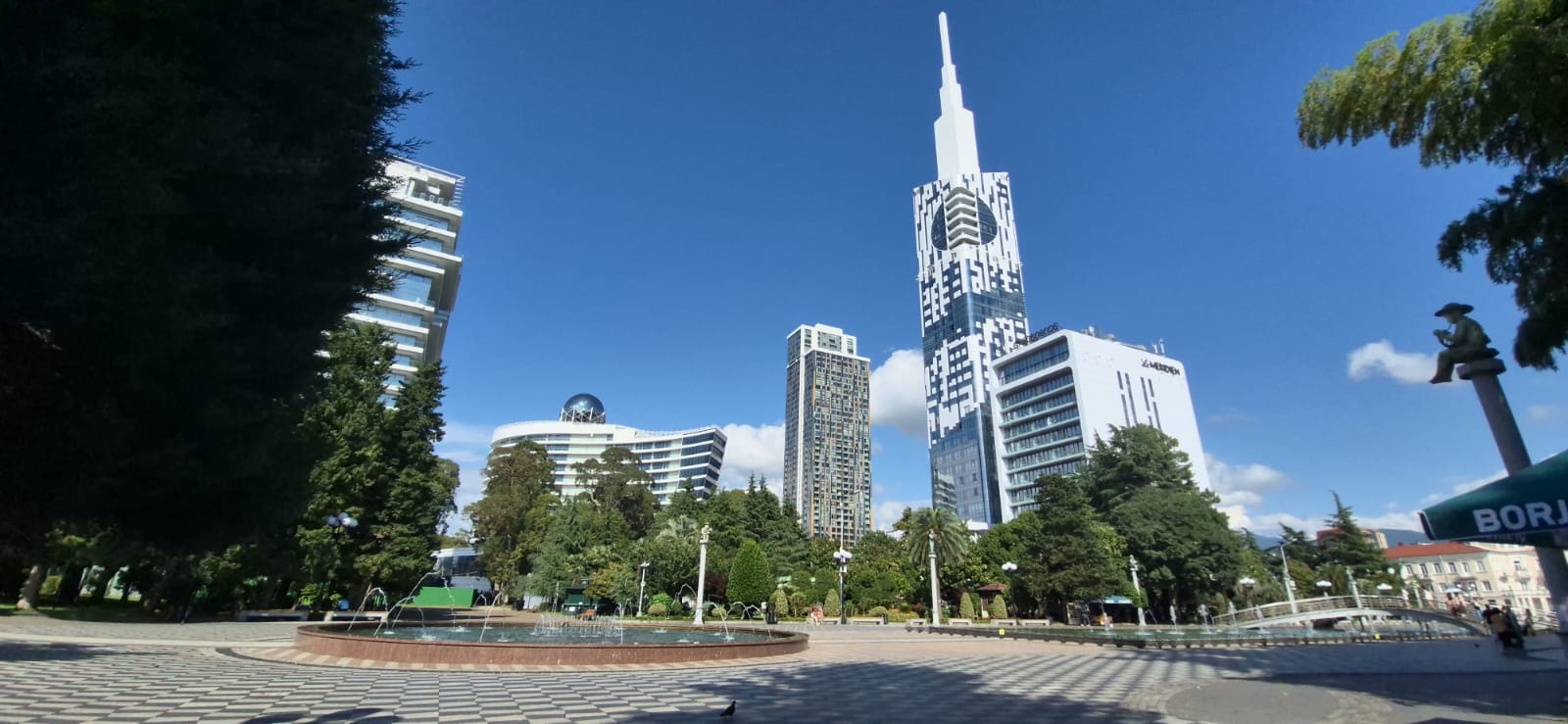
The most tourist‑oriented part of the city — the one facing the immense seaside promenade (about 8 km long) that connects the port to the airport — is the most lavish and elegant. Everywhere you look, you’ll spot skyscrapers lit up at night and new, increasingly ambitious construction projects, such as the hotel being built on a palm‑shaped artificial island that makes no secret of imitating its Dubai counterpart.
Venturing into the inner streets, however, Batumi still has to coexist with the broader Georgian reality, which is certainly not as wealthy. Look up and it’s hard not to notice rundown apartment buildings or parks far less manicured than those in the central area.
These two faces of the city somehow reflect the feelings of visitors: Batumi is a destination you either love or hate, with no middle ground, regardless of which neighborhood you’re walking through. As for us, we adored the seaside promenade at night — with its fountain shows and free events like matches from the Georgian beach soccer league — but much less during the day.
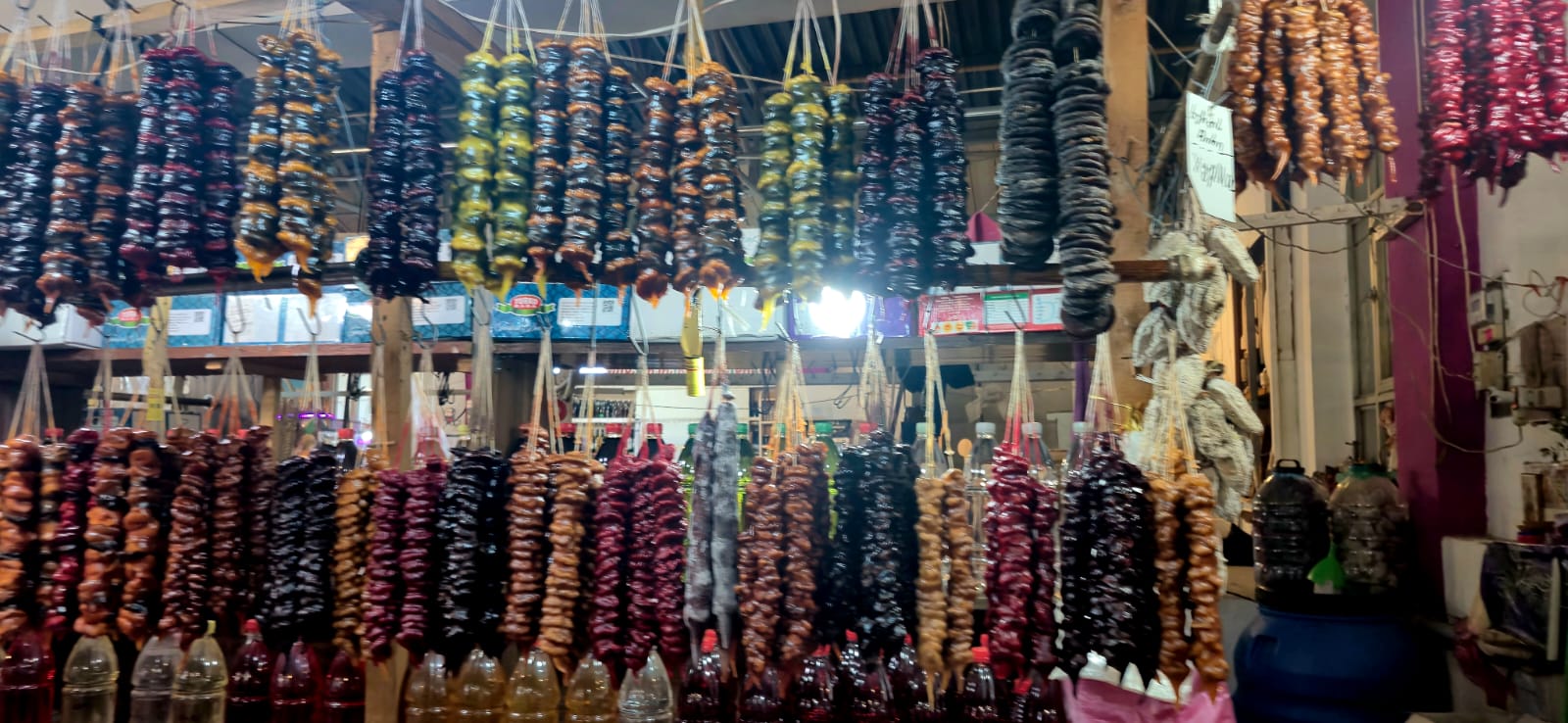
A Churchkhela stall, selling the typical Georgian sweet made of dried fruit, fruit juice, and honey.
We found ourselves discovering, with wonder and genuine interest, hidden little markets known only to locals, where vendors practically competed to offer us something to taste. But we felt far more out of place in the bakeries in the city center which, despite being used to tourists, often treated us with coldness — if not outright annoyance.
In short, an experience with two faces: one similar to that of any tourist destination in the world, where almost everything is designed to entertain (and make visitors spend as much money as possible), treating them more as “numbers” than as people; and another, more authentic and hidden, perhaps destined to shrink more and more with the advance of wild construction and the government’s expansionist vision.
One of the city’s symbols is undoubtedly the statues of Ali and Nino, protagonists of the famous Georgian novel of the same name. They are two star‑crossed lovers — she an Orthodox Christian, he a Muslim — separated by World War I and destined, after countless hardships, to part forever due to the young man’s death at the front.
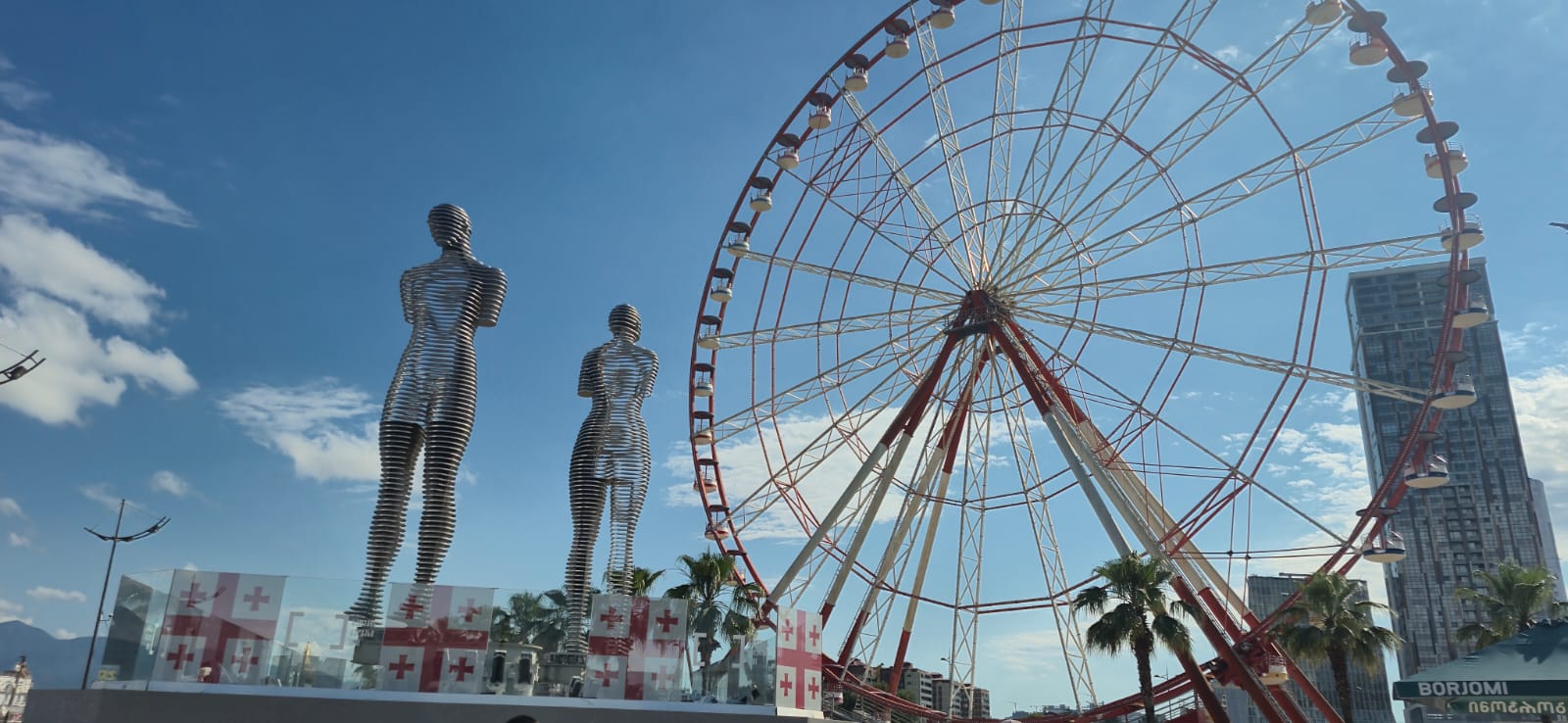
The statues of Ali and Nino, next to the Ferris wheel in Batumi
Every hour, starting at sunset, the two statues begin to move toward each other, pass through one another, and return to their starting position — symbolizing the hardships faced by their impossible love. Over time, the statues have become the embodiment of their troubled relationship, and every evening they draw hundreds of tourists eager to witness this tear‑jerking moment.
In Adjara, the region of which Batumi is the capital, there’s a saying: you can’t leave without first tasting real khachapuri. It’s a sort of boat‑shaped bread baked in the oven and filled with goat cheese. The Adjaruli version (from Adjara, of course), considered here the one and only original, also includes raw egg and butter, poured on top and melted together with the cheese to create a uniquely flavored creamy mixture.
Almost every restaurant in the area offers it, but if you want to try a delicious, less touristy version, you need to move away from the central streets and hunt for a stalovaja — a former Soviet‑style canteen recognizable by its bare‑bones atmosphere, low prices, and lack of a proper menu, with the few available dishes printed as photos and stuck near the kitchen or outside.
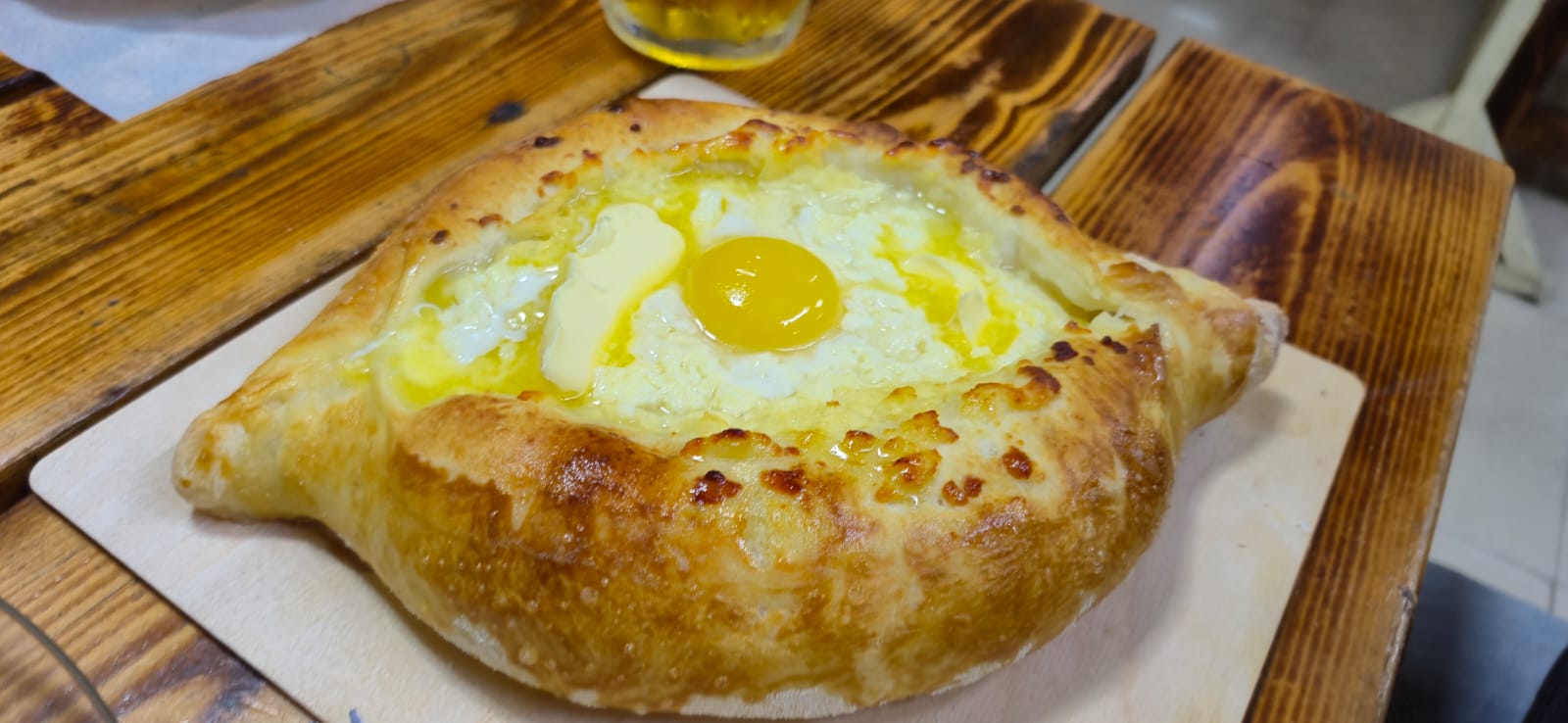
Kachapuri adjaruli
In these places, you usually shouldn’t expect the staff to speak English. The wisest thing, if you have special requests, is to rely on a good translator on your phone — but most of the time it’s enough to point at the photo of the dish you want and show the number of portions with your fingers. In other words, the international language of gestures.
Four sausages, a plate of pork in sauce, a khachapuri, rice with vegetables, two beers, and three bottles of mineral water cost us 44 GEL, just under fifteen euros. In other words, three euros per person — prices that you can still find even in a tourist city like Batumi, as long as you move a bit away from the center.
To digest, you can choose to take a cool evening walk in one of the gigantic malls scattered around the city, or grab a coffee in Piazza Square, built in the old part of town and inspired by Venice’s famous Piazza San Marco. A touch of Italy even on the easternmost edge of the Black Sea, often recalled by the Italian music playing from the cafés.
Thanks for making it this far — and as promised, we’ll talk about the sea next time.
I'm part of ITALYGAME Team
together with:
@girolamomarotta, @sardrt, @mikitaly, @mad-runner, @famigliacurione
 👉 VOTA PER NOI COME WITNESS👈
.jpg)
Upvoted! Thank you for supporting witness @jswit.
This post has been upvoted by @italygame witness curation trail
If you like our work and want to support us, please consider to approve our witness
Come and visit Italy Community